The intersection of medicine and technology is rapidly evolving, necessitating a systematic approach to anticipate and shape future healthcare landscapes. Established futures methods offer invaluable tools for healthcare professionals, policymakers, and patient leaders to navigate complexities, foresee challenges, and construct a proactive future. This article explores the significance of integrating futures studies into medical practices, highlighting its benefits and practical applications.
Embracing Systematic Future Exploration in Medicine
The traditional reliance on subjective analyses for predicting medical advancements has limitations. By adopting established futures methods, such as trend analysis, Delphi method, and scenario planning, the healthcare sector can enhance its anticipatory consciousness. These methodologies provide structured frameworks to explore various possible futures, ensuring more informed decision-making. Integrating these techniques into medical education and policy formulation will foster innovation and resilience in the face of rapid technological and social changes.
Healthcare professionals can benefit immensely from incorporating futures methods into their practice. Trend analysis helps identify prevailing patterns that could influence future developments, while the Delphi method facilitates consensus-building among experts. Scenario planning encourages imaginative thinking about potential outcomes, enabling stakeholders to prepare for diverse possibilities. The application of these methods can address critical issues like doctor shortages, AI's impact on patient care, and regulatory frameworks for emerging technologies. By embracing a systematic approach to future exploration, healthcare systems can become more adaptable and responsive to evolving needs.
Practical Applications and Emerging Disciplines
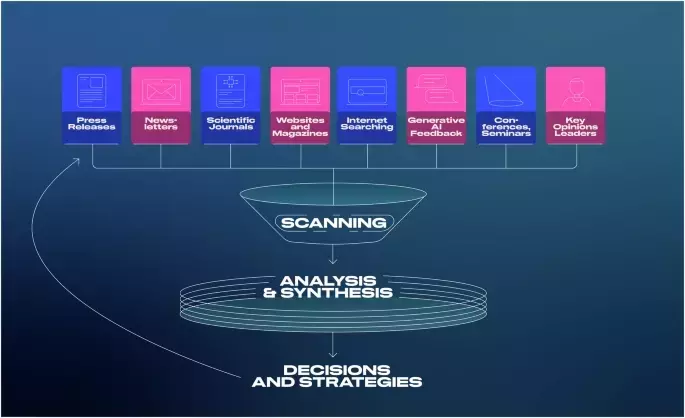
To illustrate the practical utility of futures methods, consider forecasting, environmental scanning, and vision writing. Forecasting involves making predictions based on historical data, which can be particularly useful in anticipating market trends or regulatory changes. Environmental scanning allows for the identification of early signals of significant shifts, helping to mitigate risks and seize opportunities. Vision writing fosters empathy and critical thinking by immersing participants in imagined future scenarios, broadening perspectives on complex dynamics.
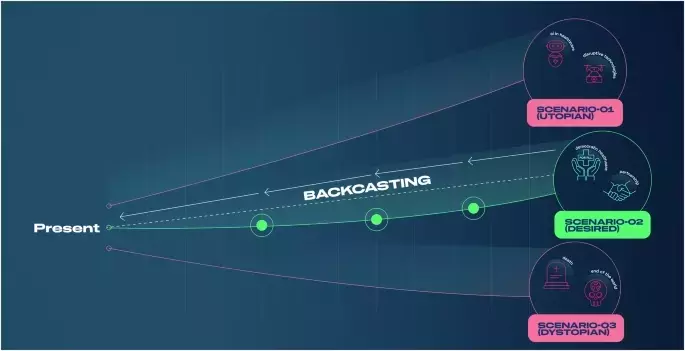
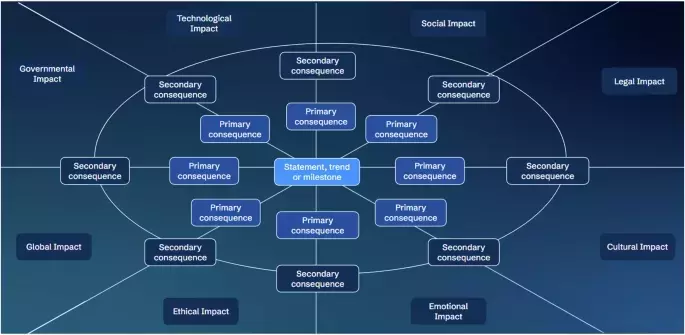
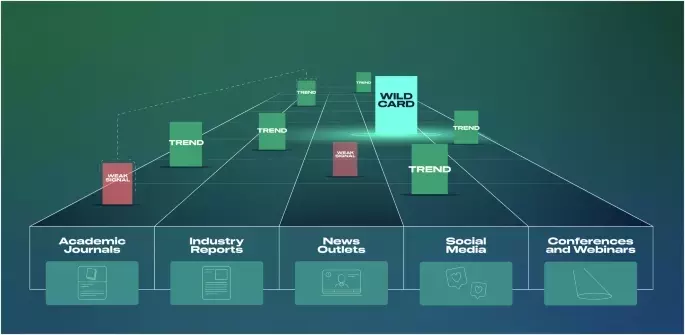
The establishment of "Medical Futures Studies" as a subfield within life sciences underscores the importance of preparing for an uncertain future. This discipline focuses on analyzing emerging trends, evaluating policy implications, and proactively addressing potential challenges. For instance, the Futures Wheel method provides a visual framework to explore direct and indirect consequences of events, aiding in risk assessment and strategic planning. Horizon scanning identifies weak signals and wild cards, preparing health systems for unexpected disruptions. Scenario analysis, including the fairy-tale exercise, helps define ideal and realistic futures, guiding actionable pathways. These methods collectively empower healthcare professionals to transform uncertainty into strategy, unknown risks into scenarios, and blind spots into visions. As digital health and AI continue to evolve, the integration of futures studies will be crucial for shaping resilient and efficient healthcare systems.
