
The Wimbledon qualifying rounds saw a significant upset as French tennis talent Lois Boisson, fresh from her remarkable semi-final appearance at the French Open, was eliminated in her opening match. This unexpected defeat dashed her hopes of securing a spot in the main draw of the prestigious grass-court Grand Slam. The tournament also featured notable advancements from British players, while other local hopefuls faced early exits, setting the stage for the main event scheduled to commence on June 30th.
French Open Sensation Lois Boisson's Wimbledon Dreams Dashed
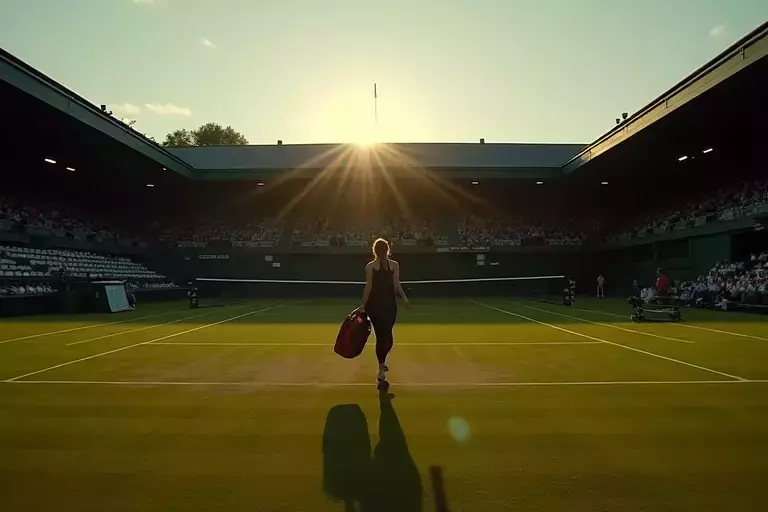
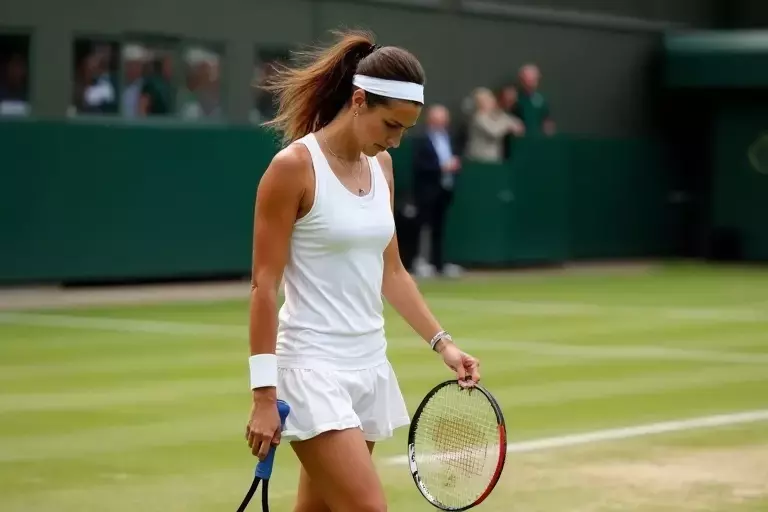
On a Tuesday in late June 2025, the serene courts of Wimbledon's qualifying rounds witnessed a surprising turn of events. Lois Boisson, the 22-year-old French tennis prodigy, who had recently astounded the tennis world by battling her way from a wildcard entry to the French Open semifinals, found her quest for a maiden Wimbledon main-draw appearance abruptly halted. Despite her impressive ascent to world number 65 following her Parisian success, the cut-off for direct entry into Wimbledon's main draw had already passed, necessitating her participation in the arduous qualifying stages. In a hard-fought encounter, Boisson was overcome by Canada's Carson Branstine, ranked 197th globally, in a three-set thriller, with the final scoreline reading 6-2, 6-7 (1-7), 6-4.
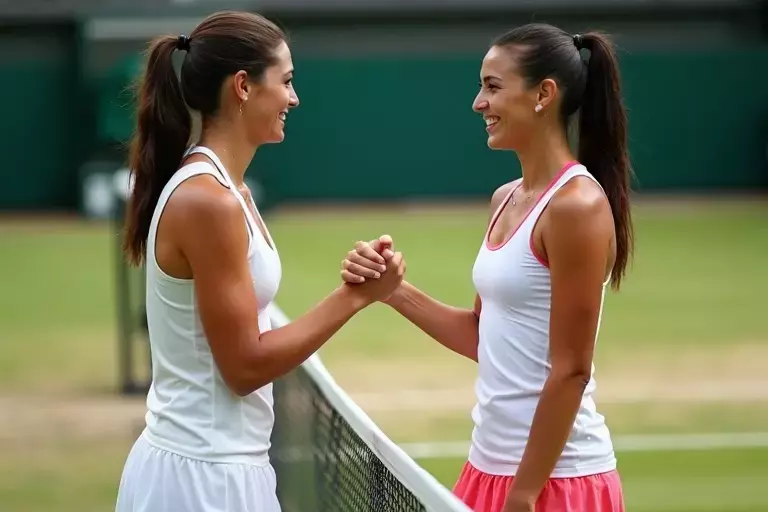
Following her victory, Branstine is now set to face her long-time friend and compatriot, Bianca Andreescu, in a pivotal match for a spot in the third and final qualifying round. Andreescu, a former US Open champion whose ranking currently sits at 147 due to a series of injuries and illnesses, confidently dispatched Brazil's Laura Pigossi with a dominant 6-2, 6-1 performance. The upcoming match will mark the first time these two friends, who clinched the Australian Open girls' doubles title together in 2017, will compete against each other in a senior singles event. Branstine expressed her fondness for her upcoming opponent, remarking on Andreescu's exceptional character both on and off the court.
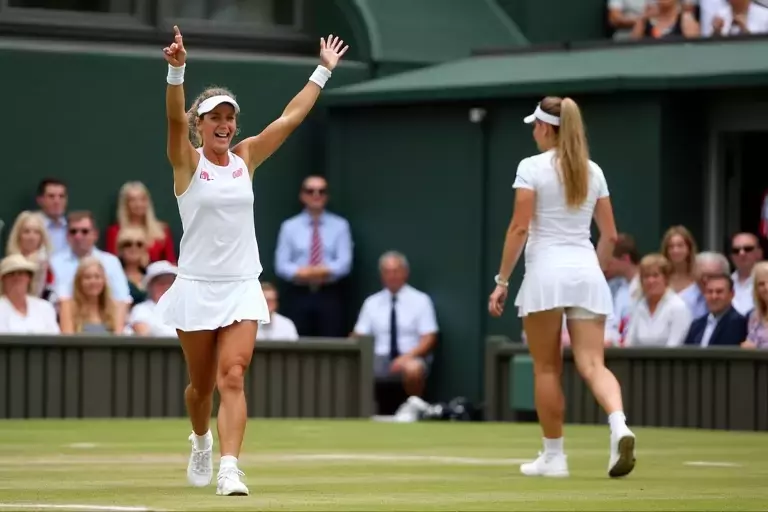
Meanwhile, the British contingent experienced mixed fortunes in the women's qualifying draw. Emily Appleton, at 25 years old, showcased remarkable resilience by staging a comeback victory over Switzerland's Simona Waltert, triumphing 6-7 (4-7), 6-4, 6-3. She now advances to face Barbora Palicova from the Czech Republic. Amarni Banks, aged 22, also secured her progression to the second qualifying round with a gritty 6-4, 1-6, 6-3 win against Austria's Julia Grabher. However, several other British players, including Katie Swan, Yuriko Miyazaki, Ella McDonald, Ranah Akua Stoiber, Amelia Rajecki, and Katy Dunne, were unable to secure their places, each falling in their respective matches. Notable among these was Katie Swan's tight 7-6 (7-2), 7-6 (8-6) loss to Spain's Leyre Romero Gormaz, and Katy Dunne's defeat by the seasoned French player Alize Cornet, who recently emerged from retirement. Wimbledon, the third Grand Slam tournament of the year, is poised to commence its main draw on the 30th of June, promising more enthralling tennis action.
The early exit of a rising star like Lois Boisson in the Wimbledon qualifiers serves as a stark reminder of the immense depth and unforgiving nature of professional tennis. Even after a breakout performance at a major, the path to sustained success remains incredibly challenging, often influenced by intricate ranking systems and the sheer competitiveness of the sport. It highlights that talent alone is often insufficient; consistency, resilience, and perhaps a touch of good fortune are equally crucial for navigating the demanding Grand Slam landscape. For emerging players, every match, even in qualifying rounds, is a battle, and every victory, a testament to their unwavering dedication. This incident underscores the idea that tennis, much like life, often throws unexpected curveballs, and adaptation is key to long-term success.
