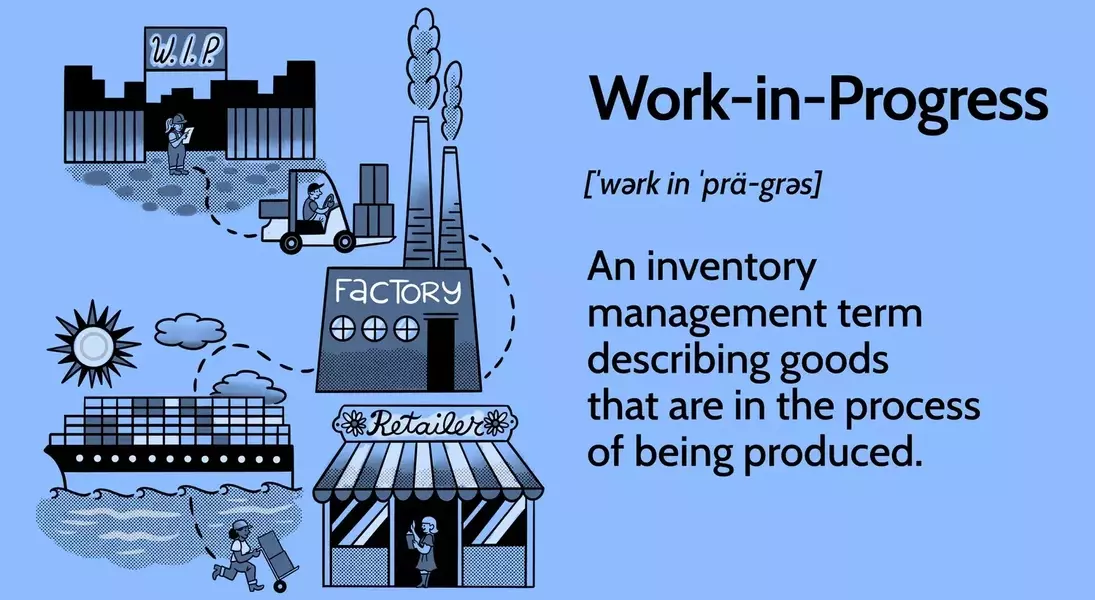
Work-in-Progress (WIP) is a fundamental concept in both production and accounting, referring to goods that are currently undergoing the manufacturing process but are not yet finalized. This includes the aggregate costs of raw materials, direct labor, and manufacturing overhead invested in products that are in various stages of completion. WIP is recognized as an asset on a company's balance sheet, representing the value tied up in these unfinished items. Efficient management and accurate accounting of WIP are crucial for businesses to maintain clear financial records, optimize production flows, and make informed decisions.
The Intricacies of Work-in-Progress in Business Operations
In the dynamic realm of modern manufacturing and supply chain management, understanding Work-in-Progress (WIP) is paramount. At its core, WIP represents the critical juncture where raw materials begin their metamorphosis into finished products. Consider the detailed journey of a product, from the initial acquisition of its foundational components to the intricate labor involved in its assembly, and the myriad overhead expenses that accrue throughout its creation. For instance, in the creation of a sophisticated electronic gadget, the journey begins with its fundamental elements: semiconductors, wiring, and casing, which are initially classified as raw materials. As these components are meticulously integrated through various stages of assembly, the accumulated costs of materials, the skilled labor involved in each step, and a portion of factory overhead, such as utilities and equipment maintenance, collectively form the WIP. Once the gadget is fully assembled and tested, its value transitions from WIP to finished goods. This transformation is not merely an accounting entry but a reflection of the physical progression of the product towards market readiness. Businesses meticulously track these transitions to ensure that their financial statements accurately reflect the true value of their inventory at any given moment.
A critical aspect of WIP management is its valuation. Accurately estimating the completion percentage of goods still in production can be a complex endeavor, yet it is essential for precise financial reporting. This challenge often prompts companies to strategically minimize their WIP inventory levels before the close of reporting periods. Such a practice not only streamlines the estimation process but also contributes to reduced storage costs and mitigates the risk of inventory obsolescence, thereby enhancing operational efficiency and financial agility.
