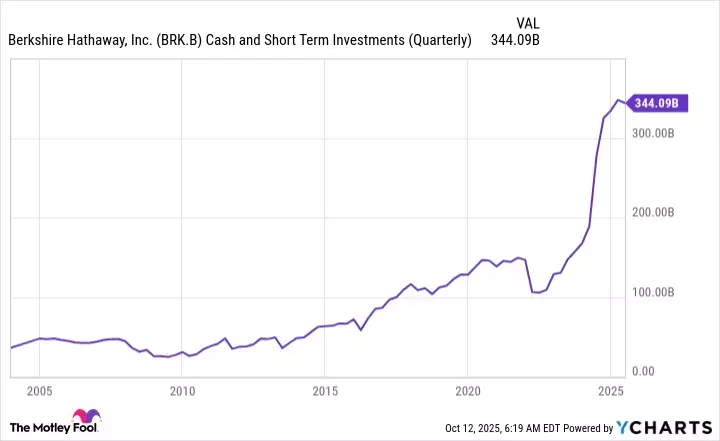
In an era where market indexes frequently achieve new peaks, the investment decisions of Warren Buffett, a figure celebrated for his enduring market success, offer considerable insight. Despite the prevailing optimism fueled by soaring stock prices and the burgeoning artificial intelligence sector, Buffett's Berkshire Hathaway has consistently engaged in net selling of stocks, leading to a record accumulation of cash reserves. This cautious stance, particularly when many companies are enjoying robust growth and the S&P 500 is hitting all-time highs, prompts a closer look at the rationale behind his strategy. His approach underscores a deep-seated commitment to value investing, even when faced with widespread market exuberance, suggesting a patient and selective deployment of capital.
Buffett’s investment philosophy centers on identifying undervalued assets within familiar industries—a strategy that has yielded remarkable returns over decades. Unlike those who chase rapid gains in volatile sectors such as technology, he favors established companies with strong fundamentals, often holding them for extended periods and benefiting from dividends and consistent growth. This method allows him to navigate various market conditions, from boom to bust, without deviating from his core principles. His current emphasis on liquidity, reflected in Berkshire Hathaway's substantial cash holdings, signals a preparedness for future investment opportunities that align with his stringent valuation criteria, irrespective of the broader market sentiment.
Buffett's Prudent Approach Amidst Market Highs
As major market indicators like the S&P 500 continue their upward trajectory, reflecting investor confidence in economic growth and technological advancements, Warren Buffett's persistent net selling of stocks presents a notable counter-narrative. His strategy of divesting more equity than he acquires, culminating in a historic accumulation of cash, underscores a deliberate and disciplined investment philosophy. This period of caution, marked by the S&P 500 reaching unprecedented levels and robust performance from sectors like artificial intelligence, highlights Buffett's commitment to long-term value over short-term trends. His actions suggest a thoughtful assessment of market conditions, indicating a preference for maintaining capital readiness amidst elevated valuations.
Buffett, often referred to as the 'Oracle of Omaha,' has built an unparalleled track record by adhering to a consistent set of investment principles, prioritizing intrinsic value and avoiding speculative ventures. His current emphasis on building a substantial cash position, even as others actively invest, implies a belief that current market valuations may not offer sufficient margins of safety or attractive returns for new capital deployment. This disciplined approach, refined over nearly six decades, illustrates his readiness to wait for opportune moments rather than chasing inflated asset prices. For the individual investor, Buffett's current conservative stance serves as a potent reminder of the importance of financial prudence and the strategic advantage of having dry powder available for future, more favorable investment landscapes.
The Valuation Conundrum and Future Preparedness
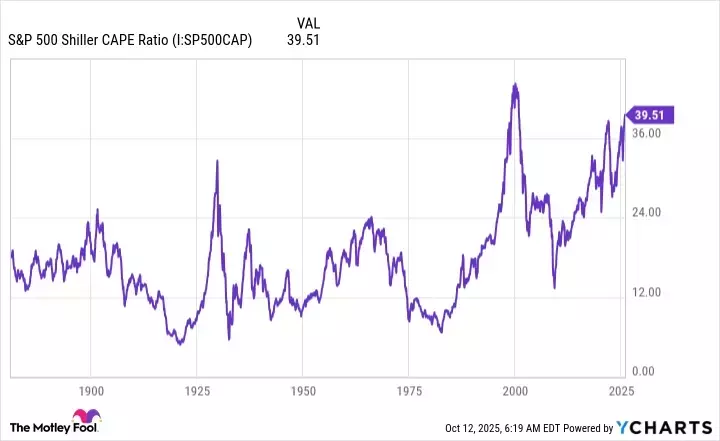
The core of Warren Buffett’s recent investment strategy, characterized by net stock sales and an increasing cash reserve, appears to be rooted in his unwavering focus on valuation. In an environment where the overall market, as indicated by metrics such as the S&P 500 Shiller CAPE ratio, is signaling high prices that have only been seen a couple of times before in history, Buffett is exhibiting profound caution. This selective buying behavior, where he has made targeted acquisitions in companies like UnitedHealth Group and Pool Corp. while largely divesting, reflects his commitment to purchasing assets only when they meet his strict criteria for undervaluation, regardless of general market enthusiasm.
Buffett’s current actions implicitly advise investors to emulate his disciplined approach: not to abandon investing altogether, but to prioritize thorough valuation analysis and to maintain a strategic cash reserve. This dual strategy allows investors to capitalize on promising opportunities that arise even in expensive markets, while also being prepared to deploy capital more broadly when market corrections make assets more attractively priced. His wisdom suggests that patience and readiness are paramount, enabling investors to secure long-term gains by acquiring quality companies at reasonable prices, thus positioning themselves for success over time.
