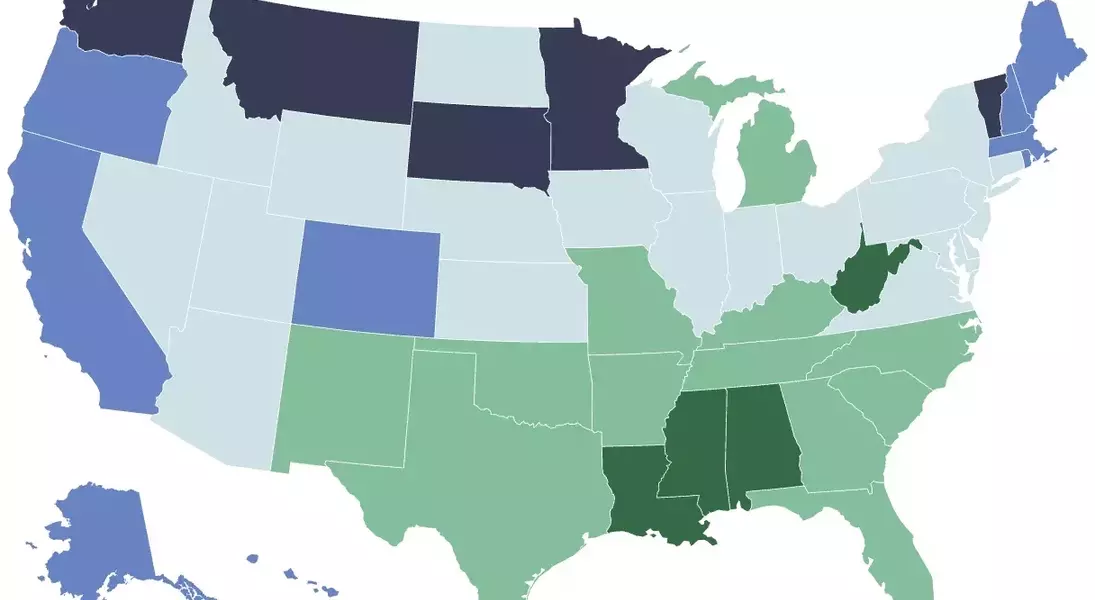
In-home care for the elderly in the United States presents a complex financial landscape, with costs varying dramatically depending on location. A recent report highlights that families paid a national median of $34 per hour for home caregivers last year, a 3% increase from the previous year. However, this national average obscures significant state-to-state disparities, prompting many families to grapple with unexpected financial burdens when navigating long-term care decisions.
The cost of in-home care is not uniform across the nation, with hourly rates fluctuating considerably from state to state. For instance, Mississippi boasts the lowest hourly rate at $25, while South Dakota leads with the highest at $44. Surprisingly, states traditionally associated with high living expenses, such as California and New York, do not rank among the top five most expensive for home care. Instead, states like Vermont, Montana, Minnesota, and Washington experience elevated costs due to factors like smaller labor pools and expansive rural areas, which drive up caregiver wages.
Conversely, the southern United States generally offers more affordable options, with Alabama and Louisiana joining Mississippi at the lower end of the cost spectrum, typically around $26 per hour. West Virginia also stands out with rates below $30 per hour. These regional differences underscore the importance of understanding local market dynamics when planning for elder care. A significant portion of the elderly population, over 10,000 Americans turning 65 daily, will require some form of long-term care, yet Medicare often does not cover these essential services, leaving families to bear the financial weight.
Several forces contribute to the escalating prices of in-home care. A persistent shortage of qualified caregivers, exacerbated by an aging population, continuously pushes wages upward. Concurrently, inflationary pressures impact operating expenses for care agencies, including food, insurance, and transportation, which are then passed on to families. Furthermore, heightened demand in the post-pandemic era has reduced the incentive for agencies to compete on price, further contributing to cost increases. These factors have led to home care costs rising faster than the general consumer price index, with other senior living options like assisted living and memory care also seeing significant price hikes.
The critical challenge for many families lies in their lack of preparedness for these costs. A study indicates that a vast majority of individuals are not well-informed about the expenses associated with long-term care, leading to unexpected financial strain, particularly when health emergencies necessitate immediate care decisions. Experts emphasize that the advertised monthly rates are often merely a starting point, as additional services required for evolving care needs can significantly inflate the total cost.
To mitigate financial surprises, proactive planning is essential. Families are advised to research and benchmark care costs in their specific state, adjusting their budgets accordingly for higher-cost regions. Comparing multiple care agencies is also crucial, as actual costs can vary based on the type of care, hours needed, and whether overnight or weekend services are required. Additionally, families should inquire about potential rate increases, given the consistent annual rise in care expenses. Initiating these conversations before a crisis hits can make a substantial difference in managing the financial and emotional complexities of elder care.
