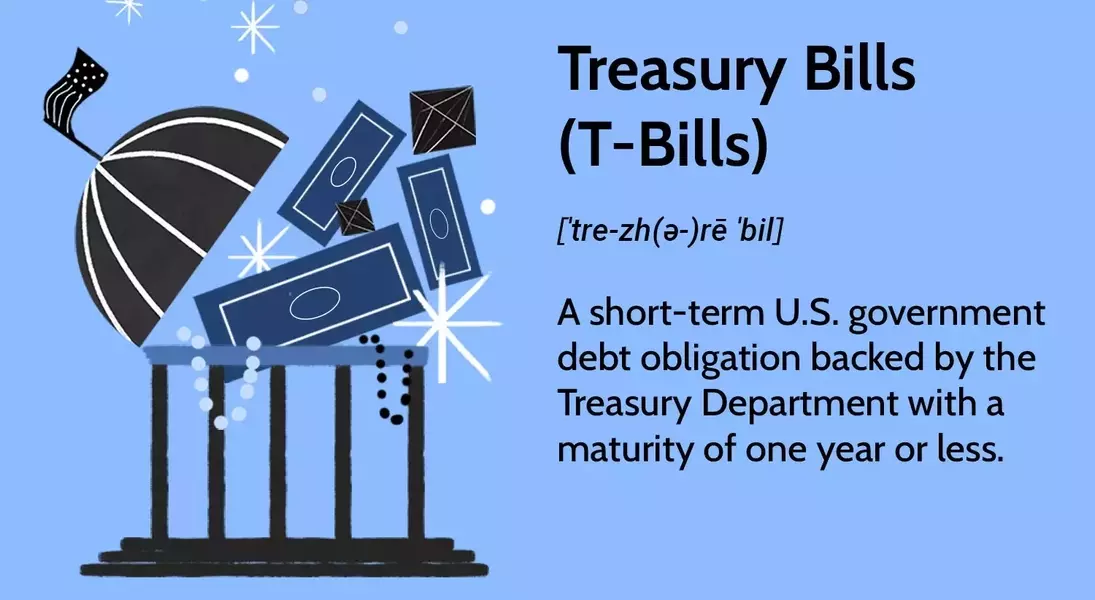
Treasury Bills (T-bills) are short-term government debt obligations crucial for financing federal expenditures. These instruments are renowned for their safety, backed by the U.S. government, and serve as a fundamental component of many investment portfolios. They do not offer periodic interest payments but rather provide returns through a discounted purchase price, reaching their full face value at maturity. This structure makes T-bills distinct from other government securities like Treasury notes and bonds, which typically have longer maturities and pay interest regularly.
Understanding T-bills involves grasping their issuance process, how their rates are determined, and the advantages and disadvantages they present to investors. Their appeal primarily lies in their minimal default risk and exemption from state and local taxes on earned interest. However, investors must also consider their lower yield compared to other assets and the potential impact of rising interest rates. The Federal Reserve's monetary policy significantly influences T-bill prices and yields, making them dynamic instruments within the broader financial market.
The Essence and Acquisition of Treasury Bills
Treasury bills are government debt instruments with durations typically under one year, issued at a price lower than their nominal value. The investor's profit comes from the difference between this discounted purchase price and the full face value received when the bill matures. These securities are widely recognized for their exceptional safety, attributed to the backing of the U.S. government, and are commonly available in denominations starting from $100. They play a vital role in government finance, offering a secure avenue for both the Treasury to raise funds and investors to preserve capital over short periods.
Acquiring Treasury bills is a straightforward process, primarily facilitated through TreasuryDirect, the U.S. Treasury's online platform, or via brokerage firms. Investors can participate in auctions, choosing between competitive bids, where they specify the desired yield, or non-competitive bids, which accept the average auction yield. The purchasing process involves providing personal identification and banking details, creating an account, and then selecting the desired T-bill amount. Upon successful purchase, investors receive a confirmation, and the principal plus the earned interest (the difference between purchase and face value) is deposited directly into their linked bank account upon maturity.
Yield Dynamics and Investor Considerations for Treasury Bills
The rates of Treasury bills are influenced by various factors, including market expectations for future interest rates and the Federal Reserve's monetary policy. Longer maturity T-bills often yield more when interest rates are projected to increase, while the reverse can be true when rates are expected to fall. This dynamic interaction makes T-bill yields responsive to broader economic conditions and central bank actions, such as adjustments to the federal funds rate. Consequently, investors need to monitor these indicators to assess the potential returns and the attractiveness of T-bills relative to other investment opportunities.
Investors considering T-bills should carefully weigh their benefits against their drawbacks. The primary advantages include virtually no default risk, a low minimum investment, and tax exemption for state and local income taxes on earned interest. However, T-bills typically offer lower returns compared to other debt instruments and do not provide regular income payments, which might not suit investors seeking steady cash flow. Furthermore, they are subject to interest rate risk, meaning their value can diminish if market interest rates rise, making older T-bills less appealing. The impact of inflation is another critical consideration, as high inflation rates can erode the real returns on T-bills, making them less attractive unless their yields surpass the inflation rate.
