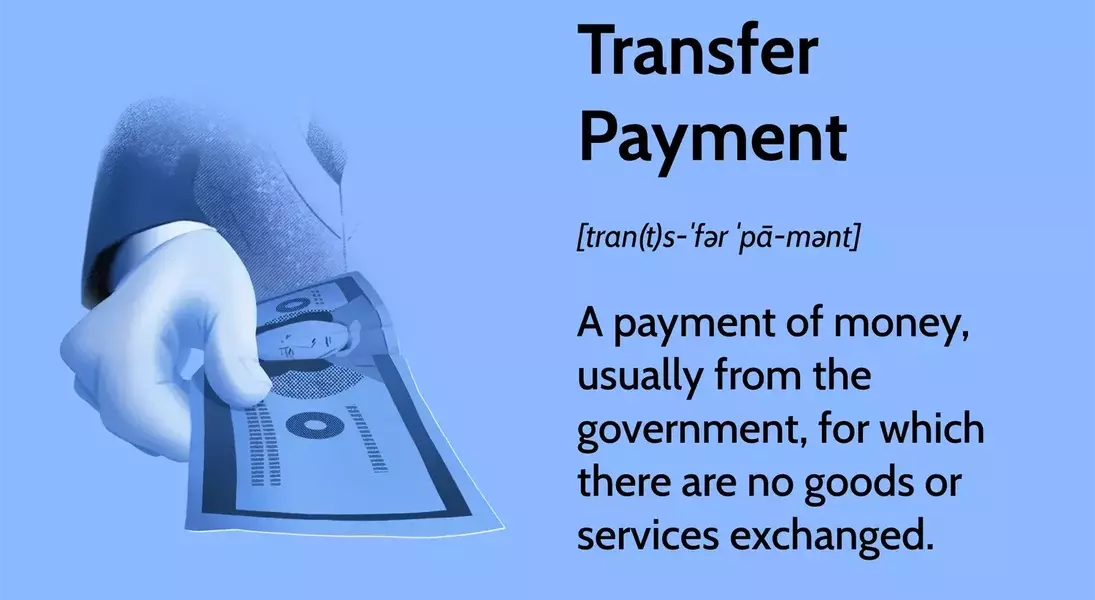
Transfer payments represent a fundamental element of government strategy, designed to reallocate resources and invigorate economic landscapes, particularly in periods of financial turbulence. These disbursements, which require no reciprocal exchange of goods or services, encompass programs like Social Security and unemployment insurance. Grasping the concept of transfer payments is vital for understanding how governmental interventions influence overall economic welfare and individual financial planning.
The Dynamics of Financial Transfers and Economic Resilience
In the expansive economic framework of the United States, governmental financial transfers are typically directed towards individuals through various social programs. These are viewed as a mechanism for the redistribution of economic resources, shifting wealth from the more affluent segments of society to those with less financial stability. The dual objectives of these payments are to provide humanitarian aid and to bolster the economy during challenging times by enhancing consumer purchasing power.
Among the most prominent examples of such transfers are Social Security, which provides retirement and disability benefits, and unemployment compensation. Although many recipients contribute to these systems during their working years, the payments themselves are categorized as transfers due to their non-reciprocal nature at the point of disbursement. Beyond these widely recognized forms, financial transfers can occur between individuals, such as charitable donations or personal monetary gifts, and also include governmental support for educational and training initiatives, such as subsidies for corporate or labor group-led programs. It is important to note that direct subsidies to farmers, manufacturers, and exporters, while one-way payments, are generally not classified under the umbrella of transfer payments.
Historically, the role of financial transfers intensifies during economic downturns. A prime example is the establishment of Social Security by the Roosevelt administration in the 1930s, a direct response to the profound hardships of the Great Depression. More recently, in March 2020, legislative bodies approved significant direct cash payments totaling $250 billion to most American citizens, alongside $500 billion in corporate bailout funds, as an urgent measure to counteract economic collapse. Such direct assistance during crises aims not only to support those in need but also to stimulate economic activity. Drawing from Keynesian economic principles, these transfers are believed to generate a "multiplier effect," where each dollar disbursed sparks a ripple of additional spending, ultimately contributing more to the economy than its initial value.
The impact of government financial transfers extends beyond immediate relief, serving as a critical buffer during economic shocks. These programs reflect a societal commitment to welfare and provide a vital mechanism for stabilizing the economy. Their strategic application during recessions demonstrates a proactive approach to managing financial volatility and promoting broader economic recovery.
