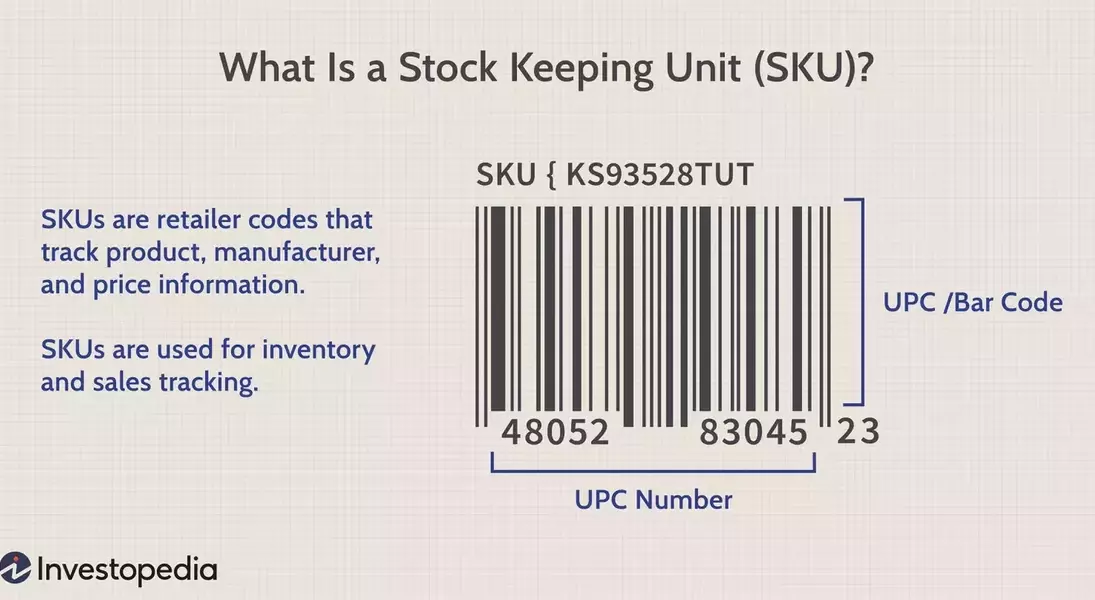

A Stock Keeping Unit (SKU) is a vital tool for businesses, serving as a unique identifier for each product to simplify and enhance inventory management. These distinct codes are crucial for maintaining efficient operations across various business models, from traditional retail to modern e-commerce. Understanding how SKUs function and their benefits can significantly improve a company's ability to track products, manage stock, and prepare for market demands.
The Core Functionality of Stock Keeping Units in Modern Business
At its heart, a Stock Keeping Unit (SKU) acts as a unique digital fingerprint for a product, embedded within a scannable barcode and a series of alphanumeric characters. When a customer purchases an item, the SKU is scanned at the point of sale (POS) system. This action automatically updates inventory records, deducting the sold item from stock and registering other crucial sales data, such as pricing and transaction details. This seamless process enables businesses to precisely monitor inventory levels, ensuring that popular items are restocked promptly and that inventory discrepancies are minimized. The implementation of SKUs extends beyond physical goods, applying to intangible services or components like warranties and labor units in service-oriented businesses, thus offering a comprehensive tracking solution. Unlike Universal Product Codes (UPCs), which are standard across all vendors for a given product, SKUs are proprietary. Each business customizes its SKUs, often incorporating details like product size, color, and storage location. This tailored approach allows for granular control over internal inventory, but also means that comparing prices using SKUs across different retailers is not feasible for consumers. UPCs, with their universal 12-digit format, remain the standard for inter-company product identification and price comparison. The strategic use of SKU data provides vendors with profound insights into their operations. It facilitates real-time tracking of product movement, helps in anticipating reorder points, and informs procurement decisions for seasonal sales or promotional events. Furthermore, SKUs play a critical role in logistics, enabling businesses to monitor products through every stage of the shipment process. For e-commerce platforms like Amazon, vendors can create customized SKUs to manage their online sales and inventory effectively, optimizing their digital storefronts for both efficiency and profitability.
The role of SKUs in inventory management is transformative, shifting it from a labor-intensive, error-prone task to an automated, precise process. This technological advancement allows businesses to gain a competitive edge by optimizing stock levels, minimizing waste, and responding dynamically to market changes. Efficient inventory practices, driven by SKUs, are not merely about counting items; they are about understanding product flow, forecasting demand accurately, and ultimately, enhancing customer satisfaction through consistent product availability. The meticulous tracking enabled by SKUs empowers businesses to make informed decisions, ensuring smooth operations and sustainable growth in an increasingly complex global marketplace.
