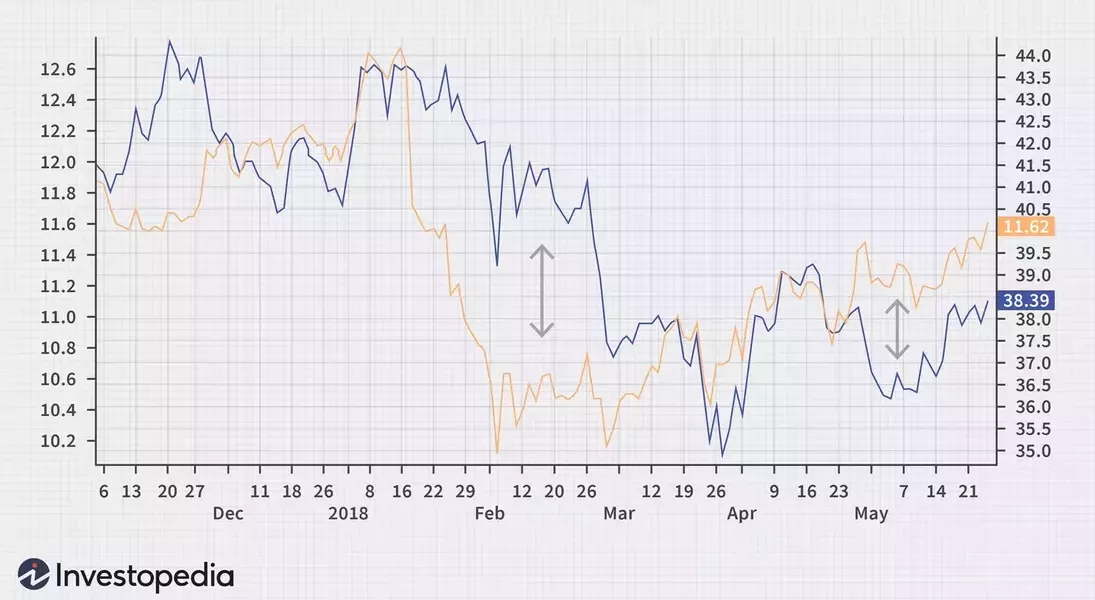

Statistical arbitrage, often abbreviated as stat arb, represents a sophisticated quantitative trading methodology designed to capitalize on temporary price discrepancies among highly correlated financial instruments. This strategy typically involves constructing diversified portfolios and employing a market-neutral stance, where simultaneous long and short positions are opened to exploit short-term pricing imbalances. The core principle revolves around the expectation that prices will eventually revert to their historical mean, allowing traders to profit from these transient deviations. Advanced computational models and high-frequency trading algorithms are frequently utilized to identify and execute these opportunities rapidly, given their often fleeting nature.
Despite its potential for generating profits from minute price movements, statistical arbitrage is not without its inherent risks. The effectiveness of this strategy heavily relies on the assumption of mean reversion, meaning that asset prices will consistently return to their average levels. However, market dynamics can sometimes lead to prolonged periods of divergence between correlated securities, challenging the fundamental premise of stat arb. Furthermore, the need to deploy substantial capital in large positions to achieve meaningful returns from small price changes amplifies the risk exposure. To mitigate these risks, traders often integrate risk management tools such as stop-loss orders, enabling them to control potential losses if market movements do not align with their expectations.
Understanding the Mechanics of Statistical Arbitrage
Statistical arbitrage is a highly technical trading strategy that uses advanced quantitative analysis to identify and exploit short-term pricing inefficiencies in financial markets. The strategy typically involves creating a portfolio of numerous securities, carefully selected for their strong historical correlation. Once these correlated assets are identified, the statistical arbitrageur establishes simultaneous long and short positions. The goal of this market-neutral approach is to profit from the temporary divergence and eventual convergence of these asset prices, while minimizing exposure to broader market movements. This method relies heavily on mathematical models and often uses high-frequency trading systems to execute trades within milliseconds, capturing profits from price differentials that may only last for very brief periods.
The operational framework of statistical arbitrage is centered on the principle of mean reversion. This means that if two historically correlated securities momentarily diverge in price, the strategy anticipates that their prices will eventually realign. For instance, a trader might take a long position in an undervalued stock while simultaneously shorting an overvalued, but correlated, stock. This "pairs trading" approach is not limited to just two assets but can extend to a basket of securities across various industries, such as a banking stock and a consumer cyclical stock. The effectiveness of the strategy is enhanced by leveraging sophisticated algorithms that can swiftly detect these fleeting inefficiencies and execute trades before they disappear. However, the reliance on high-frequency trading also necessitates significant capital allocation to generate substantial returns from small price movements, which inherently increases the risk profile of the strategy.
Navigating the Risks and Implementing Strategies in Statistical Arbitrage
The inherent risks within statistical arbitrage primarily stem from its core assumption of mean reversion. While historical data often shows that correlated assets tend to revert to their average price relationship, market conditions can change, leading to prolonged periods where these correlations break down. This can result in significant losses if positions are held without adequate risk management. For example, unexpected market events or structural shifts in industries can cause previously correlated stocks to remain divergent for extended periods, invalidating the statistical models. Furthermore, the necessity of deploying large trade sizes to achieve meaningful returns from small price differences exposes traders to amplified losses if the market moves unfavorably. Therefore, a robust risk management framework, including the diligent use of stop-loss orders, is crucial for any statistical arbitrage strategy.
Implementing statistical arbitrage strategies can appear daunting due to the complex mathematical models involved, but simpler approaches exist for those new to the concept. A straightforward method involves identifying two historically correlated securities, such as two companies within the same sector like General Motors and Ford. By visually analyzing their price movements on a chart, traders can pinpoint instances where these stocks diverge significantly from their typical correlation. For example, if Ford’s stock price drops considerably while General Motors’ remains stable, a trader might consider buying Ford and shorting General Motors, anticipating that Ford’s price will eventually rebound to align with General Motors. However, it is vital to acknowledge that there is no guarantee of price convergence, nor a specific timeline for it. Consequently, implementing strict stop-loss orders is essential to mitigate potential losses, ensuring that capital is protected even if the expected mean reversion does not occur as anticipated, thereby allowing for controlled participation in these advanced trading techniques.
