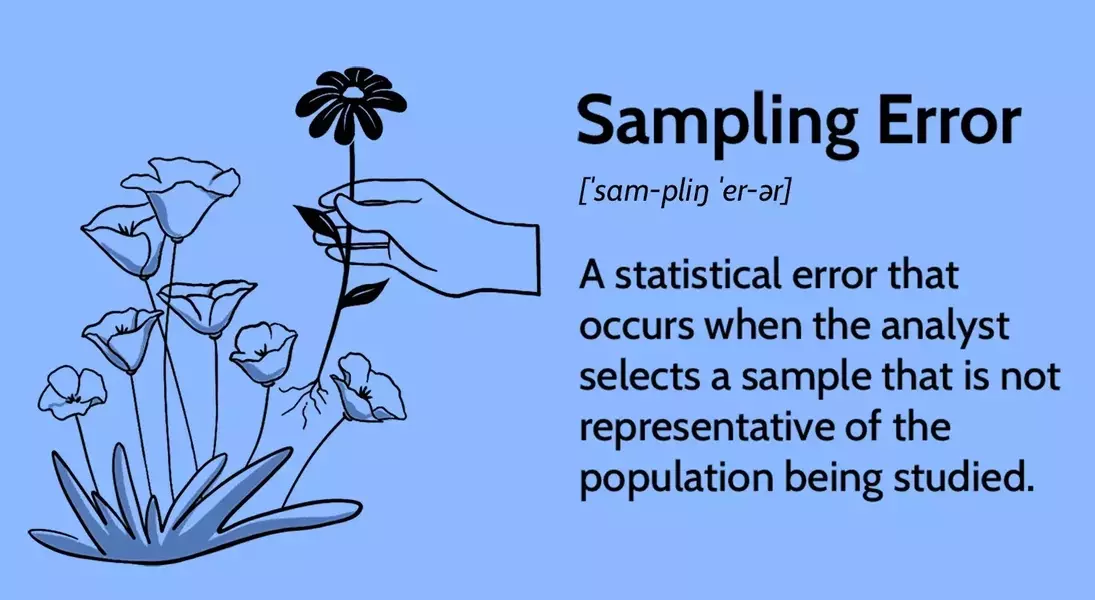
When conducting research or analysis, focusing on a subset of a larger group, known as a sample, can introduce inaccuracies. These inaccuracies, termed sampling errors, manifest as differences between the characteristics observed in the sample and the actual characteristics of the entire population from which the sample was drawn. Even when samples are chosen randomly, some degree of error is inevitable, as a sample, by its very nature, provides an approximation rather than an exact replica of the population.
Sampling errors can significantly impact the reliability of research outcomes. They can be broadly categorized into four types: population specification errors, selection errors, sample frame errors, and non-response errors. A population specification error arises when the researcher misidentifies the target group for the study. Selection errors occur when the sample is self-selected, meaning only individuals keenly interested in the survey respond, thereby skewing the results. A sample frame error happens if the sample is drawn from an incorrect or incomplete list of the population. Lastly, a non-response error occurs when chosen participants cannot be reached or decline to participate, potentially leading to an unrepresentative sample.
To reduce the occurrence of sampling errors, researchers can employ several strategies. One effective method is to increase the sample size; a larger sample tends to more closely mirror the characteristics of the overall population, thus minimizing potential deviations. For instance, the U.S. Bureau of Labor Statistics' monthly employment report, which surveys 119,000 businesses, demonstrates a very low sampling error due to its extensive sample size. Furthermore, implementing random sampling techniques helps establish a systematic and unbiased approach to participant selection. This ensures that every member of the population has an equal chance of being included, reducing the likelihood of a skewed sample.
In practical applications, sampling errors have critical implications for businesses, governments, and financial institutions. These entities frequently rely on sampling to make informed decisions, such as predicting consumer behavior, estimating market demand, or detecting fraudulent activities through auditing. The presence of significant sampling errors can undermine the validity of research findings, compromise data quality, and ultimately lead to suboptimal decision-making. Therefore, a thorough understanding and proactive mitigation of these errors are essential for maintaining the integrity and usefulness of statistical analyses across various sectors.
