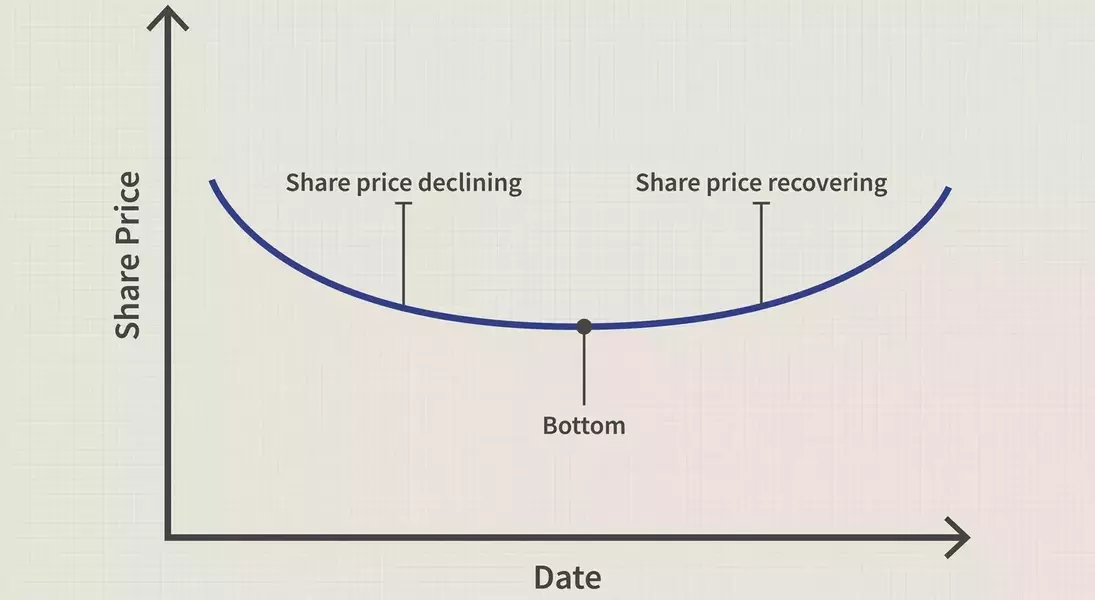
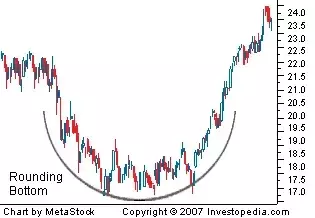
The rounding bottom chart pattern, also known as a saucer bottom, is a rare but powerful indicator in technical analysis, signaling a potential shift from a bearish market to a bullish one. This U-shaped formation suggests a gradual change in investor sentiment, often spanning several weeks to many months. Confirmation of this pattern typically involves observing the trading volume, which should decrease as prices reach their lowest point and subsequently increase as the asset's value begins its ascent. Unlike the 'cup and handle' pattern, the rounding bottom exhibits a smoother, uninterrupted curve, indicating a more direct transition towards an upward trend.
Successful identification and interpretation of this pattern, in conjunction with other analytical tools, can provide traders with valuable insights into long-term market reversals. The overall process, from the initial decline to the complete recovery and breakout, can be extended, requiring patience from investors. Understanding the key elements of this chart pattern, including the interplay between price action and trading volume, is essential for making well-informed investment decisions and capitalizing on potential market shifts.
The Rounding Bottom Formation: Decoding Market Shifts
The rounding bottom, a distinctive U-shaped configuration on price charts, represents a significant market phenomenon. It emerges after an extended period of price depreciation, suggesting a gradual transition in market sentiment from pessimistic to optimistic. This pattern is characterized by a steady, curved decline, followed by an equally steady, curved ascent, without the sharp pullbacks seen in other reversal patterns. The formation typically unfolds over several weeks or even months, making it a powerful signal of a sustained long-term trend reversal. Traders pay close attention to the corresponding trading volume, which ideally mirrors the price action. Initially, volume is high during the decline, diminishes as the price consolidates at the bottom of the 'U', and then steadily increases as the price begins its upward trajectory. This synchronized movement of price and volume provides strong confirmation of the pattern's validity and the impending bullish shift.
Understanding the dynamics of the rounding bottom is crucial for investors looking to identify opportune moments for entry into an asset. The initial downward phase reflects a market dominated by sellers, driving prices lower. As the pattern progresses, selling pressure gradually wanes, and buyers slowly begin to accumulate shares at what they perceive to be attractive low prices. This accumulation phase forms the rounded base of the pattern. The subsequent upward trend signifies a renewed confidence in the asset, with increasing demand pushing prices higher. When the price eventually breaks above the resistance level established at the beginning of the pattern, it indicates a strong breakout, confirming the long-term bullish reversal. This pattern, though infrequent, offers a reliable indication of a fundamental change in an asset's market direction, providing a strategic advantage for patient and observant traders.
Key Indicators and Strategic Implications of the Rounding Bottom
The effective use of the rounding bottom pattern in trading strategy hinges on recognizing its key components and understanding their implications. The pattern begins with a preceding downward trend, culminating in a low point where selling pressure dissipates, and buying interest gradually accumulates. During this initial decline, trading volume is typically high, reflecting intense selling activity. As the price approaches the trough of the 'U' shape, volume tends to diminish significantly, indicating a period of market indecision or equilibrium between buyers and sellers. This low volume at the bottom is a critical characteristic, signaling that the downward momentum has largely exhausted itself. As the price then begins its upward curve, reflecting renewed buyer confidence and increasing demand, trading volume should expand correspondingly, validating the strength of the emerging bullish trend. A successful breakout occurs when the price surpasses the level it held before the initial decline, marking the completion of the pattern and a confirmed reversal.
Beyond price action and volume, market sentiment plays a pivotal role in the rounding bottom's formation. The transition from a bearish to a bullish outlook among investors is fundamental to this pattern. As the stock recovers, investor expectations shift from negative to positive, driving sustained buying activity. This shift in sentiment, coupled with increasing volume on the upward leg, reinforces the reliability of the rounding bottom as a reversal signal. Traders often combine this pattern with other technical indicators, such as moving averages or oscillators, to further confirm the trend reversal and filter out false signals. Given the pattern's long formation period, patience is a virtue for traders. Accurately identifying the rounding bottom and waiting for its full confirmation, including the breakout above resistance, allows investors to position themselves strategically for long-term growth opportunities, making it a valuable tool in comprehensive technical analysis.
