This article explores the concept of residual value, its importance in financial planning, how it's calculated, and its practical implications for businesses and individuals.
Maximize Your Asset's Worth: The Power of Residual Value
The Core Concept of Remaining Asset Value
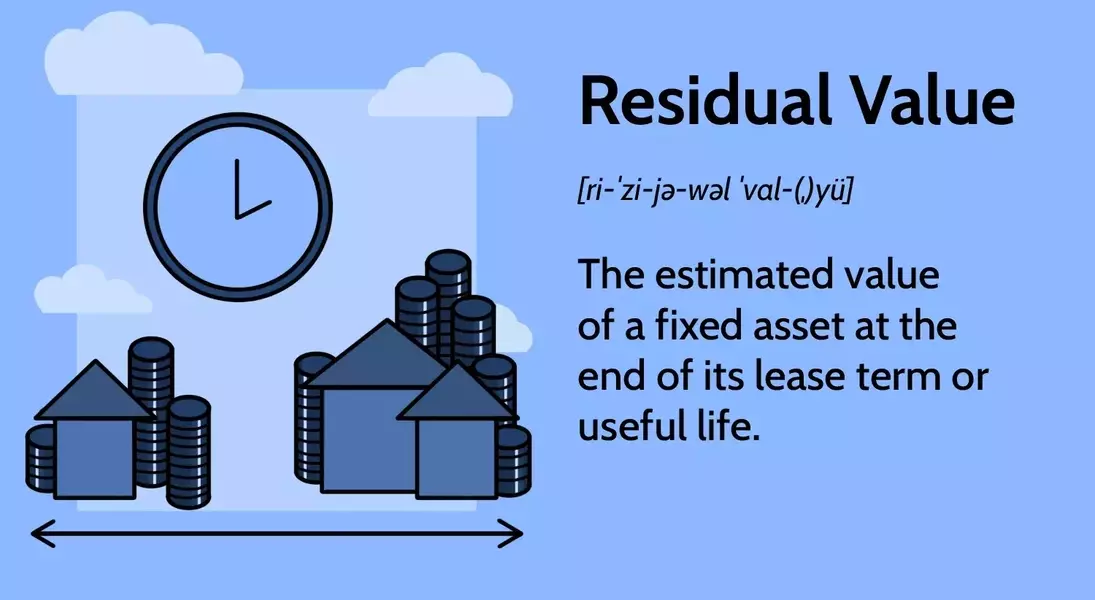
Residual value refers to an asset's estimated worth once its primary operational period concludes. This key financial indicator is vital for businesses and investors when calculating depreciation, structuring lease agreements, and making strategic investment choices. It reflects the asset's expected resale or salvage worth after its initial use.
How an Asset's Future Worth is Determined
The concept of residual value acknowledges that assets naturally decline in worth over time due to wear, technological advancements, or market saturation. From an accounting standpoint, this impacts a company's depreciation and amortization expenses, influencing capital budgeting and decisions to either purchase or lease. For leased assets, a higher residual value often translates to lower monthly payments, as the lessee essentially covers the difference between the initial cost and the projected end-of-lease value.
The Process of Assessing an Asset's Future Worth
Calculating residual value involves several steps, though specific industries may adapt the methodology. The fundamental principles remain consistent across various asset types.
Establishing the Initial Investment Cost
Begin by tabulating all expenses associated with acquiring and operationalizing an asset. This encompasses not only the purchase price but also any additional costs, such as installation fees.
Determining the Asset's Productive Lifespan
Next, estimate the duration, typically in years, during which the asset will contribute productively to the business. This "useful life" is usually guided by manufacturer specifications, industry benchmarks, and historical data.
Projecting the Future Resale Value
Forecast the asset's potential market worth at the culmination of its useful life. This projection must account for prevailing market conditions, the rate of technological obsolescence, and anticipated wear and tear. This projected value is often expressed as a percentage of the asset's original cost. Alternatively, market comparison data from similar asset transactions can be used. In practice, a combination of these methods often yields the most precise estimate.
Accounting for Disposal-Related Expenses
Finally, subtract any costs that would be incurred during the process of selling or disposing of the asset. This provides a more accurate representation of the net residual value.
Real-World Applications of Residual Value Calculations
The practical application of residual value is evident in various financial scenarios, from depreciating machinery to structuring vehicle leases.
Depreciation in Industrial Equipment
Consider a machine acquired for $50,000, with an additional $1,000 for installation. If its useful life is estimated at 10 years and its residual value at $10,000, using a straight-line depreciation method, the annual depreciation expense would be calculated by subtracting the residual value from the total cost and dividing by the useful life. This results in an annual depreciation of $4,100.
Impact on Vehicle Leasing Agreements
In vehicle leasing, the leasing company sets an estimated residual value at the lease's inception. For example, a $30,000 car might have a 50% residual value after a three-year lease, totaling $15,000. This figure is central to determining lease payments. However, the actual market value at lease-end might differ from this initial estimate due to fluctuating market conditions or unexpected wear. This highlights the inherent uncertainty in predicting future asset values.
Strategic Importance of Residual Value in Financial Decisions
Calculating residual value is a critical exercise, whether you are procuring new equipment, drafting lease agreements, or planning for asset depreciation. It is essential to continuously monitor and adjust these estimates to maintain the accuracy of financial records. The primary objective is not to achieve a flawless prediction, which is often unattainable, but to establish a robust estimate that facilitates informed financial planning. A thorough understanding of residual value empowers individuals and organizations to make astute decisions regarding asset acquisition, utilization, and disposal, optimizing their overall financial position.
