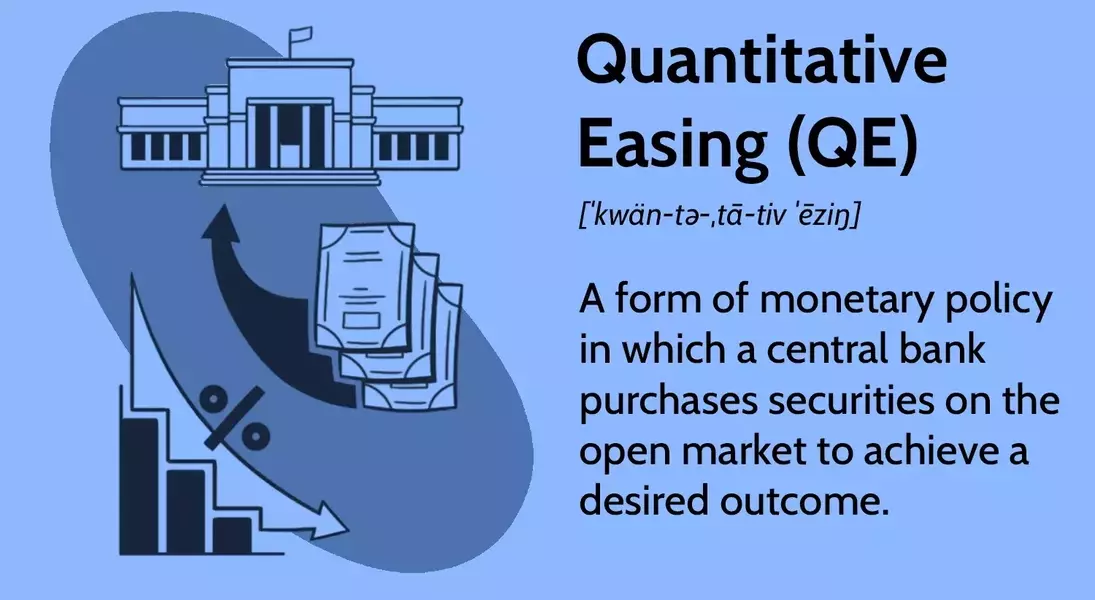
Quantitative Easing (QE) is a crucial monetary strategy employed by central banks to inject liquidity into the financial system and encourage economic activity, particularly when traditional tools are insufficient. This policy involves the large-scale purchase of government bonds and other financial assets, aiming to lower interest rates, increase bank reserves, and ultimately stimulate lending and investment. While implemented globally during various economic crises, the overall effectiveness and potential drawbacks of QE remain subjects of ongoing debate among economists.
Despite its potential benefits, QE carries inherent risks. The increased money supply can lead to inflationary pressures, and in some cases, even stagflation if economic growth does not keep pace. Furthermore, there is no guarantee that banks will translate increased liquidity into greater lending, potentially leading to a 'credit crunch' where cash is hoarded rather than circulated. Additionally, QE can lead to currency devaluation, which might benefit exporters but increase import costs, impacting consumers and production.
The Mechanism of Quantitative Easing
Quantitative Easing represents a significant intervention by central banks, such as the U.S. Federal Reserve, to energize a sluggish economy. This mechanism is primarily activated when standard monetary policies, such as merely reducing interest rates, lose their efficacy, especially when these rates are already at or near zero. The core strategy involves the central bank actively buying various financial securities, most notably government bonds, directly from the open market. This process is designed to achieve a dual objective: first, to increase the overall money supply circulating within the economy, and second, to depress long-term interest rates. By doing so, the central bank essentially floods the banking system with additional reserves, bolstering their capacity and willingness to extend loans. This surge in liquidity is intended to make borrowing more attractive and accessible for businesses and consumers, thereby fostering greater investment, spending, and, consequently, robust economic growth.
During periods of severe economic instability, like the global financial crisis of 2007–2008 and the more recent COVID-19 pandemic, QE policies have been extensively utilized by various central banks worldwide. The rationale behind these actions is to prevent deeper economic contractions and to facilitate a quicker recovery. For instance, by acquiring a substantial volume of government bonds and other eligible assets, central banks directly lower the yields on these securities, which in turn influences other interest rates across the economy. Lower interest rates reduce the cost of borrowing for mortgages, business expansion, and consumer credit, making it more appealing for individuals and companies to take on debt for productive uses. Furthermore, the increased demand for these securities by the central bank can also drive up their prices, leading to a 'wealth effect' where investors feel wealthier and are more inclined to spend. The expanded balance sheets of central banks reflect these massive asset purchases, signaling their commitment to providing ample liquidity and support to financial markets and the broader economy.
Evaluating the Outcomes and Risks of QE
The efficacy of Quantitative Easing as an economic stimulus tool has been a subject of extensive discussion among economists, with mixed conclusions. While many acknowledge that QE played a critical role in mitigating the fallout from major economic crises, such as the 2007–2008 financial crisis, precise quantification of its benefits remains challenging. Central banks globally have applied QE to avert recessions and combat deflation, yet the results have often been ambiguous. Evidence suggests that QE is highly effective in driving down interest rates and can significantly boost stock market performance. However, its broader impact on key economic indicators, such as sustained GDP growth and employment levels, is less clear-cut and subject to ongoing debate. Critics point out that the benefits of QE tend to disproportionately favor borrowers over savers and investors over non-investors, leading to discussions about wealth inequality and the distribution of economic gains.
Implementing Quantitative Easing is not without its substantial risks and potential pitfalls. One of the primary concerns is the risk of inflation. When a central bank dramatically expands the money supply through asset purchases, there is an inherent danger that too much money chasing too few goods could lead to a general rise in prices. This inflationary pressure can manifest with a significant time lag, making it difficult for central banks to anticipate and counteract. A more severe outcome, known as stagflation, occurs if QE fails to generate economic growth while simultaneously causing high inflation and unemployment. Another significant risk is the possibility of limited lending response from commercial banks. Even with abundant liquidity injected into the system, banks might be reluctant to increase lending if they perceive high risks in the market or if businesses and individuals are hesitant to borrow. This 'credit crunch' dynamic can severely undermine the intended stimulative effect of QE. Furthermore, a substantial increase in the money supply can lead to a devaluation of the domestic currency, making exports cheaper and potentially boosting international trade, but simultaneously making imports more expensive, which can increase production costs and consumer prices within the country.
