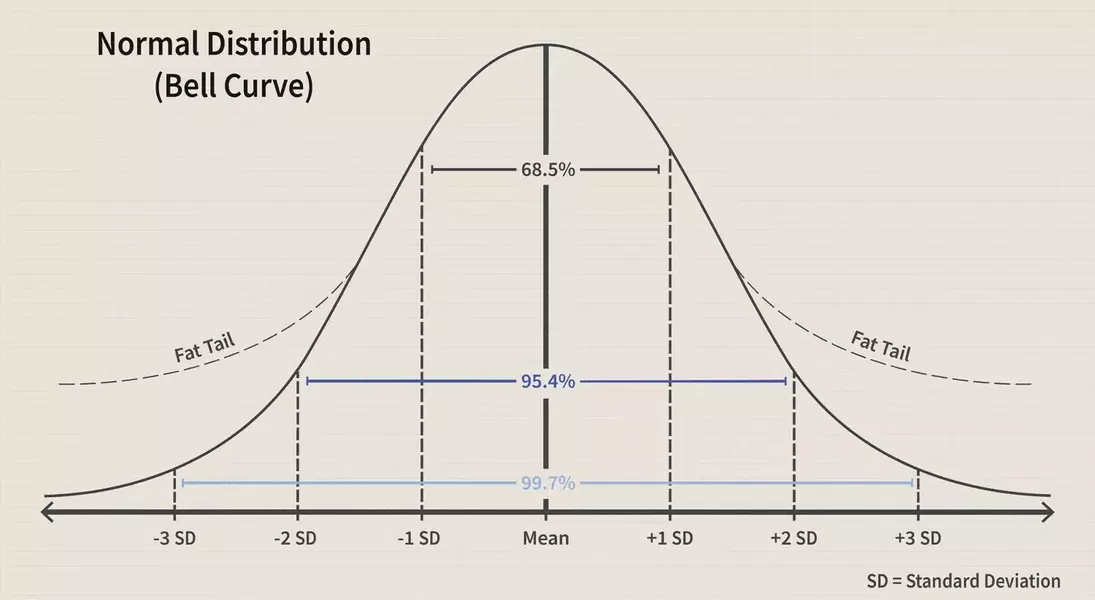
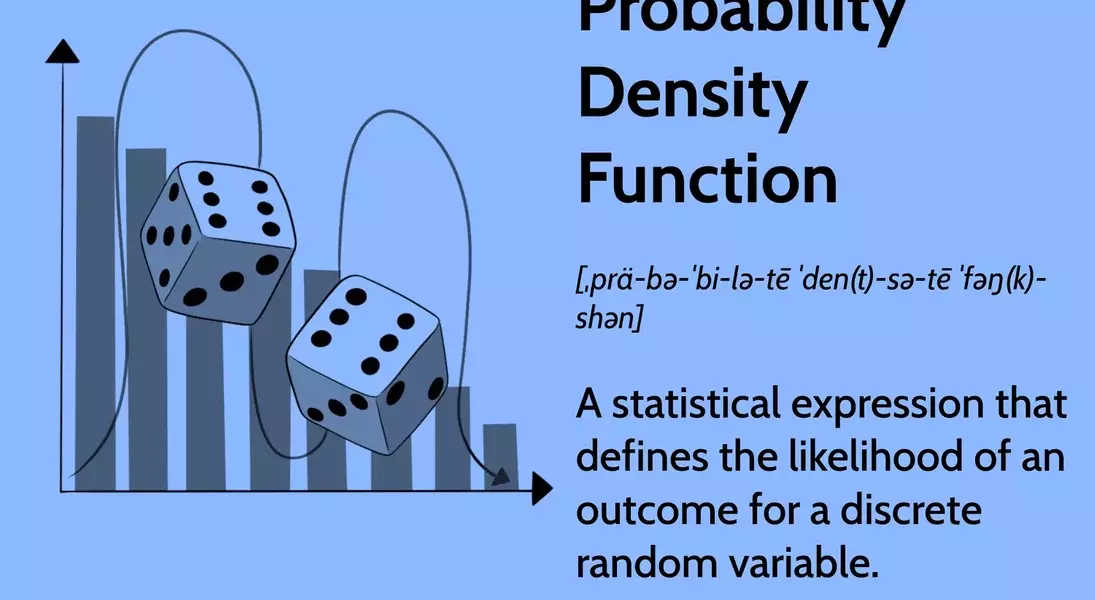
A Probability Density Function (PDF) serves as a vital analytical instrument in finance, offering insights into the likelihood of various outcomes for investments. By visualizing data distribution, typically through a bell curve, financial professionals can assess potential risks and expected returns. The shape of this curve, particularly its skewness, provides critical information for strategic decision-making in the dynamic investment landscape.
This statistical measure not only helps in comprehending how investment returns are distributed across a spectrum of values but also enables a more nuanced understanding of market behavior. It empowers investors and analysts to anticipate future trends and mitigate uncertainties, thereby fostering more confident and well-informed choices in managing financial portfolios.
The Role of Probability Density Functions in Investment Analysis
Probability density functions (PDFs) are fundamental statistical tools extensively utilized by financial analysts to evaluate the potential outcomes and associated risks of investments. By modeling how the probability of an event's outcome is distributed across a range of possible values, PDFs offer a clear picture of the likelihood of different returns. This analytical approach helps in understanding the distribution of investment returns, providing insights into whether the returns are concentrated around a mean or spread out. The visual representation of a PDF, often resembling a bell curve, is particularly effective in highlighting normal market conditions versus scenarios with higher or lower risk profiles. Such visualizations are crucial for identifying deviations from expected outcomes, allowing for a proactive assessment of investment opportunities and threats.
In the realm of investments, statistical methods are indispensable for deciphering market trends and quantifying the risks and rewards inherent in various financial instruments. PDFs enable a systematic approach to analyzing the frequency with which investment returns fall within specific ranges. This understanding is critical for investors and financial experts who aim to make judicious decisions regarding capital allocation. The depiction of a PDF on a graph, with its characteristic bell curve, can reveal whether market risk is balanced or if there is a bias towards either higher potential gains or greater losses. Any deviation from a symmetrical bell curve—known as skewness—provides an immediate visual cue about the underlying risk-reward dynamics of an investment. This comprehensive analysis supports the formulation of robust investment strategies tailored to prevailing market conditions and individual risk tolerances.
Interpreting Skewness and its Implications for Risk and Return
The concept of skewness within a probability density function is pivotal for financial analysts in discerning the asymmetrical nature of investment returns. A curve that exhibits a right skew, characterized by a longer tail extending towards the right, suggests a higher probability of experiencing positive returns, albeit with potentially fewer large negative returns. Conversely, a left-skewed curve, identified by a longer tail on the left side, indicates an increased likelihood of negative returns and greater downside risk. These interpretations are vital for investors to adjust their strategies, opting for investments with right-skewed return distributions when seeking higher upside potential, or exercising caution with left-skewed distributions due to elevated risk. Understanding skewness is therefore paramount for a nuanced assessment of investment profiles, allowing for more strategic and informed decision-making in managing financial portfolios.
Further elaborating on the utility of skewness, observing a right-skewed distribution implies that while most outcomes might cluster around a certain average, there's a non-negligible chance of achieving significantly higher returns. This scenario might appeal to investors with a higher risk appetite looking for growth opportunities. Conversely, a left-skewed distribution points to a concentration of returns on the higher end but with a greater probability of severe negative deviations. This serves as a warning sign for risk-averse investors, prompting them to re-evaluate such investments or hedge against potential losses. The visual representation of these distributions through PDFs allows for quick identification of these characteristics, enabling financial professionals to articulate risk scenarios more effectively to their clients. Consequently, integrating skewness analysis into investment evaluations provides a more holistic view of potential performance, moving beyond simple averages to encompass the full spectrum of possible outcomes and their associated probabilities.
