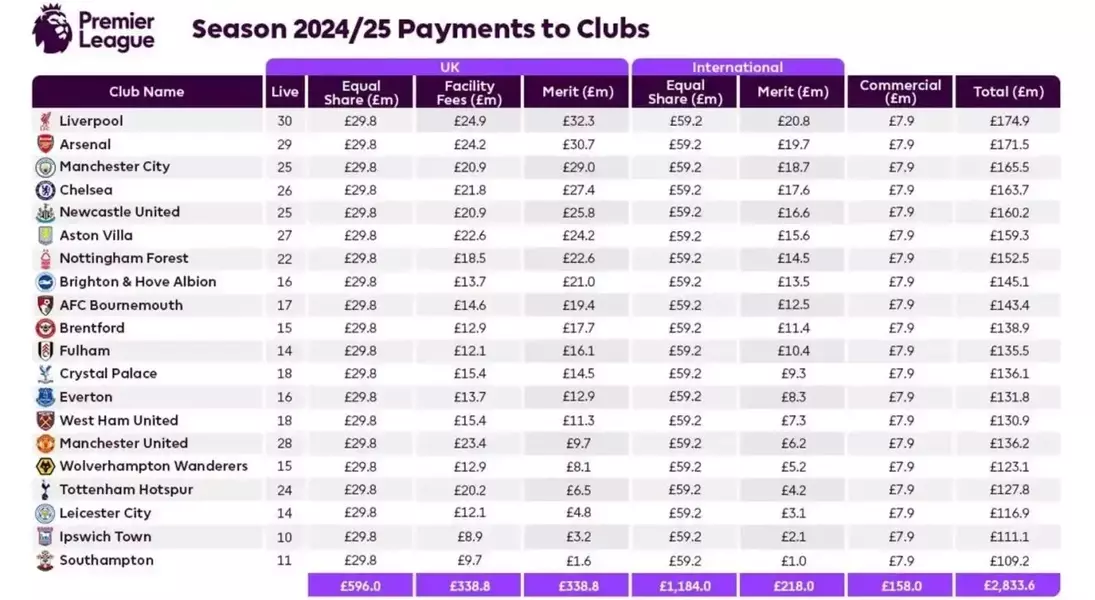
The financial framework of the Premier League is a complex yet highly equitable system, distributing billions of pounds among its twenty participating clubs annually. This intricate revenue model ensures that a significant portion of the league's earnings, derived primarily from broadcasting deals and commercial partnerships, is shared across the board. While a substantial fixed sum is guaranteed to all clubs, the remaining portion is subject to performance-based incentives and exposure through live television broadcasts. For instance, in a recent season, top contenders like Liverpool received a substantial amount, though slightly less than Manchester City's record payout from the preceding year, while even the team finishing last, such as Southampton, still commanded over a hundred million pounds, underscoring the immense financial benefits of Premier League participation.
Beyond the foundational equal share, clubs' earnings are significantly influenced by their final standing in the league and the frequency of their matches being selected for live television. Merit payments, which are tied directly to league position, demonstrate a consistent financial gradient, with each incremental position upward yielding an estimated additional 2.7 million pounds. Furthermore, 'facility fees' are allocated based on the number of times a club's matches are televised. This variable component can lead to notable disparities in total revenue, even among clubs finishing near each other in the league table, as evidenced by teams with more televised games earning more than those positioned above them with fewer broadcast appearances. The upcoming seasons promise even greater financial windfalls, with new, record-breaking domestic television rights deals set to dramatically increase the number of live broadcast matches, thereby potentially boosting facility fees for many clubs.
The financial dynamics of the Premier League reflect a robust ecosystem where success on the pitch and visibility through broadcasting directly translate into significant economic advantages. This structure not only rewards sporting achievement but also incentivizes engagement with a global audience, fostering a cycle of investment and growth within the sport. The transparency and structured distribution of these vast sums underscore a commitment to fair play not just in competition, but in financial opportunity, driving innovation and competitive spirit across the league.
