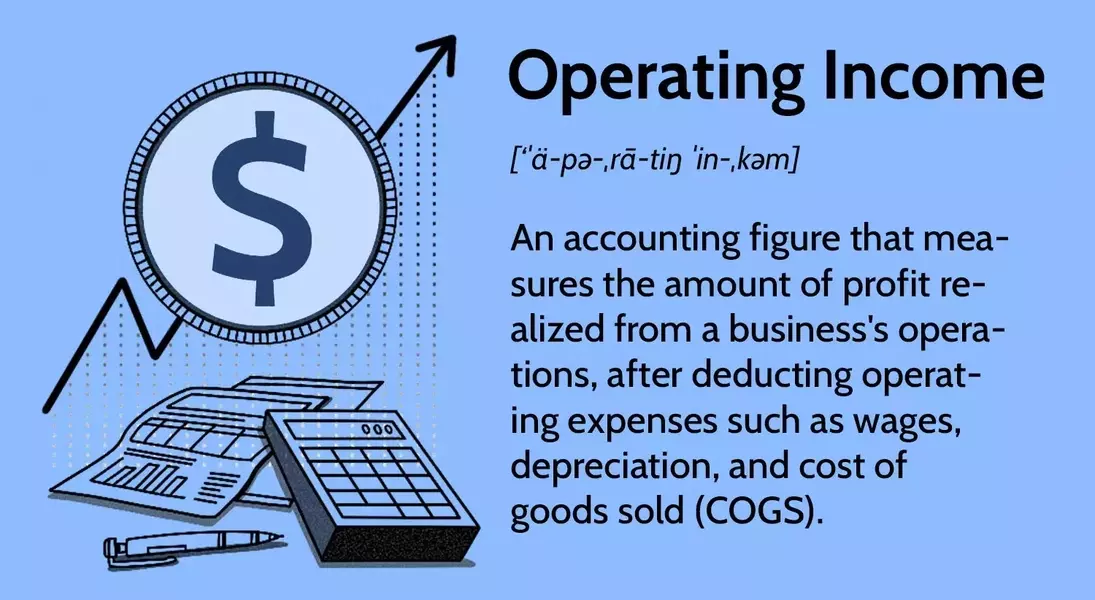
Operating income stands as a pivotal financial indicator, shedding light on a company's profitability derived solely from its core business operations. This metric encompasses all expenses directly tied to running the business, such as wages, depreciation, and the cost of goods sold, while intentionally excluding non-operating income, specific expenses, taxes, and interest payments. By focusing on these core elements, operating income provides a clear and unfiltered view of how efficiently a company transforms its revenue into profit through its primary activities. It is an invaluable tool for investors and management alike, offering insights into a company's operational health and its capacity to generate sustainable earnings.
Operating Income: Deep Dive into Calculation and Significance
In the financial realm, operating income is a central figure in assessing a company's operational efficiency. It represents the earnings remaining after deducting all direct costs associated with producing and selling goods or services, along with general administrative and selling expenses. This figure is critical because it isolates the profitability of a company's primary business model, free from the influence of external financial activities or extraordinary events. For instance, in the dynamic global market, Apple Inc. consistently demonstrates robust operating income. For the three-month period ending March 29, 2025, Apple reported an impressive operating income of $29.589 billion, a notable increase from $27.900 billion in the corresponding period of the previous year. This growth highlights the company's strong performance in its core product and service offerings, alongside effective cost management despite rising operating expenses, which increased from $14.371 billion to $15.278 billion. This financial data, readily available in the company's annual reports, showcases the importance of operating income as a barometer of business health and strategic effectiveness.
The measurement of operating income provides profound insights into a company's fundamental ability to generate earnings from its regular operations. This metric is a cornerstone for strategic decision-making and performance evaluation. Observing trends in operating income allows stakeholders to gauge the effectiveness of a company's operational strategies and its capacity for sustained profitability. It underscores the importance of efficient resource allocation and cost control, serving as a powerful indicator of a business's intrinsic value and potential for long-term success.
