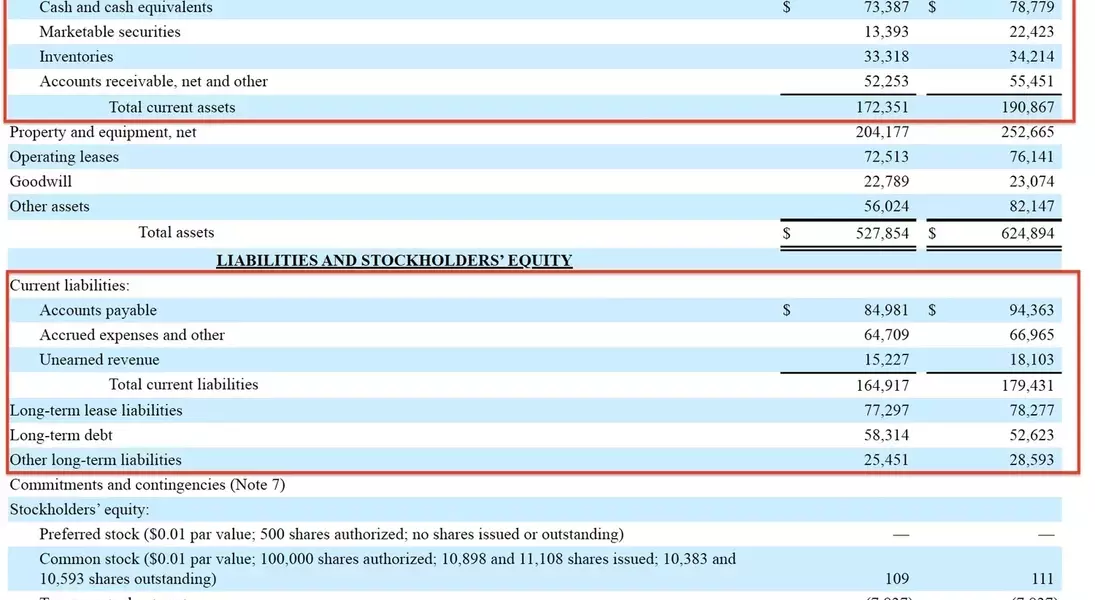

Net debt provides a comprehensive view of a company's financial standing by accounting for both its total liabilities and its accessible cash reserves. This metric is a vital tool for stakeholders, offering a clearer picture of a firm's ability to manage its financial commitments, particularly in dynamic economic environments. Analyzing net debt alongside industry benchmarks and other financial indicators allows for a more nuanced understanding of a company's financial strategy and operational efficiency.
The concept of net debt is fundamental for evaluating a company's true financial burden. Unlike simply looking at gross debt, net debt considers the cash and cash equivalents a company holds, which can be readily used to offset its obligations. This approach helps in understanding the immediate liquidity available to a firm, making it a more robust indicator of financial health. For instance, during corporate mergers and acquisitions, potential buyers closely examine the target company's net debt to gauge its financial resilience and the real cost of acquisition.
The calculation of net debt involves a straightforward formula: sum of short-term debt and long-term debt, minus cash and cash equivalents. Short-term debt typically includes obligations due within a year, such as short-term bank loans and accounts payable. Long-term debt comprises financial commitments extending beyond one year, like bonds and mortgages. Cash and cash equivalents are highly liquid assets that can be converted into cash quickly, usually within 90 days. While some analysts might also include marketable securities in the calculation of liquid assets, the core principle remains consistent: evaluate a company's debt net of its most liquid holdings.
The significance of net debt extends beyond its calculation; its interpretation is heavily dependent on context. A high net debt might not always signal financial distress; it could indicate substantial investments in growth initiatives. Conversely, a very low or even negative net debt (where cash exceeds total debt) might seem ideal but could suggest a company is underinvesting in future opportunities. Therefore, stakeholders must consider the specific industry, growth strategies, and economic climate when assessing a company's net debt position.
For example, consider three hypothetical industrial equipment manufacturers: Evergreen, BlueRidge, and Centerpoint. Evergreen has a net debt of $190 million, BlueRidge $225 million, and Centerpoint $175 million. While Centerpoint appears to have the lowest net debt, BlueRidge possesses a larger cash reserve, which could offer a buffer during an economic downturn despite its higher overall debt. Evergreen's higher debt might be attributed to strategic investments in modernizing its facilities, aiming for long-term profitability. This illustrates that a simple net debt figure needs deeper contextual analysis to prevent misinterpretation.
Financial analysts frequently employ net debt in conjunction with other metrics to gain deeper insights into a company's efficiency and stability. Ratios such as Net-debt-to-EBITDA (Earnings Before Interest, Taxes, Depreciation, and Amortization) measure how quickly a company could repay its debt using its operational income. A ratio below 3.0 is generally considered healthy, though acceptable levels vary significantly across industries. Net-debt-to-equity and Net-debt-to-free-cash-flow are other critical ratios that provide perspectives on debt leverage against shareholder equity and the time required to eliminate debt using generated cash, respectively. Furthermore, net debt is a key component in calculating Enterprise Value (EV), a crucial metric for acquisition analysis and comparative valuations.
Ultimately, a company's net debt reveals a more accurate picture of its financial obligations by offsetting total liabilities with available cash. This enables more informed comparisons between companies, even those with diverse approaches to managing their cash. The appropriate level of net debt is not universal but depends on various factors, including industry dynamics, growth prospects, and economic conditions.
