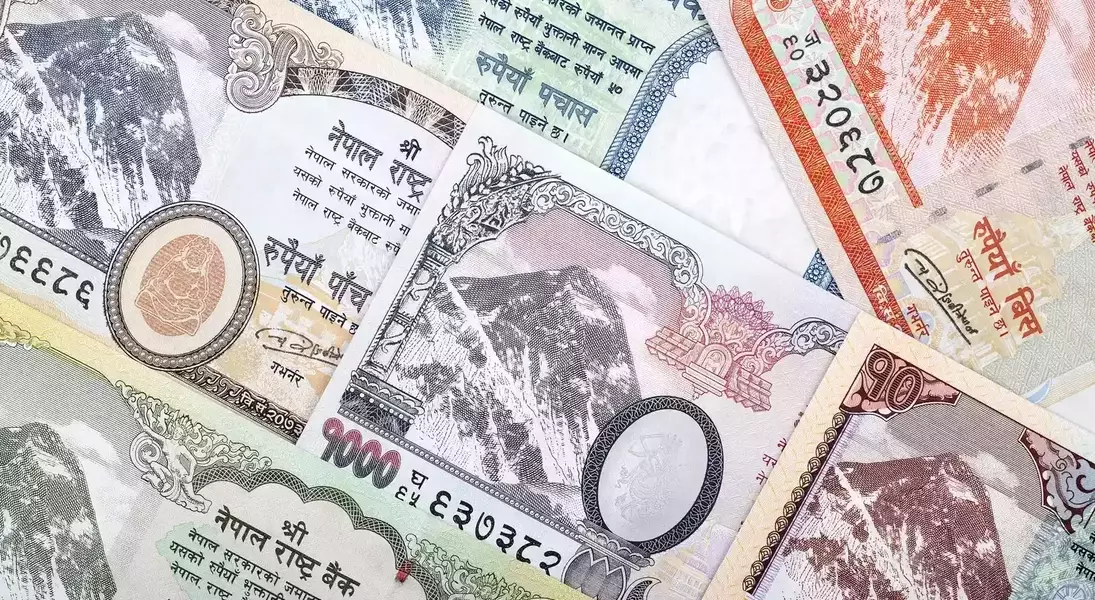
The Nepalese Rupee (NPR) stands as Nepal's official currency, having been established in 1932 to supersede the Nepalese mohar. Its value is rigidly connected to the Indian Rupee (INR), a policy designed to foster exchange rate stability while simultaneously imposing limits on Nepal's monetary policy autonomy. Overseen by the Nepal Rastra Bank, which is responsible for monetary regulation and currency stability, the NPR is issued in a variety of coins and banknotes. Navigating NPR transactions can be complex for foreign visitors due to the existence of multiple exchange rates, including a prominent black market rate. This article delves into the currency's background, its structure, the dynamics of its exchange rates, and the broader economic landscape of Nepal.
The Nepalese Rupee (NPR) was officially introduced in 1932, taking the place of the Nepalese mohar as the nation's primary currency. The Nepal Rastra Bank is the central authority tasked with issuing and regulating the NPR, ensuring monetary stability and managing the country's currency policy. A critical aspect of the NPR's structure is its peg to the Indian Rupee (INR), a fixed exchange rate mechanism that provides a degree of stability but also curtails Nepal's independence in monetary affairs. This peg was officially re-established in 1993, setting the rate at NPR 160 for every INR 100.
The NPR is subdivided into 100 units called paisa, and it circulates in both coin and banknote forms. Coins are available in denominations of 1, 5, 10, 25, and 50 paisa, as well as 1, 2, 5, and 10 rupees. Banknotes are issued in denominations ranging from 1, 2, 5, 10, 20, 50, 100, 500, to 1,000 rupees. The system of multiple exchange rates, encompassing official rates, legal private bank rates, and black market rates, adds a layer of complexity to currency conversions, particularly for international travelers. The black market often offers more advantageous rates, leading to a significant portion of local commercial activities being conducted at these unofficial valuations.
Over the past decades, Nepal's economy has shown variable growth, averaging around 4% between 1965 and 2019. While GDP growth reached 5.63% in 2022, it slowed to 1.95% in 2023. Inflation, which hovered around 9% between 2008 and 2016, decreased to approximately 3.6% in 2017 before slightly increasing to just over 4% in 2021. The NPR has experienced depreciation against the U.S. dollar over the last ten years, with the exchange rate shifting from about 77 NPR per 1 USD in September 2009 to approximately 133 NPR per 1 USD by September 2024. For comparison, as of September 21, 2024, 1 U.S. dollar was equivalent to 133.9 Nepalese rupees, and 1 euro was approximately 148 rupees.
The Nepalese Rupee, Nepal's official currency, is linked to the Indian Rupee at a rate of 160 NPR to 100 INR, a peg established in 1993. This close economic tie to India influences its monetary flexibility. The currency exists in both coin and banknote forms, with 'paisa' as its subunit. Nepal's economic journey has been marked by fluctuating GDP, inflation trends, and a noticeable depreciation against the U.S. dollar. Visitors to Nepal should be aware of the existence of official, legal private bank, and black market exchange rates, and it is advisable to retain receipts for all currency transactions conducted through authorized channels to avoid potential legal ambiguities.
