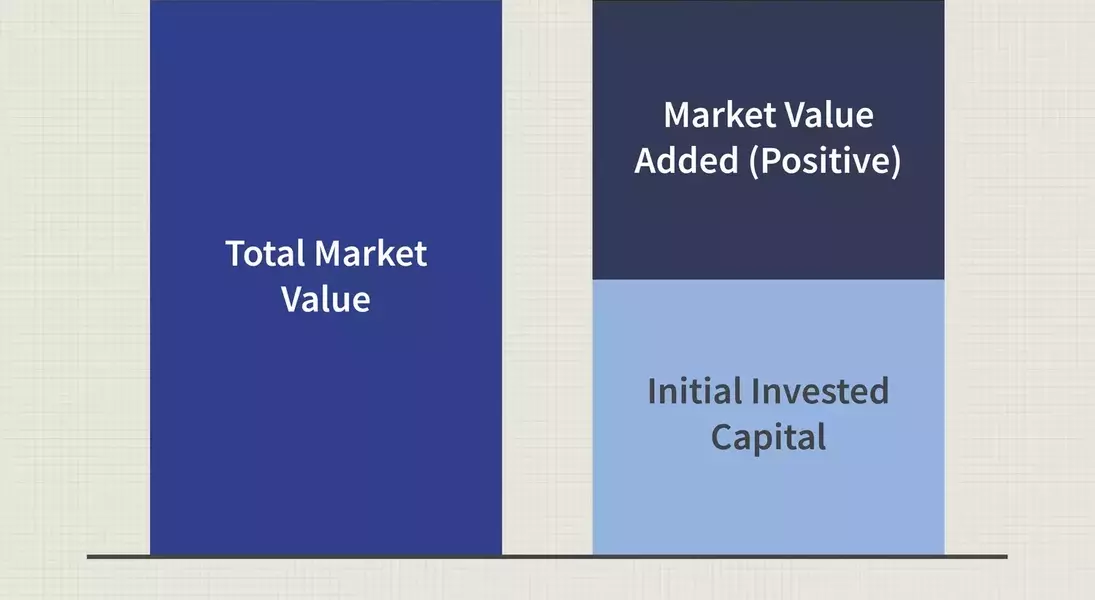
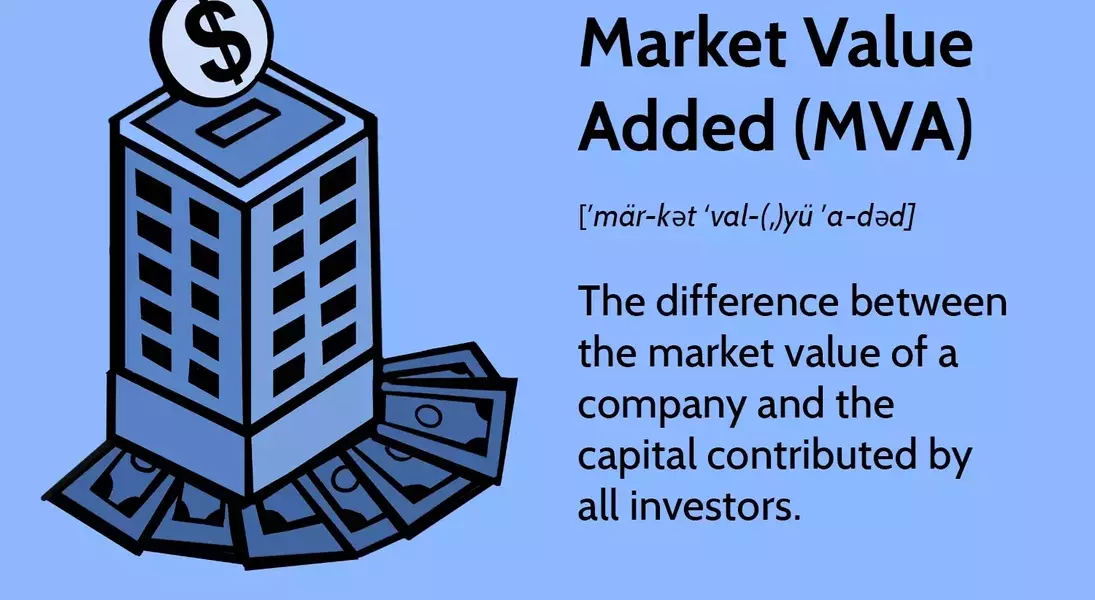
Market Value Added (MVA) serves as a vital indicator in corporate finance, revealing the extent to which a company has enhanced value for its investors. It essentially quantifies the disparity between a company's current market valuation and the total capital infused by its shareholders and debt holders. A substantial MVA reflects robust corporate performance and adept management practices, signaling that the company is proficient in generating returns that significantly surpass the initial capital contributions. This metric is instrumental for investors seeking to assess a company's potential for sustainable, long-term value creation. Its direct relationship with Economic Value Added (EVA) further underscores its importance in evaluating a firm's financial health and its capacity to deliver superior shareholder returns.
Understanding Market Value Added: A Core Metric for Value Creation
Market Value Added (MVA) is a financial metric that quantifies the difference between a company's total market value and the total capital invested in it by shareholders and bondholders. Expressed as the market value of the company minus the capital invested, MVA provides a clear picture of how much wealth a company’s management has generated above and beyond the initial investment. A positive MVA indicates successful value creation, reflecting efficient management and strong operational capabilities that lead to increased shareholder wealth. Conversely, a negative MVA suggests that the company has underperformed, potentially diminishing the value of the capital contributed by investors. This metric is closely related to Economic Value Added (EVA), offering insights into a firm's capacity to deliver sustained long-term returns.
For investors, a high MVA is a compelling signal of a company's robust health and potential for future growth. It demonstrates that management is effectively allocating capital and making strategic decisions that enhance the company's overall market perception and valuation. This attracts further investment, creating a virtuous cycle where increased capital inflows can further boost MVA. However, it's important to note that MVA does not account for direct cash distributions to shareholders, such as dividends or stock buybacks, which are significant components of shareholder return. Moreover, MVA can be influenced by broader market conditions, meaning that a rising stock market might inflate MVA even for companies with less stellar individual performance. Therefore, while MVA is a valuable tool, it should be considered alongside other financial indicators and market contexts.
The Strategic Impact of High Market Value Added (MVA) on Investment and Corporate Governance
Companies that consistently achieve high Market Value Added (MVA) tend to be highly attractive to investors, not only for their potential to generate strong financial returns but also as indicators of superior leadership and robust corporate governance. A significant MVA suggests that the company's management has a proven track record of effectively utilizing invested capital to create substantial wealth for its shareholders, going beyond the initial contributions. This success fosters investor confidence and signals that the company is managed with a long-term vision focused on maximizing shareholder benefits. Such a positive reputation often translates into increased investor interest, which can, in turn, reinforce and further elevate the company’s MVA.
Sustaining or increasing MVA over time establishes a company as a leader in value creation, drawing in more capital and strengthening its market position. This dynamic highlights the importance of MVA as both a performance metric and a magnet for investment. While MVA offers a powerful perspective on value creation, it does have limitations; for instance, it doesn't directly incorporate the impact of dividend payouts or share repurchase programs, which are direct forms of returning capital to shareholders. Furthermore, MVA's sensitivity to general market movements means that strong bull markets can sometimes mask underlying operational weaknesses, leading to an artificially inflated MVA. Despite these nuances, companies like Alphabet and Coca-Cola serve as prime examples of how consistently high MVA, driven by strategic management, can cultivate enduring shareholder value and investor loyalty.
