This article explores the concept of marginal revenue, a fundamental economic principle for businesses. It details how this metric is calculated, its behavior in various market conditions, and its crucial role in guiding production and pricing decisions for optimal profitability.
Unlock Profit Potential: Mastering Marginal Revenue for Business Success
Understanding the Core Concept of Marginal Revenue
Marginal revenue represents the extra income a business gains from selling just one more unit of its product or service. This metric is essential for businesses to understand their earning potential from incremental sales. It's important to note that marginal revenue typically diminishes as production increases, a concept tied to the law of diminishing returns. Unlike profit, marginal revenue solely focuses on the income generated, without accounting for production or sales costs.
Applying Marginal Revenue in Business Operations
Businesses leverage marginal revenue data to predict consumer purchasing patterns, forecast future production requirements, and establish effective pricing strategies. The selling price of a product is largely influenced by supply and demand dynamics, causing marginal revenue to fluctuate with sales volume. As a general rule, an increase in supply often leads to a decrease in price, which in turn reduces marginal revenue. If the marginal revenue turns negative, it signifies that increasing production actually reduces total revenue, typically due to significant price reductions needed to sell additional units.
Visualizing Marginal Revenue: The Downward Slope
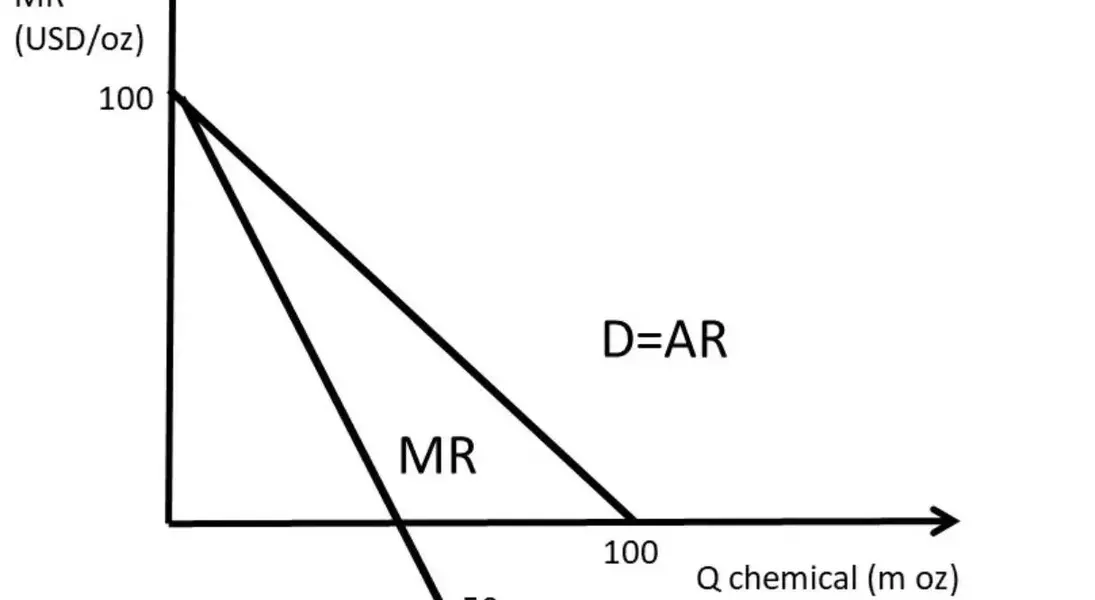
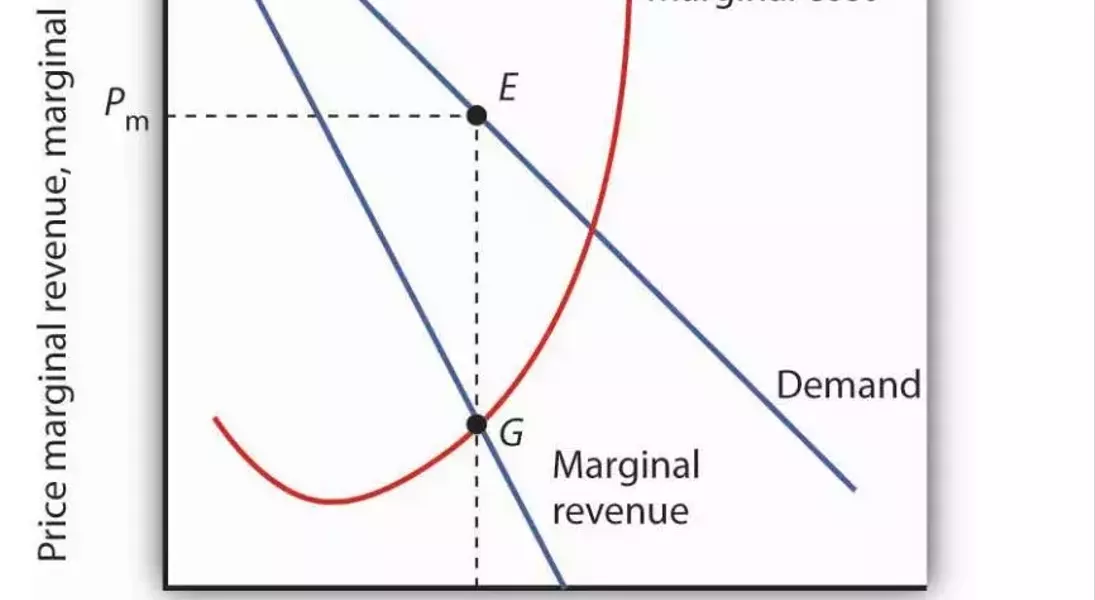
A graphical representation of marginal revenue typically shows a downward-sloping line, with price on the y-axis and quantity on the x-axis. This slope illustrates the inverse relationship between price and demand: as prices drop, demand tends to rise, and vice versa. Consequently, to expand market share, most companies must lower prices, which reduces the marginal revenue from each additional unit. Production becomes unprofitable when marginal revenue falls below marginal cost. The optimal production quantity is reached when marginal revenue and marginal cost are equal, with the corresponding price point located on the demand curve.
Differentiating Marginal Revenue from Average Revenue
Average revenue is calculated by dividing total revenue by the total number of units sold. Comparing marginal revenue with average revenue provides deeper insights. In a perfectly competitive market, where companies are price-takers, marginal revenue, average revenue, and price are equal, as the price remains constant. However, in imperfect competition, businesses must reduce prices to sell more units, meaning marginal revenue will be less than or equal to average revenue and declines faster. For instance, if a company sells a dress for $100 but offers a second at half price, the marginal revenue for the second dress is $50, while the average revenue for both is $75.
The Mechanism of Calculating Marginal Revenue
Marginal revenue is determined by dividing the alteration in total revenue by the alteration in total quantity. This formula is ideal for assessing the revenue change from selling single additional units. However, it can also be adapted to calculate the average marginal revenue over a larger batch of units, such as the increase per unit from 100 to 150 items. The formula is expressed as Marginal Revenue = (Change in Total Revenue) / (Change in Quantity Sold).
Practical Illustration of Marginal Revenue Principles
Consider a scenario where a company initially sells 100 units for $1,000. The following week, it sells 115 units for $1,100. The revenue change is $100, and the quantity change is 15 units. Thus, the marginal revenue for units 101 through 115 is $100 divided by 15, resulting in approximately $6.67 per unit. This example demonstrates how marginal revenue provides insight into the profitability of selling additional units.
Marginal Revenue Versus Marginal Cost: A Strategic Comparison
When marginal revenue surpasses marginal cost, a business generates a profit. For example, if an additional unit costs $80 to produce but sells for $100, the marginal profit is $20. Optimally, a company aims for a point where marginal revenue equals marginal cost. Beyond this point, if marginal costs exceed marginal revenue—e.g., an additional unit costing $110 to produce while still selling for $100—the company incurs a loss. At this juncture, continuing production becomes financially unviable, leading to a halt in output to prevent further losses.
