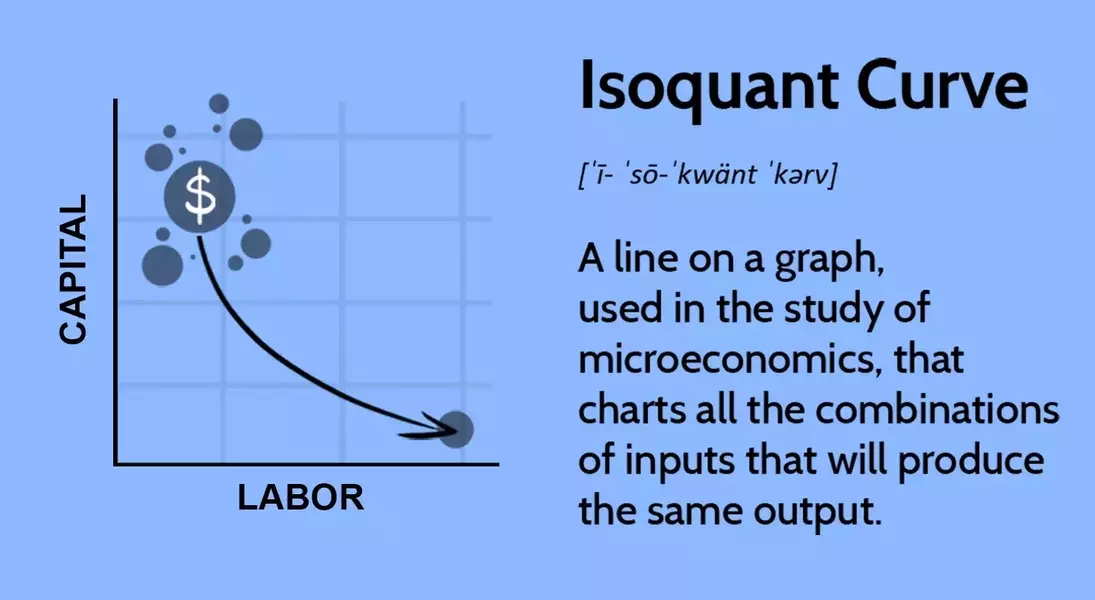
An isoquant curve is a key concept in microeconomics, providing a visual representation of how various combinations of inputs, such as labor and capital, can be utilized to produce a consistent quantity of output. This analytical tool enables businesses to make strategic decisions regarding their production processes, aiming to minimize costs while maximizing output. Understanding isoquants helps companies to efficiently allocate resources and navigate the trade-offs between different factors of production. The curve’s characteristics, including its downward slope and convexity, offer insights into the substitutability of inputs and the varying efficiencies of production combinations.
Isoquant analysis is closely related to the marginal rate of technical substitution (MRTS), which quantifies how much of one input can be substituted for another without altering the total output. While isoquants focus on production efficiency, they stand in contrast to indifference curves, which analyze consumer behavior and preferences. By studying isoquants, firms gain a deeper understanding of the technological relationships between inputs and outputs, helping them to optimize their operational strategies and achieve sustainable growth in a competitive market environment.
The Essence of Isoquant Curves in Production Theory
Isoquant curves provide a fundamental framework in economic analysis, specifically within production theory, to demonstrate how businesses can achieve a constant output level by employing diverse combinations of production inputs. These curves are critical for firms aiming to optimize their resource utilization and manage production costs effectively. By plotting different quantities of labor and capital that yield the same output, an isoquant curve visually illustrates the inherent trade-offs and substitutability between these key factors. This graphic representation helps decision-makers understand the flexibility they have in adjusting their input mix while maintaining their production targets.
The central role of isoquant curves lies in their ability to highlight the technical efficiency of production. Each point on an isoquant curve signifies a specific combination of labor and capital that results in the same level of output. Firms can analyze these curves to identify the most cost-effective methods of production, ensuring that they are operating at their optimal capacity. The principles embedded in isoquant curves are essential for strategic planning, allowing businesses to adapt to changes in input prices or technological advancements by re-evaluating their production functions and making informed choices about resource allocation.
Interpreting Isoquant Characteristics and Applications
Understanding the properties of isoquant curves is essential for their practical application in economic decision-making. These curves typically exhibit a negative slope, indicating that to increase the use of one input while maintaining the same output, the use of the other input must decrease. Furthermore, isoquants are convex to the origin, reflecting the diminishing marginal rate of technical substitution (MRTS), which means that as more of one input is substituted for another, progressively smaller amounts of the latter are needed to compensate for additional units of the former. This convexity underscores the flexibility in substituting inputs without compromising output, but also highlights the changing efficiency of such substitutions.
A critical characteristic of isoquants is that they never intersect, as an intersection would imply that a single combination of inputs could produce two different output levels, which is economically illogical. Higher isoquant curves on a graph represent greater levels of output, demonstrating that increased input usage—whether of capital or labor—leads to higher production volumes. These curves also do not touch either the X or Y axis, as this would suggest that output can be produced using only one input, a scenario rarely feasible in real-world production. Lastly, isoquant curves are often oval-shaped, helping firms to pinpoint the most efficient regions of production and avoid technically inefficient input combinations.
