
This article serves as an introductory guide to the iShares Ethereum Trust ETF (ETHA), offering a detailed exploration of its operational framework, the fundamental differences between Ether and Ethereum, the benefits and drawbacks of indirect cryptocurrency investment, and the various elements that shape ETHA's market behavior. Its primary goal is to demystify prevalent misunderstandings and furnish prospective investors with essential knowledge.
Navigate the Digital Frontier: Unpacking Your Gateway to Ether Investment.
Exploring the iShares Ethereum Trust ETF: Structure and Exposure
The iShares Ethereum Trust ETF (ETHA) provides investors with a regulated avenue for obtaining indirect exposure to Ether, the native cryptocurrency of the Ethereum blockchain. This ETF primarily holds Ether, leading to a high correlation with the price movements of ETH-USD. It's crucial to understand that this analysis focuses on the ETF's mechanics and the nature of indirect ownership, rather than offering a direct investment recommendation for Ether itself. It aims to educate investors on the nuances of crypto investing and to serve as a foundation for informed decision-making.
Demystifying Ether and Ethereum: A Crucial Distinction
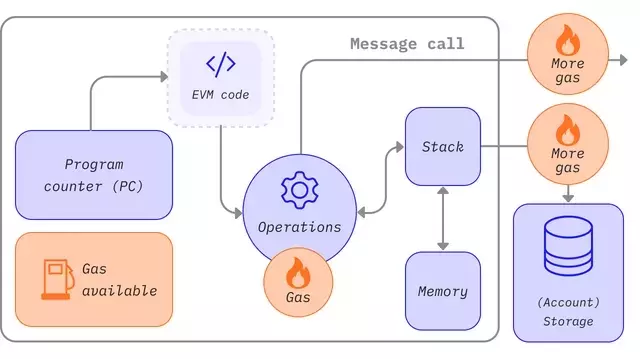
A common misconception among newcomers to the cryptocurrency space is the interchangeability of the terms Ether and Ethereum. However, they represent distinct entities. Ethereum is the decentralized blockchain platform and network where smart contracts are executed and decentralized applications (DApps) operate. Ether, on the other hand, is the digital token used to compensate miners and validators for processing and authenticating transactions on this network. These payments, often referred to as "gas fees," are essential for powering the computational efforts involved in Ethereum Virtual Machine (EVM) operations. While common parlance often blurs these distinctions, it's Ether that is the tradable asset, which ETHA seeks to track.
Understanding the "Trust" in ETHA: A Legal Framework
The term "trust" in the context of ETFs like ETHA can be misleading, as it carries different meanings across various financial structures. Unlike traditional closed-ended Investment Trusts, which have a fixed number of shares, ETHA is an open-ended trust. It operates as a Grantor Trust, a legal wrapper designed to hold a single commodity—in this case, Ether. This structure primarily provides regulatory and legal compliance for investors, especially institutional ones, allowing them to invest in digital tokens. For retail investors, purchasing ETHA means owning shares in these Ether holdings without direct digital ownership, which has significant implications.
The Dual Nature of Indirect Crypto Ownership: Advantages and Disadvantages
Investing in ETHA, a Delaware Statutory Trust, entails both benefits and limitations. The fund holds physical crypto assets through a custodian, such as Coinbase Prime. While this structure offers regulatory protection and simplifies the investment process by eliminating the need for direct crypto wallet management, it also means investors cannot directly engage in blockchain transactions, utilize DApps, or enjoy the same level of privacy and control as with direct Ether ownership. However, the indirect approach mitigates risks associated with securing seed phrases, navigating complex technical setups, and the irreversibility of erroneous blockchain transactions.
Navigating ETHA Investments: Key Considerations
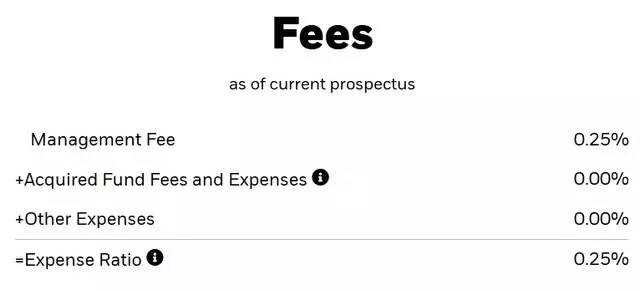
ETHA, launched on June 24, 2024, passively tracks the price of Ether, holding it as its sole portfolio asset. The fund's market value and net assets under management reflect the value of its Ether holdings. As a passively managed fund, its expense ratio (sponsor fee) is 0.25%. Shares are created and redeemed in batches by authorized participants (APs) on NASDAQ, ensuring that the Trust does not employ derivatives leverage or actively trade Ether. It simply reflects the price movements of its underlying asset.
Addressing Risks: Volatility and Market Dynamics
A primary risk associated with an ETHA investment is its direct correlation with Ether's price, which is subject to significant volatility inherent in cryptocurrencies. With an annualized volatility of 73%, ETHA mirrors the speculative nature of the crypto market. Unlike other funds, ETHA does not face turnover risk due to rebalancing; its asset under management (AUM) changes only through the creation and redemption of share baskets. This high volatility is a given in the crypto space, though Ether, as a dominant cryptocurrency, exhibits relatively lower volatility compared to smaller tokens.
Interpreting ETHA's Performance: Beyond Simple Price Tracking
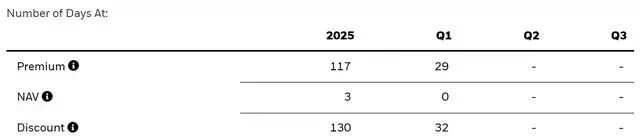
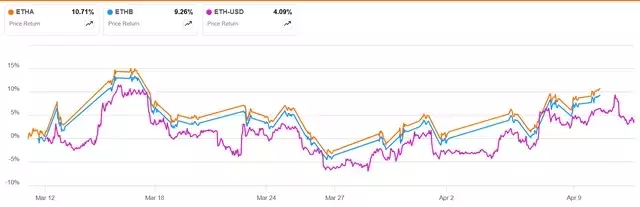
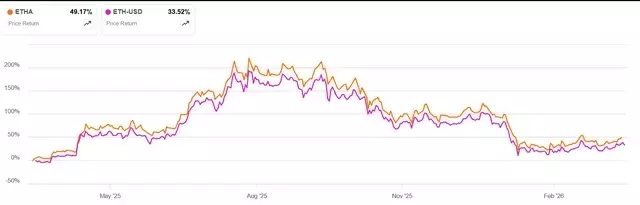
Understanding ETHA's performance relative to ETH-USD requires appreciating several market dynamics. ETHA, unlike its newer counterpart iShares Staked Ethereum Trust ETF (ETHB), does not engage in staking activities, which generate income by "lending" Ether for network operations. Yet, ETHA may appear to outperform ETH-USD due to strong institutional demand, particularly in anticipation of significant Ethereum blockchain upgrades. This demand can lead to ETHA trading at a premium to its Net Asset Value (NAV). Additionally, differences in trading hours between the 24/7 crypto market and traditional stock exchanges can create price gaps, and short-covering by institutional investors can also influence ETHA's perceived outperformance. However, historical data shows ETHA has more frequently traded at a discount to NAV.
