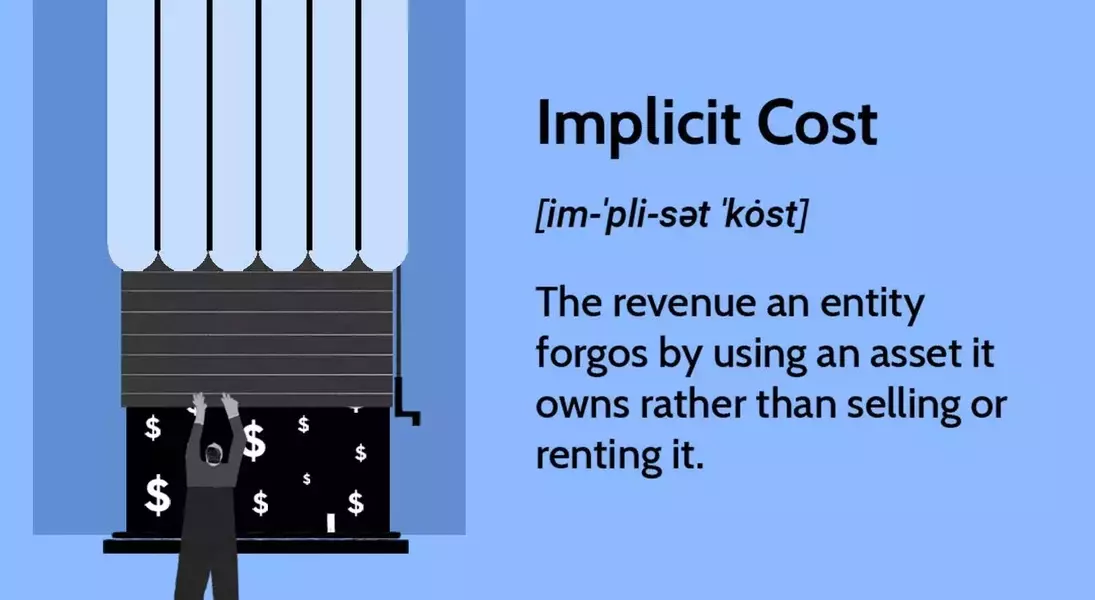
Implicit costs, often referred to as hidden or notional expenses, represent the value of opportunities foregone when a business chooses to utilize its own resources instead of generating income from them elsewhere. These costs do not involve direct cash transactions and are therefore not typically recorded in standard accounting practices. However, they are vital for calculating a company's true economic profit, which accounts for both explicit, out-of-pocket expenses and these subtle, unrecorded opportunity costs. Understanding and considering implicit costs is essential for sound financial decision-making, as they can significantly influence resource allocation strategies and ultimately, a business's long-term success.
The Unseen Financial Landscape: Unpacking Implicit Costs
In the dynamic realm of business, distinguishing between various financial outflows is paramount for accurate economic evaluation. Implicit costs, a category often overlooked in conventional bookkeeping, are fundamentally opportunity costs that arise when a business uses its owned assets for a specific purpose rather than leveraging them for external income generation. Unlike explicit costs, which are tangible, out-of-pocket expenses such as rent, salaries, and utility bills, implicit costs do not involve an actual exchange of money. Yet, their impact on a company's economic profit and strategic planning is profound.
Consider a small business owner in the early stages of their venture. They might forgo a personal salary to reinvest profits and stimulate growth. This uncompensated labor, though not a direct cash expenditure, represents an implicit cost—the salary they could have earned working elsewhere. Similarly, a company utilizing its own building for operations, rather than renting it out to a third party, incurs an implicit cost in the form of lost rental income. These scenarios underscore that implicit costs are not losses in the traditional sense, but rather missed revenue opportunities. They highlight the necessity of a holistic financial perspective, where economic profit is calculated by subtracting both explicit and implicit costs from total revenue.
While traditional accounting primarily focuses on explicit costs due to their quantifiable nature and direct impact on financial statements, corporate finance decision-makers must integrate implicit costs into their evaluations. This is particularly crucial when assessing the efficiency of resource allocation. By weighing the potential income from alternative uses of assets against the benefits derived from their current internal application, businesses can make more informed choices that maximize overall economic value. For instance, allocating existing employee time to train a new hire involves an implicit cost equal to the revenue that employee could have generated during that training period. Recognizing these hidden costs allows for a more comprehensive understanding of a project's true cost-benefit analysis and strategic alignment.
Reflections on Hidden Value: The Strategic Importance of Implicit Costs
The exploration of implicit costs reveals a fundamental truth in business: true financial performance extends beyond mere cash flow. The concept of implicit cost, as a form of opportunity cost, urges businesses to think critically about every resource and its potential alternative uses. This perspective is not about finding fault, but about optimizing value. It teaches us that even when money isn't leaving the bank, a valuable economic 'cost' might be incurred by choosing one path over another. This understanding can fundamentally shift how management views efficiency, investment, and growth strategies, pushing them towards decisions that not only generate accounting profits but also maximize economic returns by carefully considering all forgone opportunities.
