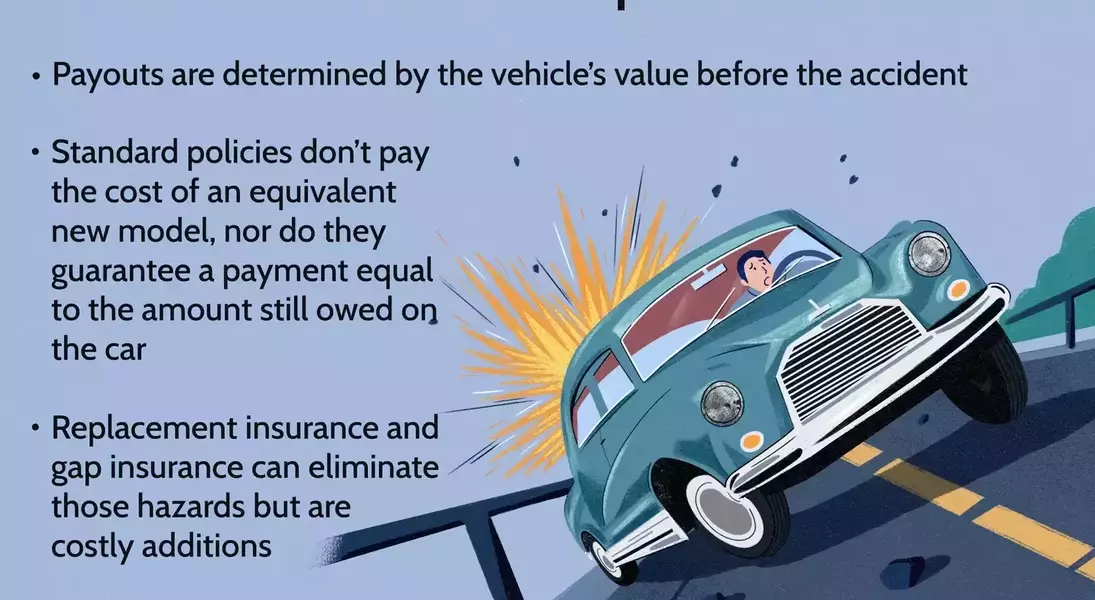
When a vehicle is involved in an accident and deemed a total loss, insurance companies compensate the owner based on their valuation. This process often leaves policyholders feeling frustrated, as the offered amount is frequently less than anticipated, sometimes insufficient even to cover outstanding car loans. The lack of transparency in the valuation methods employed by insurers further complicates this, making it challenging for consumers to dispute low offers effectively.
Upon reporting a car accident, an insurance adjuster evaluates the damage to determine if the vehicle is a total loss. This classification occurs if repair costs exceed a specific percentage of the car's pre-accident value, typically ranging from 51% to 80%, with some states setting their own thresholds, like Alabama's 75%.
If the vehicle is totaled, the adjuster assesses its value immediately before the accident, disregarding the damage incurred. This initial appraisal aims to estimate a fair market cash offer. Subsequently, a third-party appraiser is engaged to provide an independent valuation, ensuring objectivity. The insurance company then considers both appraisals when formulating its offer to the policyholder, aiming to minimize any perception of bias or unfairness in the process.
A critical distinction lies between the actual cash value (ACV) and the replacement cost. ACV, the basis of most insurance offers, represents the amount a buyer would reasonably pay for the car just before the accident, factoring in depreciation, wear and tear, mechanical issues, cosmetic flaws, and market demand. For instance, State Farm explicitly outlines that its valuation considers the car's year, make, model, mileage, condition, and major options, deducting for deductibles and applicable taxes.
Depreciation significantly reduces a car's ACV, especially for newer vehicles. A new car can lose 9% to 11% of its value the moment it leaves the dealership, with depreciation accelerating to 20% within the first year. This means the ACV will almost always be less than the replacement cost, which is the amount needed to purchase a similar new vehicle. To bridge this gap, policyholders can opt for replacement cost insurance, which, despite higher premiums, ensures compensation for a new car in the same class.
In situations where a relatively new car is totaled, the insurance payout based on ACV might not cover the outstanding loan balance, leading to a "deficiency balance." This is particularly common if the car was purchased with a minimal or no down payment. To mitigate this risk, gap insurance can be added to a policy. This coverage pays the difference between the ACV and the remaining loan balance, protecting the policyholder from financial liability for a vehicle they no longer possess.
Understanding the terminology and processes insurance companies use for vehicle valuation empowers policyholders. Familiarity with concepts like actual cash value and the impact of depreciation, coupled with knowledge of supplementary coverages like gap and replacement cost insurance, can significantly enhance a policyholder's ability to negotiate a more favorable settlement. This proactive approach can alleviate the stress and financial burden associated with a totaled vehicle claim.
