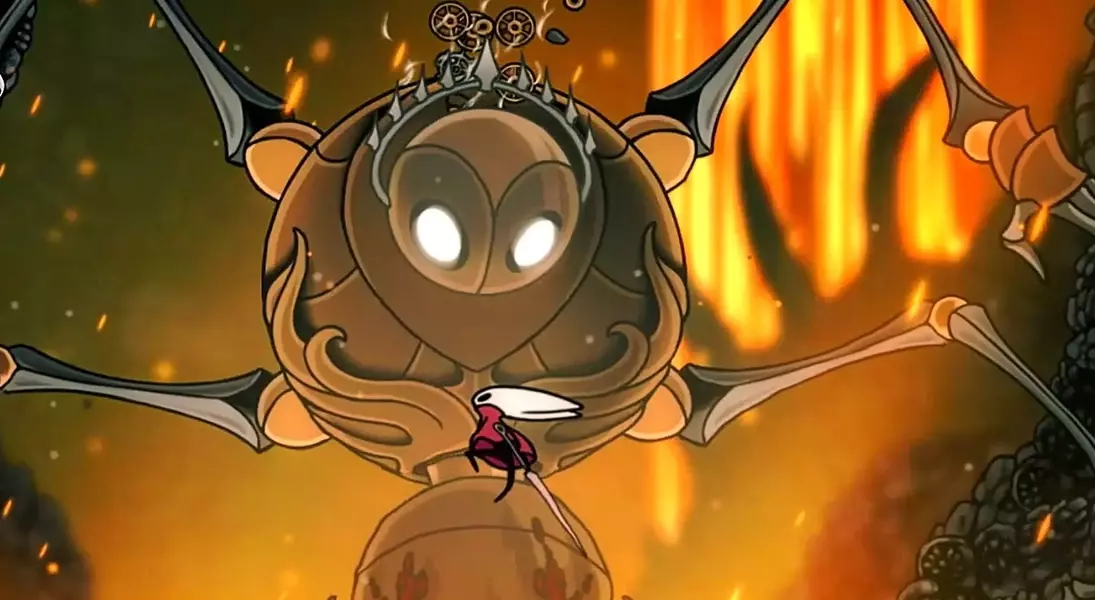
Game developers from Team Cherry recently elucidated why their latest creation, Silksong, presents a significant challenge to players, a point of general consensus among its enthusiasts. At an Australian Centre for the Moving Image (ACMI) exhibition, co-director Ari Gibson highlighted that the character Hornet's intrinsic agility and prowess mandated a more sophisticated and intricate adversary design. This emphasis on enhancing enemy intelligence aimed to match Hornet's elevated capabilities, thereby increasing the overall difficulty.
Expanding on this, co-director William Pellen further elaborated that Hornet's adversaries were specifically engineered with improved methods to counteract her evasive maneuvers. This design philosophy aimed to ensure that enemies could effectively 'check' and engage with the player, presenting a consistently demanding experience. Although the intention was to elevate all gameplay elements to Hornet's level, the initial reception prompted a subsequent patch that slightly eased certain early-game boss encounters, and the community also saw modders developing modifications to reduce the game's difficulty on PC platforms.
Despite its challenging aspects, Hollow Knight: Silksong, as a Metroidvania title, deeply integrates exploration as a core mechanic. Gibson noted that this design choice allows players some degree of flexibility in managing the game's difficulty. Should players encounter particularly tough bosses or situations, the expansive world offers opportunities for alternative paths, strategic learning, or even bypassing certain challenges entirely, rather than facing an insurmountable barrier.
Ultimately, the rigorous design of Silksong, while demanding, encourages players to fully engage with its rich world and mechanics. The developers' commitment to creating a challenging yet navigable experience ensures that persistence and strategic exploration are rewarded, fostering a deep sense of accomplishment and discovery within the game's intricate environment.
