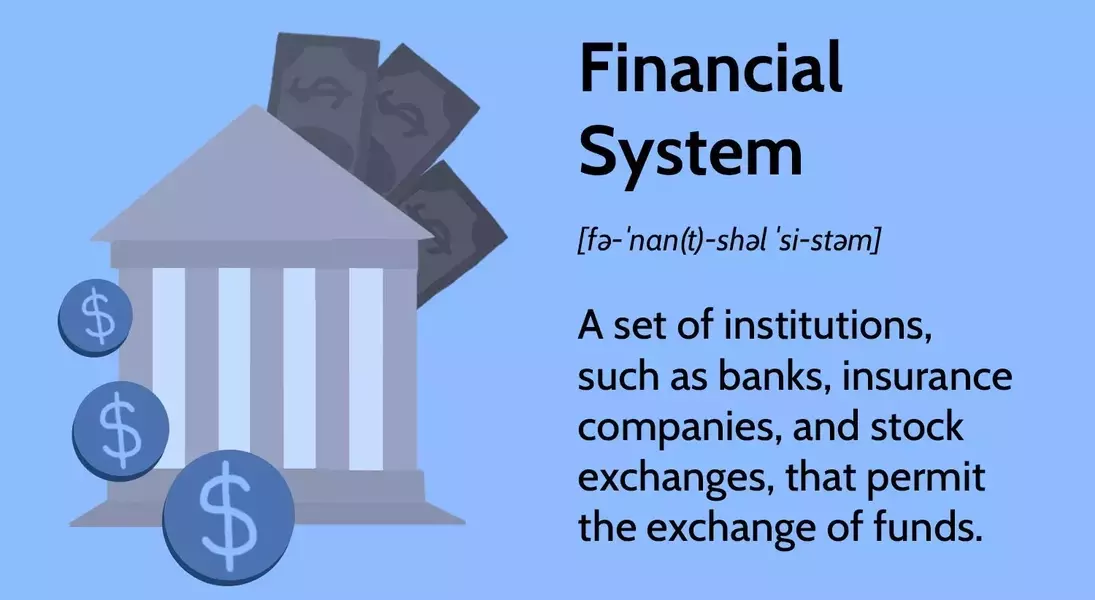
The financial system serves as the backbone of economic activity, allowing for the efficient allocation of monetary resources across various sectors. This intricate web involves a diverse range of institutions, from local banks to global financial bodies, and operates under various frameworks including market-driven mechanisms and centralized planning. Understanding its components and functions is essential for anyone engaged in economic transactions, from individual consumers to multinational corporations. The stability and effectiveness of this system directly impact economic performance, resource distribution, and overall societal welfare.
This comprehensive system ensures that capital can be raised for both immediate spending and long-term investments, connecting those with surplus funds to those in need. It encompasses the rules, regulations, and mechanisms that govern how financial dealings are executed, ensuring transparency and order in the flow of money and credit. Whether navigating personal finances or analyzing global economic trends, grasping the fundamental principles of the financial system is crucial for informed decision-making and participation in the economic landscape.
The Core Functioning of Financial Systems
A financial system represents a collection of structures, policies, and conventions designed to facilitate the exchange of capital and credit across an economy. These systems operate at various levels, from individual business entities to comprehensive global frameworks, encompassing a wide array of financial participants such as banking establishments, insurance providers, and stock exchanges. Their primary purpose is to enable the fluid movement of monetary assets, supporting consumption and productive investments by connecting those who have capital to offer with those who require it. This intricate network is governed by specific regulations and practices that dictate the terms of financial engagements, ensuring systematic transactions and resource allocation.
The operational dynamics of financial systems can vary significantly, incorporating elements of market-driven approaches, centralized command structures, or a combination thereof. In market-centric models, participants, including borrowers, lenders, and investors, engage in negotiations for loans and other financial instruments, trading various forms of money such as cash, future claims (credit), or equity. These markets also deal in complex derivatives, whose values are tied to underlying assets, and operate under the fundamental principles of supply and demand. Conversely, centrally planned systems, often seen within single firms or command economies, involve a central authority dictating financial allocations. Most contemporary financial systems blend these approaches, with businesses, for instance, operating within a broader market while managing internal finances through centralized planning. All such systems are subject to stringent regulatory oversight to protect consumers, ensure economic stability, and influence overall economic performance.
Participants and Impact of the Financial Framework
The financial framework consists of numerous elements that function at different scales. At the micro-level of an individual enterprise, it includes internal accounting practices, income and expenditure schedules, and balance sheet verification. On a broader regional scale, the financial framework facilitates exchanges between lenders and borrowers through institutions such as banking facilities, securities markets, and financial clearinghouses. Expanding to a global perspective, this framework integrates all financial institutions, borrowers, and lenders worldwide. Key international entities like the International Monetary Fund, central banks, national treasuries, and the World Bank, alongside major private international banks, are integral to this global financial framework.
Interactions with the financial framework are commonplace in daily life, whether applying for credit, depositing funds, or cashing a check. This interconnected system is crucial for almost every economic actor. Businesses rely on it to secure funding through equity issuance or borrowing for their operations and growth. Individual consumers engage with the system for saving, borrowing, and various other monetary transactions. The stability of financial frameworks is paramount for efficient resource allocation, consistent employment levels, and effective risk management. However, this stability can be compromised by various factors, including political instability, trade imbalances, natural calamities, public health crises, and sudden inflationary pressures. Essentially, financial frameworks are indispensable for enabling the borrowing, lending, investing, and financing activities that underpin modern economic life.
