
Options are intricate financial instruments, yet their fundamental concepts are readily graspable. When employed judiciously, they unlock numerous financial prospects, but improper usage can lead to significant losses. Novices venturing into the options market should dedicate ample time to comprehending its complexities and honing their skills before committing substantial capital.
Delving into the World of Options Trading
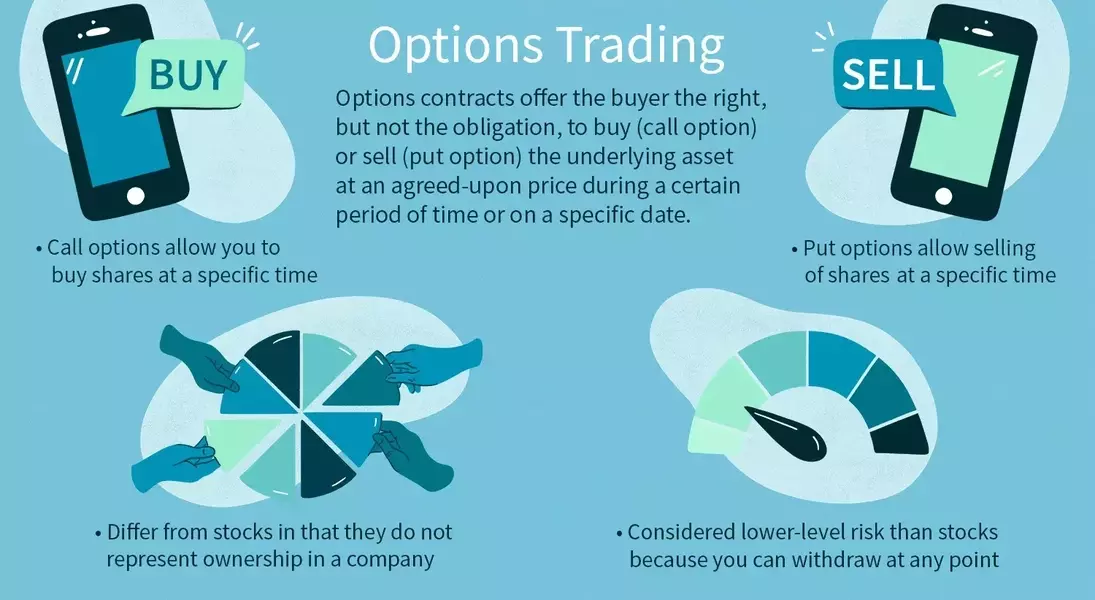
Options represent financial agreements that bestow upon their proprietor the prerogative, though not the compulsion, to acquire or divest a financial instrument at a predetermined valuation within a specified timeframe. These instruments are accessible across a diverse array of financial products, including equities, funds, commodities, and market indices. Like most asset categories, options can be procured through brokerage investment accounts.
While options trading might initially appear daunting, its core tenets are easily mastered. Investor portfolios frequently comprise multiple asset classes, such as stocks, bonds, exchange-traded funds (ETFs), and mutual funds. Options introduce an additional asset class, offering distinct advantages that cannot be replicated solely through trading stocks and ETFs.
At the heart of options lie three pivotal characteristics: the strike price, which is the predetermined value at which an option can be executed; the expiration date, marking the final day an option remains valid before becoming worthless; and the option premium, which is the cost incurred when purchasing an option.
Options serve as potent tools capable of enriching an individual's portfolio by providing avenues for income generation, asset protection, and amplified leverage. Tailored option strategies typically exist to align with an investor's specific objectives across various market scenarios.
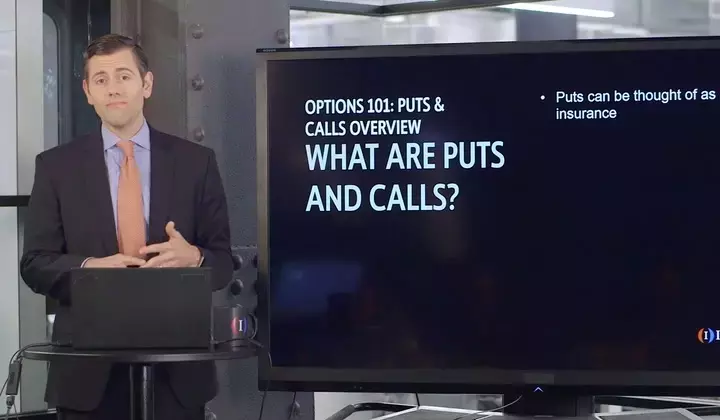
One primary utility of options is their capacity to act as a safeguard against a downturn in the stock market, thereby mitigating potential losses. Indeed, options were initially conceived for this very purpose. Employing options for hedging aims to curtail risk at a manageable expense. Akin to insuring one's home or vehicle, options can be deployed to shield investments from market declines.
For instance, consider an investor keen on acquiring technology stocks while simultaneously desiring to cap potential losses. By strategically employing put options, this investor can restrict downside risk while cost-effectively partaking in all upward market movements. Conversely, for those engaged in short-selling, call options offer a mechanism to limit losses should the underlying asset's price move adversely against their position, particularly during a short squeeze.
Options also lend themselves to speculative endeavors, serving as a means to wager on future price trajectories. A speculator might anticipate an appreciation in a stock's value, perhaps influenced by fundamental or technical analysis. Rather than purchasing the stock directly, a speculator might opt for a call option, which provides leverage. An out-of-the-money call option, for example, might cost only a fraction of the full price of a $100 stock.
Options are classified as derivatives, meaning their value is intrinsically linked to, or 'derived from,' the price of another asset. The valuation of option contracts primarily revolves around assessing the probabilities of future price events. The higher the likelihood of an event occurring, the greater the cost of an option that benefits from that event. For example, the value of a call option typically increases as the price of the underlying stock rises.
Conversely, as the time remaining until expiration diminishes, so does an option's value. This phenomenon, known as time decay, occurs because the probability of significant price movement in the underlying stock decreases as the expiration date approaches. Consequently, a one-month option will inherently be less valuable than a three-month option, as the extended timeframe offers a greater chance for favorable price action.
Volatility also plays a crucial role in option pricing, with increased volatility leading to higher option prices. This is because greater uncertainty fosters larger price swings, thereby elevating the probability of substantial upward or downward movements. Thus, heightened volatility directly correlates with a higher option price, underscoring the inherent link between options trading and market volatility.
On most U.S. exchanges, a single stock option contract typically represents 100 shares. Therefore, to ascertain the total expenditure for a call option, the contract premium must be multiplied by 100.
In the vast majority of cases, option holders realize profits by closing out their positions before expiration. This entails selling their options in the market, while option writers repurchase their positions to close them. Data from the Options Industry Council indicates that over the long term, more than 70% of option contracts are closed prior to expiration, approximately 20% expire valueless, and only about 5% are ultimately exercised.
Variations in option prices can be attributed to their intrinsic and extrinsic (time) values. An option's premium is a composite of these two elements. Intrinsic value refers to the in-the-money amount of an option contract; for a call option, this is the extent to which the stock's price exceeds the strike price. Time value, conversely, represents the additional sum an investor is willing to pay above the intrinsic value, reflecting the possibility of future favorable price movements. In practice, options almost invariably trade at a premium to their intrinsic value, as the probability of an event, however remote, is rarely absolute zero.
Navigating the Options Market: A Trader's Perspective
The options market presents both exciting opportunities and considerable risks. From a trader's perspective, the power of options lies in their versatility for hedging, speculation, and income generation. However, this power demands respect and thorough understanding. The analogy of insuring a house or car against damage highlights the protective aspect of options, offering peace of mind in volatile markets. Yet, the unlimited risk potential for sellers of uncovered options serves as a stark reminder of the importance of disciplined risk management and a clear understanding of one's obligations.
The current market landscape, characterized by rapid technological advancements and increasing access to financial markets, makes options trading more accessible than ever. This accessibility, however, necessitates a higher degree of financial literacy and caution. The intricate interplay of strike price, expiration date, premium, time decay, and volatility requires continuous learning and adaptation. For new participants, starting with a simulated trading environment or engaging in thorough educational programs can be invaluable. Even seasoned traders benefit from continuous analysis and refinement of their strategies to navigate the ever-evolving market dynamics effectively.
