The Federal Deposit Insurance Corporation (FDIC) maintains a confidential roster known as the Problem Bank List, identifying U.S. financial institutions at risk of insolvency. This critical tool helps the FDIC monitor the health of the banking sector, flagging banks and thrifts that exhibit significant financial, managerial, or operational weaknesses. While the specific identities of banks on this list are kept private to avert public panic and bank runs, the FDIC periodically releases the aggregate number of institutions under scrutiny. Inclusion on this list means a bank is under heightened regulatory oversight, with the FDIC prepared to intervene if its financial viability continues to deteriorate.
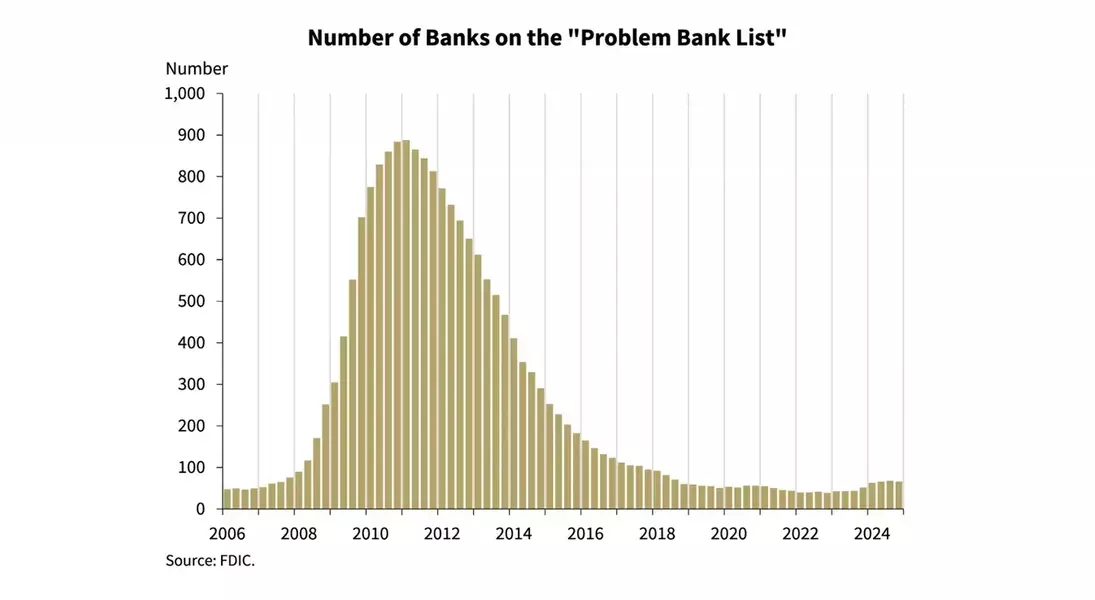
Historically, the number of banks on this list has fluctuated, often reflecting broader economic conditions. For instance, the aftermath of the 2008 financial crisis saw a dramatic surge in troubled institutions, with the list peaking at nearly 900 by 2011. This period also correlated with a significant rise in bank failures, underscoring the list's predictive power. More recently, events like the 2023 failures of Silicon Valley Bank and Signature Bank highlighted the FDIC's role in managing such crises, including extending deposit protections beyond standard limits to stabilize the financial system. The FDIC's oversight, coupled with its deposit insurance mechanisms, aims to protect depositors and maintain confidence in the banking system, even as institutions navigate periods of stress.
The FDIC Problem Bank List: A Confidential Watchlist
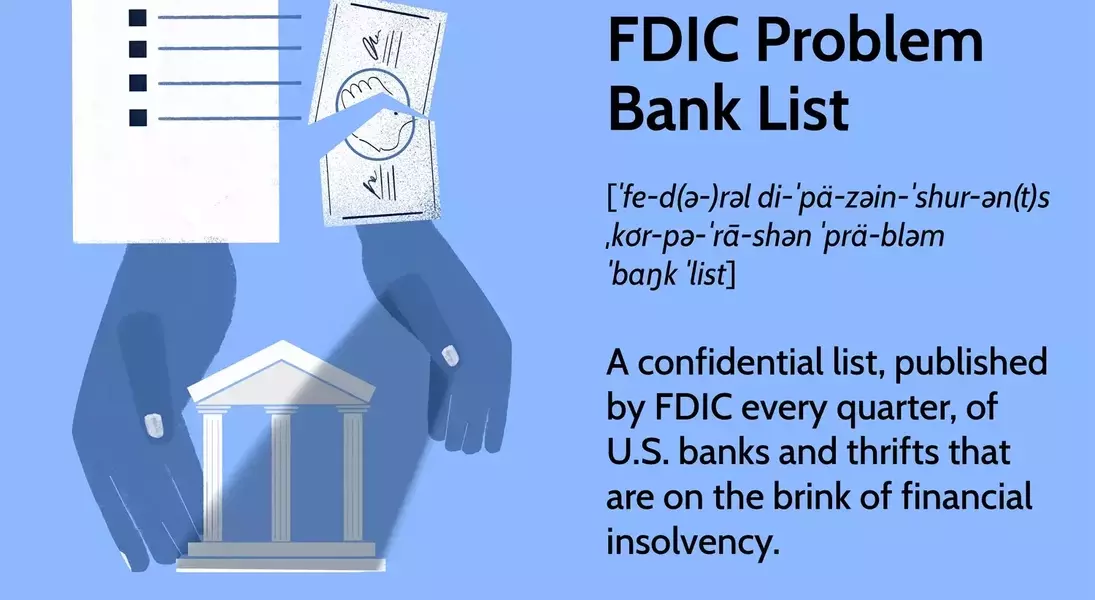
The FDIC Problem Bank List serves as a critical, yet confidential, mechanism for the Federal Deposit Insurance Corporation to monitor U.S. banks and thrifts teetering on the edge of financial instability. This internal compilation is updated quarterly, encompassing institutions insured by the Deposit Insurance Fund that exhibit significant vulnerabilities in their operations, management, or financial health. The primary objective is to identify these at-risk entities early, allowing regulatory bodies to intensify supervision and potentially implement corrective actions before problems escalate into full-blown crises. The confidential nature of the list is paramount, designed to prevent public fear and potential bank runs that could exacerbate a bank's precarious situation. Despite the secrecy surrounding individual bank names, the FDIC transparently reports the total number of institutions on this list to the public, offering a crucial barometer of the overall health and stability of the national banking system.
To qualify for inclusion on the FDIC Problem Bank List, a financial institution must display one or more critical weaknesses that jeopardize its ongoing financial viability. These weaknesses are assessed using the FDIC's comprehensive CAMELS rating system, an acronym representing Capital adequacy, Asset quality, Management effectiveness, Earnings performance, Liquidity management, and Sensitivity to market risk. Each component is meticulously evaluated to provide a holistic view of a bank's operational soundness. When a bank's issues persist, the FDIC typically steps in to take control, either facilitating its acquisition by a more robust institution or liquidating its assets to reimburse depositors. The quarterly banking survey, beyond just disclosing the number of troubled banks, also provides vital data on key financial metrics such as net interest margins, net income, and loan loss provisions, collectively painting a detailed picture of the banking sector's performance and resilience.
Historical Trends and Recent Bank Failures
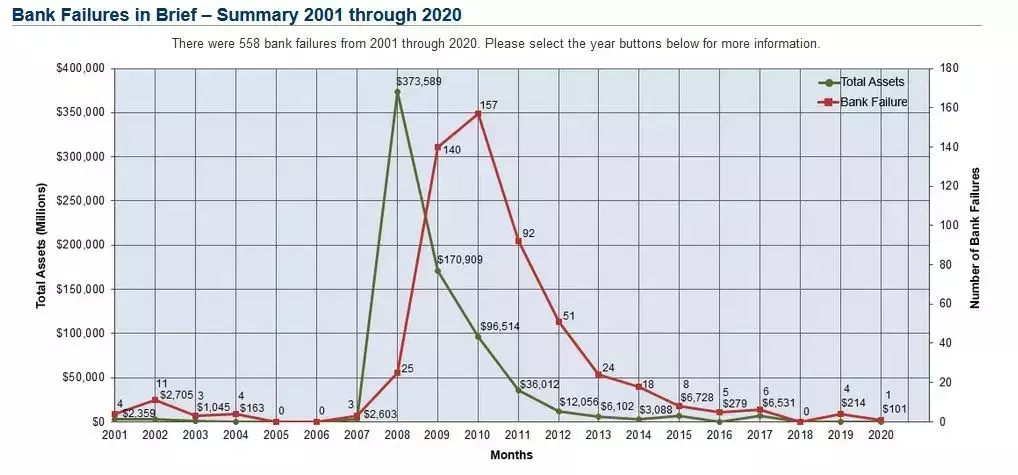
The historical trajectory of the FDIC Problem Bank List reveals a clear correlation with broader economic cycles, particularly periods of financial distress. Following the 2008 global financial crisis, the list swelled dramatically, peaking at nearly 900 institutions by 2011, reflecting widespread systemic vulnerabilities. This surge in troubled banks coincided with a significant increase in actual bank failures, with 2010 witnessing 157 FDIC-insured bank failures. As the economy recovered and regulatory measures took effect, the number of banks on the list gradually receded, falling below 100 by 2018 and maintaining a stable count of 60 by the end of 2025. This pattern underscores the list's effectiveness as an early warning system, indicating periods of heightened risk in the financial sector and the subsequent impact on bank stability.
The events of 2023 brought renewed attention to the FDIC's role in managing bank failures. On March 10, 2023, Silicon Valley Bank, holding $212 billion in assets, collapsed following a rapid bank run triggered by substantial losses on asset sales. Many of its clients, predominantly technology startups, held deposits far exceeding the standard FDIC insurance limit of $250,000. In an unprecedented move to prevent a wider banking panic, the FDIC announced that all depositors, including those with uninsured funds, would be fully protected. This measure was extended to Signature Bank in New York, which was also placed into receivership around the same time. These interventions highlighted the FDIC's flexibility and commitment to maintaining confidence in the banking system during critical junctures. While 2024 saw only two bank failures, The First National Bank of Lindsay and Republic First Bank, these incidents serve as reminders of the ongoing need for robust regulatory oversight and the FDIC's crucial function in safeguarding financial stability.
