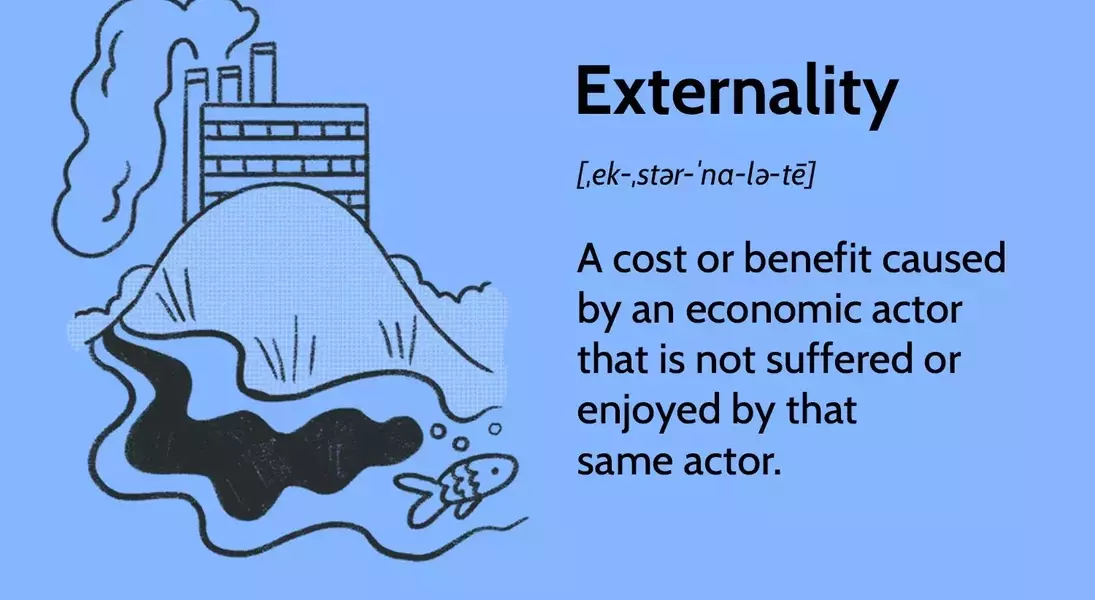
Externalities are unintended consequences of economic activities that impact third parties. These effects can be positive or negative and arise from either production or consumption. They signify a divergence between private and social costs or benefits, leading to market inefficiencies. Governments often intervene to correct these imbalances through various policy tools, seeking to align individual actions with broader societal well-being. Economists analyze externalities to understand their impact and to develop strategies for effective management, aiming for a more efficient allocation of resources within the economy.
The Nature and Economic Consequences of Externalities
Externalities manifest as indirect effects of economic transactions, influencing individuals or groups not directly participating in the activity. These effects can be either beneficial, such as the societal gains from widespread education, or detrimental, like environmental pollution from industrial operations. A key characteristic of externalities is that their costs or benefits are not reflected in market prices, creating a discrepancy between the private costs or gains of an activity and its overall social impact. This market failure often leads to an inefficient allocation of resources, where activities with negative externalities are overproduced and those with positive externalities are underproduced.
The concept of externalities is fundamental to understanding market inefficiencies. When private costs do not account for the broader societal costs (as in negative externalities like pollution), individual entities may engage in activities that benefit them but impose burdens on others. Conversely, positive externalities, such as the societal advantages derived from research and development or public education, often mean that the private benefits reaped by innovators or educators are less than the total benefits to society. This disparity highlights the need for external mechanisms, frequently involving government intervention, to ensure that the social costs and benefits of economic actions are properly integrated into market decisions, thereby fostering a more equitable and efficient economic landscape.
Policy Approaches to Managing Externalities
Addressing the challenges posed by externalities requires a range of policy interventions, typically involving both governmental and, at times, private sector initiatives. For negative externalities, governments commonly employ taxes, such as Pigovian taxes, designed to internalize the external costs by making the polluter pay. This incentivizes a reduction in harmful activities. Conversely, to promote positive externalities, governments might offer subsidies, encouraging activities like education or research that generate broad societal benefits beyond private gains. Regulatory measures are also a prominent tool, setting standards or limits on activities to mitigate negative impacts or mandate beneficial practices, although these require robust monitoring and enforcement.
Beyond traditional taxes and subsidies, innovative approaches like carbon credit systems have emerged to manage environmental externalities. These systems create a market for pollution rights, allowing entities to trade allowances to emit greenhouse gases. This mechanism provides flexibility, enabling entities to either reduce their emissions or purchase credits, thereby achieving environmental goals economically. The effectiveness of these policy tools hinges on accurate assessment and continuous adaptation, as externalities often involve complex, evolving dynamics. The overarching goal of these strategies is to ensure that economic decisions reflect their full social costs and benefits, moving the economy towards a more optimal and sustainable equilibrium.
