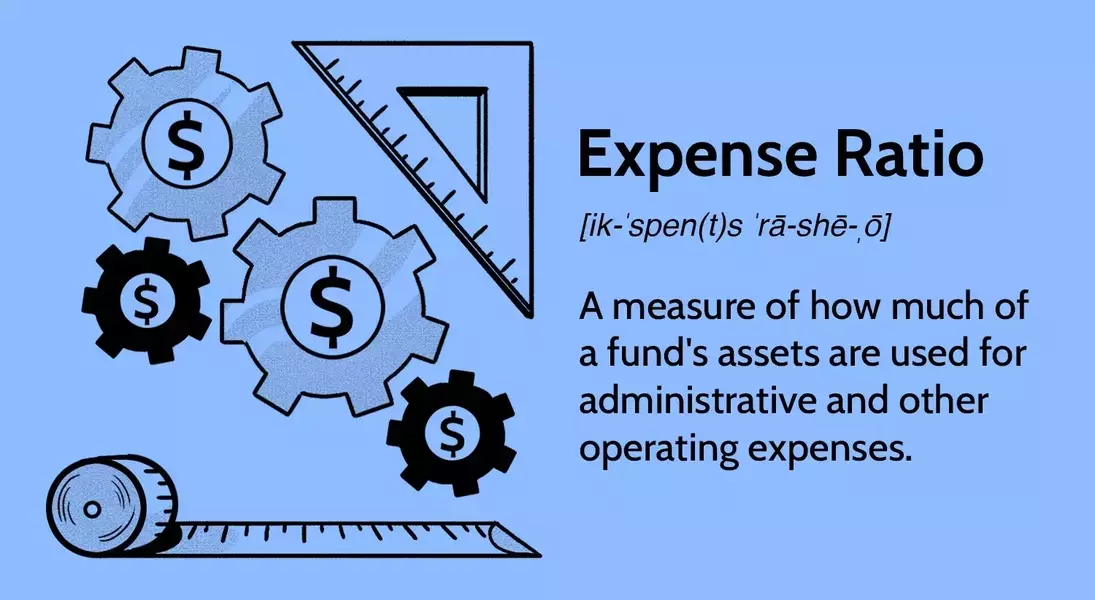
Understanding the operational costs associated with investment vehicles like mutual funds and exchange-traded funds (ETFs) is vital for informed decision-making. These costs are encapsulated in what is known as the expense ratio. This ratio, expressed as a percentage, reflects the annual expenditures incurred in managing and operating a fund relative to its total net assets. A lower expense ratio is generally advantageous for investors, as it translates to higher net returns over time. While investment companies are mandated to disclose this figure in their prospectuses, knowing its calculation and components can offer deeper insights.
Dissecting the Expense Ratio: Calculation and Components
The expense ratio is derived by dividing a fund's total operating costs by its total net assets. Operating costs encompass a broad spectrum of expenses, including management fees, transfer agent charges, accounting and custodian fees, auditing and legal expenses, interest, and various miscellaneous operational outlays. It is important to note that this ratio specifically excludes trading costs, such as loads or commissions, which are directly borne by investors.
For instance, an investor holding $5,000 in an ETF with a 0.04% expense ratio would effectively pay $2 annually for the fund's operation. Fund companies typically provide this information, making manual calculation rarely necessary. However, if one were to compute it, the formula is straightforward: Expense Ratio = Total Fund Costs / Total Fund Assets.
Most expenses embedded within a fund's structure are variable but are treated as fixed percentages of the fund's assets for expense ratio calculation. For example, a fee pegged at 0.5% of assets will consistently consume that percentage, regardless of market fluctuations. Additionally, certain funds may include advertising and promotion costs, such as 12b-1 fees, within their operating expenses. Regulatory bodies, like FINRA, cap these 12b-1 fees, limiting their allocation to distribution and shareholder servicing. The expense ratio predominantly reflects net expenses, but investors sometimes consider gross versus net expenses for a more granular view.
Passive vs. Active Management: A Cost Comparison
The management style of a fund significantly influences its expense ratio. Passively managed funds, such as many ETFs and mutual funds designed to track a specific index, typically boast much lower expense ratios. Their strategy of replicating an index requires less active decision-making and fewer trading activities, thereby reducing operational overhead. A prime example is the Vanguard S&P 500 ETF (VOO), which mirrors the S&P 500 Index and has an exceptionally low annual expense ratio of 0.03%.
Conversely, actively managed funds, which aim to outperform the market through strategic stock picking and frequent trading, inherently carry higher expense ratios. These funds incur greater costs due to the extensive research, analysis, and trading decisions made by their portfolio managers. The Fidelity Contrafund (FCNTX), a large actively managed fund, has an expense ratio of 0.39%, reflecting its more dynamic management approach and sector weighting discrepancies compared to its benchmark.
It is generally observed that ETFs tend to have lower expense ratios than their comparable mutual fund counterparts, making them an attractive option for cost-conscious investors. The continuous competition for investor capital has generally driven down expense ratios across the industry, benefiting a broad spectrum of market participants.
Understanding expense ratios is fundamental for investors. These costs directly impact net returns, making it crucial to consider them when evaluating investment opportunities. The decline in expense ratios over time, fueled by competition, offers investors more cost-efficient options, particularly in passively managed funds. By scrutinizing these figures, investors can make more informed decisions that align with their financial goals and optimize their long-term investment performance.
