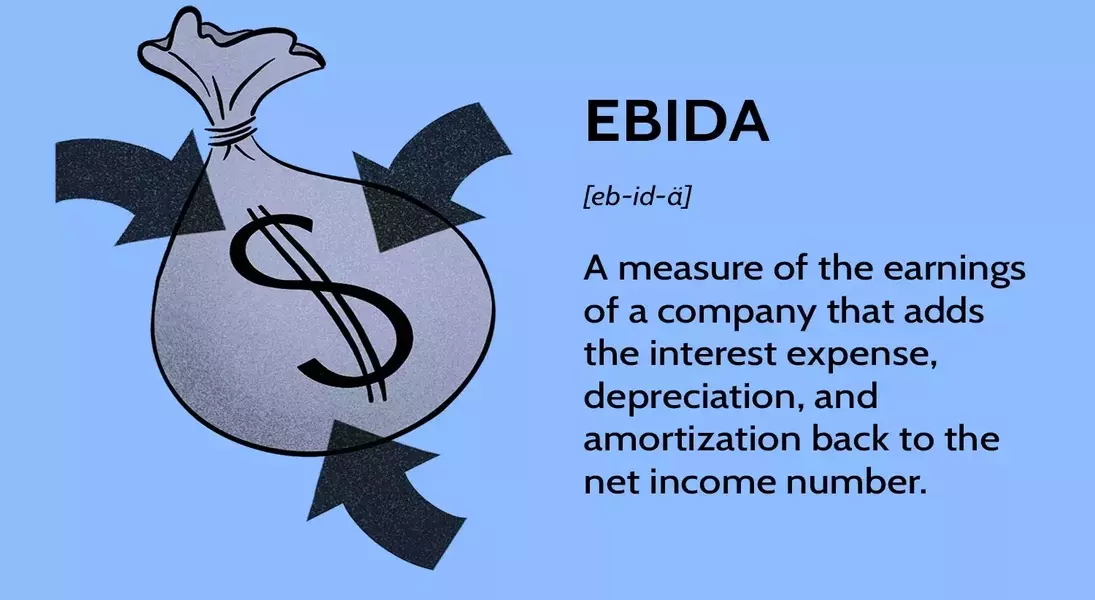
EBIDA is a financial metric designed to evaluate a company's profitability. It takes a conservative approach by calculating earnings before interest, depreciation, and amortization, while still accounting for tax expenses. This method provides an alternative view of a company's financial performance, particularly for organizations not subject to income taxes, such as non-profits. Although less prevalent than its counterpart, EBITDA, EBIDA can offer valuable insights into a company's cash-generating ability by stripping away certain non-cash expenses.
Despite its utility in specific contexts, EBIDA is not universally adopted by financial analysts, who often prefer EBITDA or EBIT for a broader assessment of profitability. One of the main criticisms of EBIDA stems from its non-compliance with Generally Accepted Accounting Principles (GAAP), leading to inconsistencies in its calculation and reporting across different companies. Furthermore, its inherent nature of being higher than net income and EBIT can sometimes mislead stakeholders about the true financial health of an enterprise. Therefore, while EBIDA serves as a specialized tool for financial analysis, it requires careful interpretation alongside other metrics.
Delving into EBIDA: Definition and Calculation
Earnings Before Interest, Depreciation, and Amortization (EBIDA) is a financial indicator that offers a unique perspective on a company's operational profitability. It is calculated by taking a company’s net income and adding back the costs associated with interest, depreciation, and amortization. Unlike EBITDA, which also excludes taxes from its calculation, EBIDA retains tax expenses, positioning it as a more stringent and conservative measure of earnings. This distinction makes EBIDA particularly relevant for assessing entities that operate in a tax-exempt environment, such as charitable organizations or non-profit hospitals, where the impact of taxes on profitability calculations is minimal or non-existent.
The calculation of EBIDA is straightforward, primarily involving the adjustment of net income to remove certain non-cash and financing-related expenses. The fundamental formula for EBIDA is: Net Income + Depreciation + Amortization + Interest. This metric can also be derived by starting from Earnings Before Interest and Taxes (EBIT) and then adding back depreciation and amortization, followed by subtracting taxes. A key application of EBIDA involves comparing the financial performance of companies within the same sector, offering a more nuanced view, especially when analyzing firms with varying debt structures or capital intensity. By focusing on earnings before these specific deductions, EBIDA highlights a company's capacity to generate cash from its core operations, providing insights into its financial resilience and operational efficiency.
Key Considerations and Criticisms of EBIDA
When incorporating EBIDA into financial analysis, it is crucial to recognize its specific characteristics and limitations. This metric is perceived as a more conservative valuation tool compared to EBITDA, largely because it does not exclude tax expenses. The rationale behind this lies in the fact that interest payments, being tax-deductible, can reduce a company's tax liability, theoretically freeing up capital for debt servicing. However, EBIDA deliberately avoids making such an assumption, thereby presenting a less optimistic, yet potentially more realistic, picture of a company's earnings available for other uses, excluding tax savings from interest deductions.
Despite its potential utility, particularly for tax-exempt organizations, EBIDA is not widely adopted in standard financial reporting or by analysts. A significant reason for this limited use is its exclusion from Generally Accepted Accounting Principles (GAAP). This lack of standardization means that the precise components included in an EBIDA calculation can vary from one company to another, making direct comparisons challenging and potentially misleading. Critics also point out that EBIDA, like EBITDA, overlooks critical financial components such as working capital fluctuations and capital expenditures (CapEx), which are vital for understanding a company's overall financial health and its ability to sustain growth. Consequently, while EBIDA can offer specialized insights, its application demands a thorough understanding of its underlying assumptions and careful consideration of its shortcomings alongside other more conventional financial metrics.
