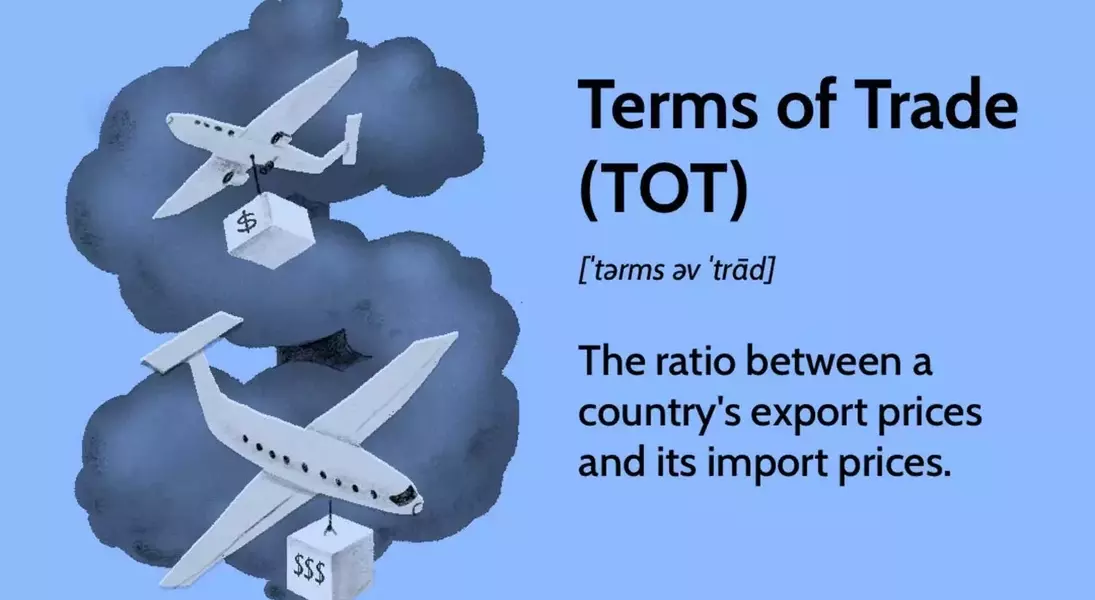
The Terms of Trade (TOT) serve as a crucial economic indicator, reflecting the balance between a nation's export prices and its import prices. A TOT exceeding 100% signifies a robust economic position, where the country accrues more capital from its exports than it expends on imports. This dynamic influences a country's overall wealth and competitiveness on the global stage.
Detailed Analysis of Terms of Trade
At the heart of global commerce lies the Terms of Trade (TOT), a fundamental economic metric that meticulously tracks the ratio of a country's export prices against its import prices. This ratio is pivotal in shaping a nation's economic competitiveness and its overall prosperity. A TOT value greater than 100% signals a beneficial trade environment for a country, indicating that the revenue generated from its exports exceeds the costs incurred from its imports.
Understanding the subtleties of TOT is critical for policymakers and investors navigating the complexities of international trade. Fluctuations in exchange rates, inflationary pressures, and the scarcity of goods are primary drivers influencing a country's TOT. For instance, an appreciation of a country's currency can bolster its TOT by making imports cheaper and exports more valuable. Similarly, a decrease in the global supply of a key export commodity can drive up its price, thereby improving the exporting nation's TOT.
Conversely, a deteriorating TOT compels a country to export a larger volume of goods to acquire the same quantity of imports, potentially straining its economy. The Prebisch-Singer hypothesis, a long-standing economic theory, suggests that developing nations often face declining TOTs due to the relative decline in commodity prices compared to manufactured goods. This historical trend has significant implications for the long-term economic growth and stability of countries heavily reliant on commodity exports.
The measurement of TOT is typically conducted using an index, providing a standardized method for economic monitoring. This index is calculated by dividing the price index of exports by the price index of imports, then multiplying the result by 100. This formula allows for a clear, quantitative assessment of a country's trade health and its capacity to engage effectively in the global marketplace.
In recent history, the early 2000s witnessed a commodity price boom that temporarily boosted the TOT for many developing countries. This period allowed these nations to acquire more consumer goods from industrialized economies for a given volume of commodity exports, such as oil and copper. However, the long-term trend indicates a shift, with globalization leading to reduced prices for manufactured goods. This has, to some extent, diminished the competitive advantage historically held by industrialized nations over developing countries, fostering a more balanced, albeit complex, global trade landscape.
Reflections on Global Trade Dynamics
The intricate dance between export and import prices, encapsulated by the Terms of Trade, offers a compelling lens through which to view a nation's economic resilience and its position in the global hierarchy. The insights derived from analyzing TOT underscore the constant need for countries to adapt their economic strategies to external forces. For a nation, particularly a developing one, a rising TOT can be a beacon of economic hope, suggesting increased purchasing power and improved living standards. However, the precarious balance means that these gains can be fleeting, subject to the volatile swings of global commodity markets and shifts in industrial production. It highlights the importance of diversification and innovation in a country's economic portfolio to cushion against adverse trade shocks. Ultimately, understanding and strategically managing the Terms of Trade is not merely an academic exercise; it's a practical imperative for fostering sustainable economic development and navigating the ever-evolving currents of international commerce.
