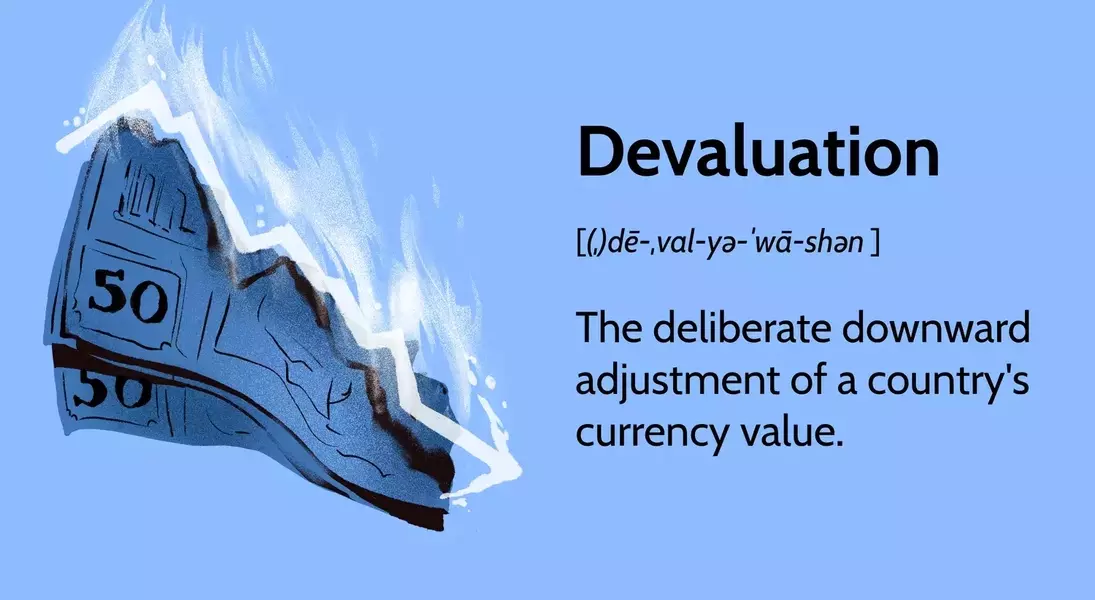
Currency devaluation is a strategic decision by a nation's government to decrease the official value of its currency against other global currencies. This measure is typically implemented within a fixed or semi-fixed exchange rate system with the primary goals of making exports more attractive and imports less appealing. While intended to correct trade deficits and stimulate domestic economic growth, such a policy can also trigger inflationary pressures and ignite trade disputes with other countries.
When a country's currency is devalued, its domestically produced goods become more affordable for foreign buyers, thereby increasing export volumes. Conversely, foreign products become more expensive for local consumers, leading to a reduction in imports. This rebalancing of trade aims to improve the country's balance of payments and shrink its trade deficit by boosting exports over imports.
The act of currency devaluation stands in contrast to revaluation, which involves deliberately increasing a currency's exchange rate. This distinction is crucial in understanding government interventions in currency markets. While devaluation can provide a competitive edge in international trade and attract foreign capital, it also comes with notable downsides. For instance, higher import prices can protect local industries but might reduce their incentive to innovate and become more efficient in the absence of foreign competition. Furthermore, an increase in exports combined with a decrease in imports can lead to a surge in aggregate demand, potentially causing inflation. Manufacturers might become complacent about cost-cutting if their products are made artificially cheaper for export, which could lead to a long-term increase in the cost of goods and services.
History is replete with examples of countries engaging in what are often termed 'currency wars,' where nations intentionally devalue their currencies to gain an economic advantage. Notable past tensions between countries like China and the United States illustrate this dynamic, with allegations of currency manipulation aimed at securing unfair trade benefits. The U.S. Treasury, under the 1988 Omnibus Trade Act, is tasked with monitoring such practices. In a significant event in August 2023, Fitch Ratings downgraded the United States' long-term credit rating, citing fiscal deterioration and a growing national debt, alongside concerns about governance that could impact its relative standing among global peers.
A critical distinction exists between currency devaluation and currency depreciation. Devaluation is a policy choice made by governments affecting a fixed exchange rate. In contrast, depreciation occurs naturally in a floating exchange rate system, driven by market forces such as changes in demand and supply for a currency. If market dynamics cause a currency to lose value, it is referred to as depreciation. In scenarios where a country's imports become excessively cheap due to devaluation, governments might impose tariffs to artificially raise their prices, thereby encouraging the consumption of domestically produced goods.
Ultimately, currency devaluation is a governmental tool designed to strategically reduce the value of a nation's currency. This action is undertaken primarily to enhance the competitiveness of exports and to rectify imbalances in trade. By making domestic products more attractive on the global stage and foreign goods less appealing domestically, devaluation can effectively narrow a country's trade deficit and invigorate its economy. However, it also carries the inherent risks of accelerating inflation and potentially triggering international trade disputes. A thorough understanding of both the advantages and disadvantages of currency devaluation is essential for policymakers, economists, and investors navigating the intricate landscape of global commerce.
