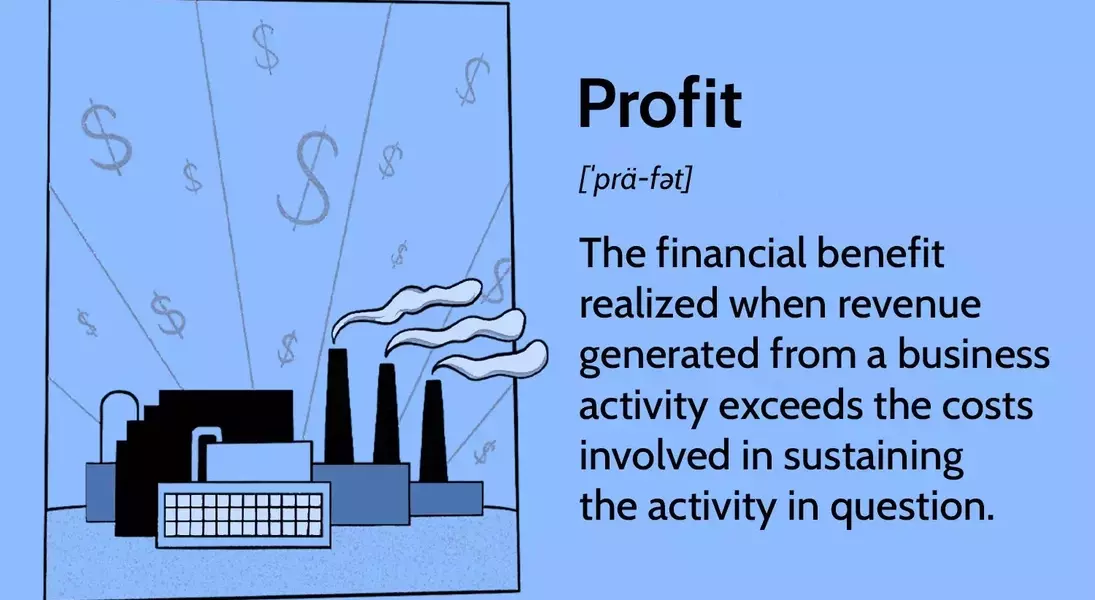
Profit is a crucial metric in the business world, representing the financial gain a company achieves when its revenue surpasses its expenditures. It signifies the funds a business retains after covering all costs associated with producing and distributing its goods or services. There are distinct categories of profit: gross profit, operating profit, and net profit, each offering unique insights into a company's financial well-being. A business with strong profitability is better equipped to manage its financial obligations and operational expenses effectively. Often, companies either distribute these earnings to their shareholders or reinvest them back into the business for further growth and development.
Understanding how profit is determined is fundamental to assessing a company's performance. For any commercial enterprise, from a small startup to a large multinational corporation, the primary objective is to generate profit. Financial analysts examine different levels of profitability to gain a comprehensive understanding of a company's financial landscape. Some focus on initial profitability, while others are interested in earnings before taxes and other specific outlays. Ultimately, the most comprehensive view of profitability considers all expenses. The three primary profit metrics—gross profit, operating profit, and net profit—are all detailed in a company's income statement, offering vital data for comparative analysis with competitors.
Gross profit, the foundational level of profitability, is calculated by subtracting the cost of goods sold (COGS) from sales revenue. Sales are typically the first item listed on an income statement, followed by COGS. For instance, if a company generates $100,000 in sales and incurs $60,000 in COGS, its gross profit would be $40,000. The gross profit margin, derived by dividing gross profit by sales, would be 40% in this scenario. This metric indicates the efficiency of a company's production or service delivery process before considering other operational costs.
Moving further down the income statement, operating profit is determined by subtracting operating expenses, such as overhead and other indirect costs, as well as non-cash accounting expenses like depreciation and amortization, from the gross profit. Operating profit is also commonly referred to as earnings before interest and taxes (EBIT), providing a clear picture of a company's profitability from its core business operations, independent of financing costs and tax obligations. This measure is particularly useful for evaluating the operational efficiency of a business.
Net profit, often termed the "bottom line," is the final measure of profitability, calculated by deducting interest expenses and taxes from operating profit (EBIT). This figure represents the actual profit retained by the company after all financial obligations and taxes have been met. The net profit indicates the funds available for dividend distribution to shareholders or for reinvestment into the company to fund new projects, reduce debt, or support future growth initiatives. A consistent increase in net profit signals robust company growth and effective financial management, while a decline can serve as a warning sign.
Publicly traded companies are mandated by regulatory bodies, such as the U.S. Securities and Exchange Commission, to publicly disclose their financial statements through annual reports like Form 10-K. These detailed reports offer stakeholders a transparent view of the company's financial performance over the fiscal year, including its various profit metrics. The concept of profit has been a subject of extensive study by economists, with theories ranging from Karl Marx's view of profit as surplus labor to modern interpretations that see it as compensation for entrepreneurial risk or a result of market inefficiencies. These diverse perspectives underscore the complex nature of profit within economic systems.
Profitability, typically defined as revenue less expenses, is a multifaceted concept that can be analyzed at different stages of a company's financial operations. Gross profit highlights efficiency in production, while operating profit reveals the effectiveness of core business activities before financial and tax considerations. Net profit, the ultimate indicator, represents the company's true financial gain after all deductions, offering a comprehensive overview of its overall financial health and potential for future investment or shareholder returns.
