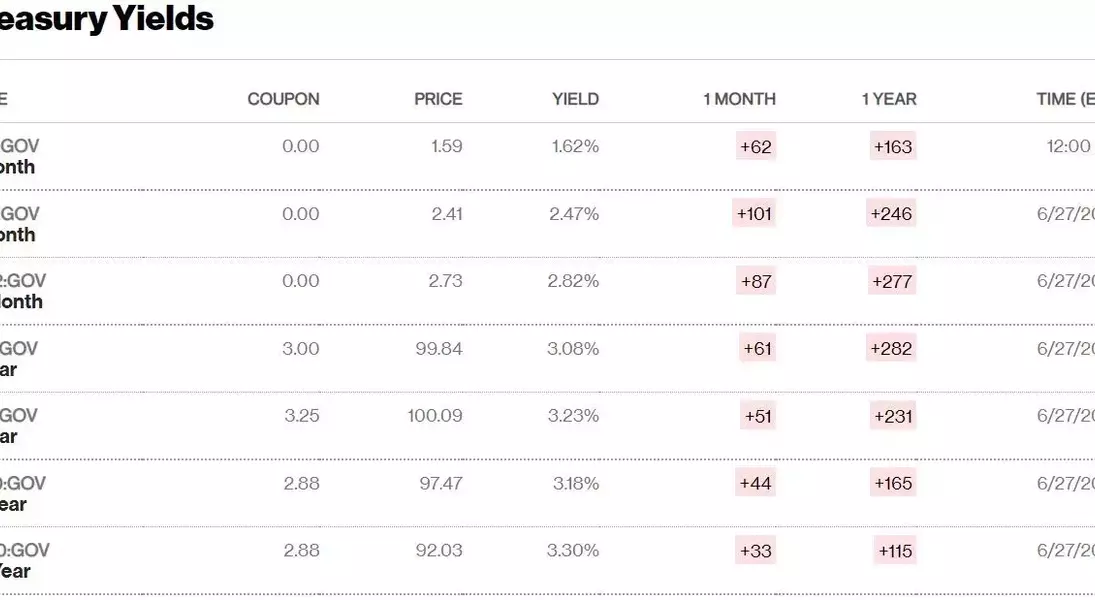
Bond prices and their associated yields are critical indicators of prevailing economic conditions and interest rate shifts, offering valuable insights for portfolio management. A fundamental principle in bond markets is the inverse relationship between price and yield: as one increases, the other typically decreases. This dynamic means that changes in interest rates can significantly alter a bond's market value, affecting its attractiveness to investors.
When a bond is initially issued, its price often aligns with its face value, and its yield mirrors the coupon rate. For instance, a bond offering a 1% annual interest rate for three years will deliver exactly that return if held until maturity. However, the bond's value can fluctuate in secondary markets based on external factors, predominantly prevailing interest rates. If, for example, a similar bond is later issued with a higher coupon rate (e.g., 2%), the initial 1% bond might trade at a discount to its face value, reflecting its reduced appeal in a higher-rate environment. Conversely, if new bonds offer lower rates, the original bond becomes more attractive, trading at a premium.
The market value of a bond is influenced by four main factors: current interest rates, the issuer's creditworthiness, the time remaining until maturity, and the balance between bond supply and demand. Interpreting bond price quotes requires understanding that prices are typically expressed as a percentage of the bond's par value. For instance, a quote of $98.90 for a bond with a $100,000 par value implies a purchase price of $98,900, indicating it is trading at a discount. Conversely, a price above $100 suggests a premium. These fluctuations mean the bond's coupon rate may no longer match its current market yield.
The distinction between discounted and premium bond pricing is driven by the bond's coupon rate relative to current market interest rates. A bond trades at a premium when its coupon rate exceeds prevailing market rates, making its regular interest payments more attractive. Investors are willing to pay more than face value to secure these higher payments, even though the actual yield received will be closer to the lower market rate due to the premium paid. Conversely, a bond trades at a discount when its coupon rate is below current market rates. To attract buyers, sellers must reduce the bond's price, effectively increasing its yield to compete with newly issued bonds offering higher rates.
A bond's yield is essentially the discount rate that equates the present value of all its future cash flows (coupon payments and principal repayment at maturity) to its current market price. While various yield calculations exist for different bond types, non-callable bonds like U.S. Treasuries typically use the yield to maturity. This calculation provides a precise yield based on a known maturity date, although it assumes that all coupon payments are reinvested at this same rate, which may not hold true given unpredictable future interest rates.
Inflation expectations play a significant role in determining the appropriate discount rate used in bond valuation. When inflationary concerns rise, central banks like the Federal Reserve may increase interest rates. Higher interest rates make existing bonds with lower fixed coupon rates less desirable and increase the discount rate applied to future cash flows, leading to a decrease in bond prices. Conversely, falling inflation expectations can prompt central banks to lower interest rates, making existing bonds more appealing and reducing the discount rate, which in turn boosts bond prices. Additionally, the credit quality of the bond issuer impacts the discount rate; a lower credit quality implies higher risk, demanding a higher yield and resulting in a lower bond price.
Bond prices and yields serve as excellent barometers for the broader economy and particularly for inflation trends. Their inverse relationship means that as market interest rates climb, bond prices generally fall, and vice versa. This intricate dance is heavily influenced by inflation, which can trigger interest rate adjustments from central banks. Moreover, factors such as the creditworthiness of the bond issuer also play a crucial role, with riskier bonds commanding higher yields to compensate investors for the increased likelihood of default. Comprehending these interconnections empowers investors to make informed decisions by shedding light on market expectations and the potential impact of interest rate, inflation, and risk dynamics on their financial strategies.
