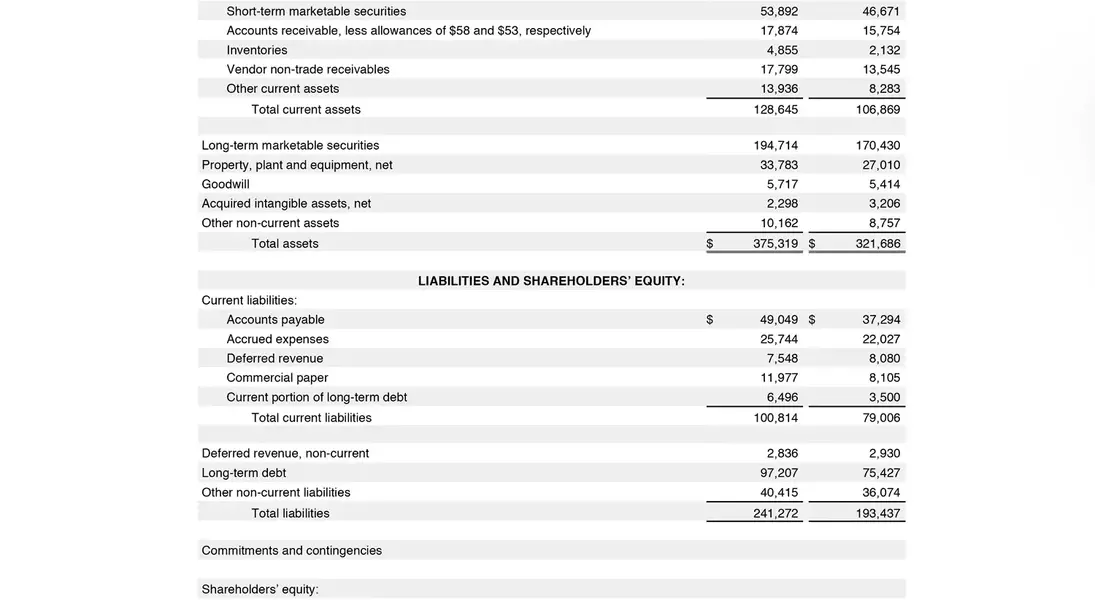

A company's financial position is encapsulated in its balance sheet, a vital document that reveals what it owns, what it owes, and the ownership stake of its shareholders. This statement adheres to the fundamental accounting identity: Assets = Liabilities + Equity. The intrinsic nature of this equation mandates that both sides always perfectly align, a principle rooted in double-entry bookkeeping, which ensures systematic and consistent financial record-keeping.
The equilibrium of a balance sheet is a strong indicator of well-maintained financial records, offering stakeholders a clear and reliable overview of the company's fiscal health. Conversely, any imbalance typically signals inaccuracies or omissions in entries, necessitating immediate correction to uphold financial integrity. This core concept is critical for financial transparency and informed decision-making.
The foundation of a balance sheet lies in the principle of double-entry accounting, a system where every financial transaction impacts at least two accounts. This dual entry mechanism inherently provides a self-checking feature, ensuring that all records remain consistent and accurate. Consider the simple act of acquiring an automobile: if a $10,000 vehicle is bought using a $5,000 loan and $5,000 in cash, the car (an asset) is valued at $10,000, mirroring the sum of the $5,000 debt (liability) and $5,000 cash (equity). Should this vehicle later be sold for $10,000, the asset account decreases by $10,000, while the cash or accounts receivable account increases by the same amount, maintaining the balance.
Balance sheets classify assets into two main types. Current assets are resources expected to be converted into cash within one year, crucial for covering operational costs. Examples include cash, accounts receivable, prepaid expenses, inventory, and marketable securities. Noncurrent assets, on the other hand, represent long-term investments not intended for short-term conversion into cash. This category encompasses fixed assets like property and equipment, and intangible assets such as trademarks and goodwill.
Liabilities, similar to assets, are categorized by their due dates. Current liabilities are obligations due within one year, including accounts payable (short-term debts to suppliers) and accrued expenses (expenses incurred but not yet paid). Noncurrent liabilities are long-term debts or obligations extending beyond one year, such as long-term lease obligations and bonds payable. For instance, a long-term lease agreement appears as an asset on the balance sheet, with its corresponding long-term obligation listed under noncurrent liabilities.
Shareholder equity represents the net worth of a company, calculated as total assets minus total liabilities. It signifies the residual value available to shareholders after all debts are settled, particularly relevant in a liquidation scenario. A significant component of shareholder equity is retained earnings, which are profits kept by the company for reinvestment or debt reduction, rather than distributed as dividends to shareholders.
Examining a real-world balance sheet, such as Apple's from September 30, 2017, provides practical insight. Their 10-K filing revealed total assets of $375.319 billion, total liabilities of $241.272 billion, and shareholder equity of $134.047 billion. When total liabilities and shareholder equity are summed, they equal Apple's total assets, demonstrating a perfectly balanced sheet. This adherence to the fundamental accounting equation confirms the accuracy and consistency of the company's financial reporting, offering a reliable picture of its fiscal standing.
A balance sheet provides a comprehensive overview of a company's financial status at a specific moment. It details assets, liabilities, and shareholder equity, acting as a crucial tool for assessing risk and securing financing. Coupled with the income statement and cash flow statement, it forms a complete picture of a company's financial performance and stability, essential for both investors and creditors.
