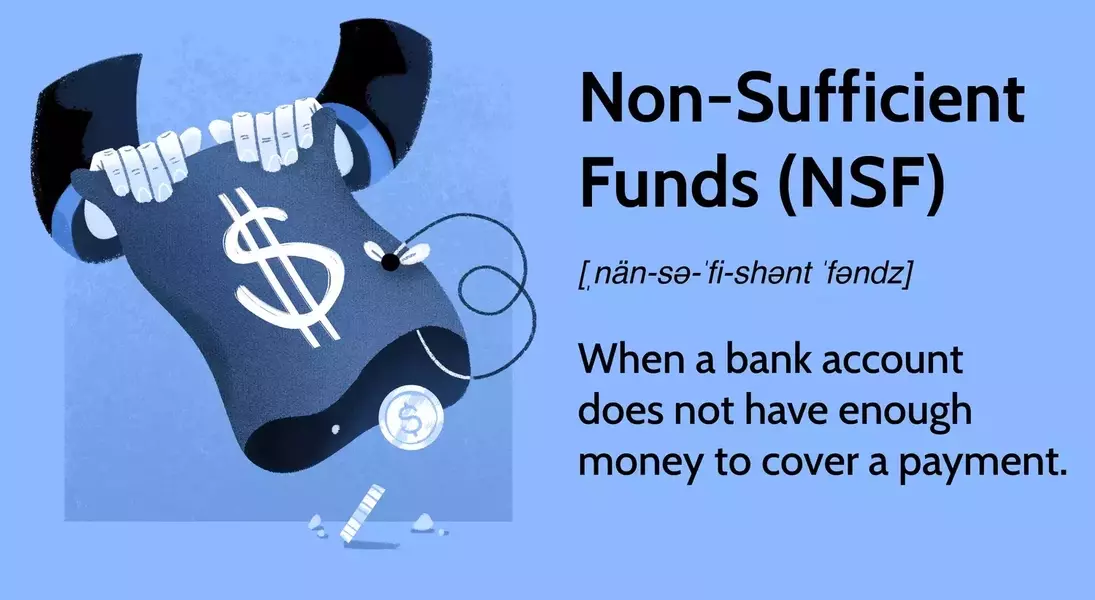
When a bank account doesn't have enough funds to cover a transaction, it leads to what is known as Non-Sufficient Funds (NSF), resulting in declined payments and charges. This financial hiccup can be a source of frustration and unexpected costs for account holders.
Financial institutions typically impose NSF fees when a payment instrument, such as a check, is presented but cannot be honored due to inadequate funds. In 2023, data from the Consumer Financial Protection Bureau (CFPB) indicated that these fees averaged between $32 and $34 per incident. Generally, funds for local checks must be available within two business days, with certain regulatory exceptions. If the necessary funds are not present, the transaction is marked as insufficient, and an NSF fee is applied.
To help customers steer clear of penalties related to insufficient funds, banks offer various solutions. Account holders can choose to opt out of specific overdraft services, particularly those associated with ATM withdrawals and one-time debit card transactions. A significant development in this area is the CFPB's stance on multiple NSF fees for the same transaction. The bureau has deemed such practices potentially unfair and unlawful, leading many banks and credit unions to commit to discontinuing these charges.
It's important to distinguish between NSF fees and overdraft fees, though both relate to insufficient funds. An NSF fee is incurred when a bank declines a transaction because of inadequate funds, whereas an overdraft fee is charged when the bank covers a transaction, causing the account balance to drop below zero. For instance, if an account holder with $100 attempts a $120 purchase via electronic check and the bank rejects it, an NSF fee is charged. However, if the bank approves the transaction, the account balance becomes negative, triggering an overdraft fee instead.
To avoid these charges, individuals can adopt several strategies. These include meticulously managing monthly budgets, refraining from issuing payments that exceed current account balances, and diligently monitoring account activity, including debit card transactions and automated payments. Linking multiple accounts, such as checking and savings, can provide a buffer by automatically transferring funds to cover shortfalls. Additionally, some banks offer overdraft lines of credit, subject to credit assessment, to help manage potential fund shortages. Setting up low-balance alerts is another effective way to stay informed about available funds and adjust spending habits accordingly.
The issue of NSF fees has been a subject of contention, leading to increased scrutiny from consumer protection agencies. Regulations introduced in 2010 mandated fee disclosures and opt-in rules for ATM and one-time debit card overdraft coverage, aiming to protect consumers. Historically, some financial institutions were criticized for reordering transactions to maximize overdraft fees, processing larger debits first rather than in chronological order. Several class-action lawsuits, including those against Bank of America and TD Bank, resulted in significant settlements over these practices. Furthermore, some institutions were found to be levying multiple NSF fees for a single transaction if the payment request was repeatedly resubmitted. Following the CFPB's intervention and reports highlighting these issues, many institutions have agreed to cease such practices and reimburse affected consumers, underscoring ongoing efforts to ensure fair banking practices.
