Options that are 'At the Money' (ATM) are a fundamental concept in the world of options trading. This means that the option's strike price precisely matches the current market value of its underlying asset. Such options, characterized by a delta of ±0.50, exhibit heightened sensitivity to shifts in market elements such as time decay, implied volatility, and prevailing interest rates.
Delving into 'At the Money' (ATM) Options: Mechanism and Trading Strategies
In the dynamic realm of options trading, the concept of 'At the Money' (ATM) is pivotal. An option is deemed ATM when its strike price aligns perfectly with the current market price of the underlying asset. This crucial classification distinguishes ATM options from those 'In the Money' (ITM), which possess intrinsic value, and 'Out of the Money' (OTM), which do not. Although ATM options lack intrinsic value, they retain an extrinsic value, meaning there's still potential for them to become ITM before their expiration.
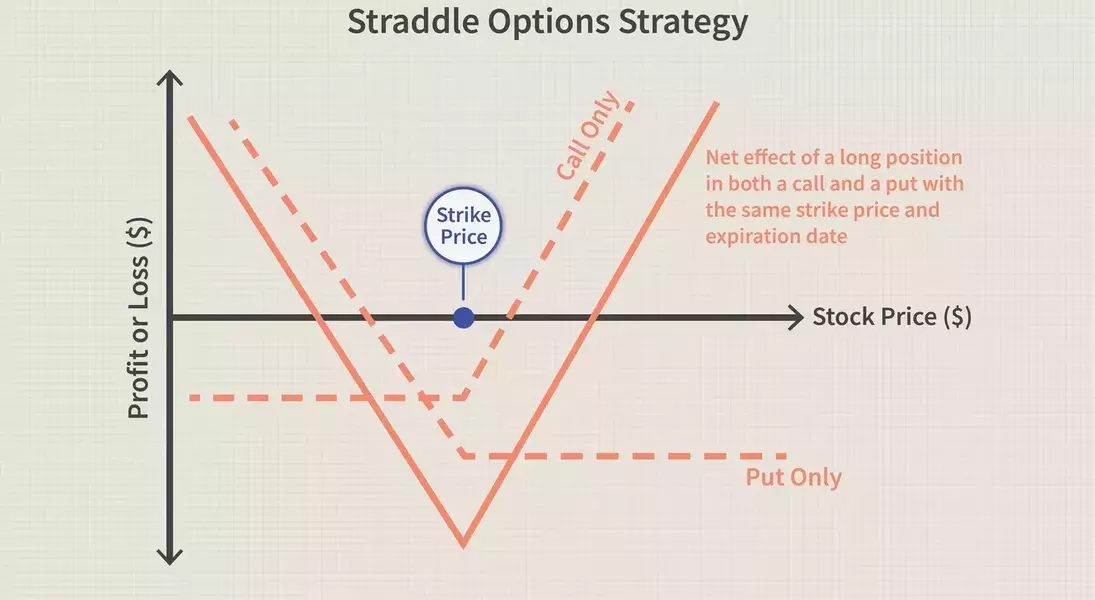
For instance, a call option is considered ITM if its strike price is lower than the underlying security's market price, whereas a put option is ITM if its strike price exceeds the market price. Conversely, a call option is OTM if its strike price is higher than the market price, and a put option is OTM if its strike price is lower. ATM options, being at the midpoint, are frequently utilized by traders to devise complex strategies like straddles, which involve simultaneously purchasing or selling both an ATM call and a put option.
These options are remarkably sensitive to various risk factors, collectively known as the 'Greeks'. Their delta, a measure of price sensitivity, stands at ±0.50, and they possess high gamma, indicating rapid changes in delta with market movements, particularly as expiration approaches. Furthermore, ATM options are most susceptible to time decay (theta) and highly responsive to volatility changes (vega), especially over longer maturities. Their sensitivity to interest rate fluctuations (rho) is also notable. Trading activity tends to surge when options reach the ATM state, reflecting their dynamic nature and strategic importance.
A distinction is also drawn between ATM options and 'near the money' options, with the latter typically defined as options whose strike price is within 50 cents of being ATM. Both ATM and near the money options are appealing to traders who anticipate significant market shifts, as even slightly OTM options can experience value increases with substantial price swings.
When it comes to pricing, an option's value comprises both intrinsic and extrinsic components. ATM options, devoid of intrinsic value, derive their entire worth from extrinsic value, which is significantly influenced by time decay and implied volatility. For example, if an investor acquires an ATM call option with a strike price of $25 for 50 cents, this 50 cents represents its extrinsic value. This value diminishes as the option nears expiration, assuming stable volatility and price. However, if the underlying asset's price rises above the strike price to, say, $27, the option gains $2 of intrinsic value, in addition to any remaining extrinsic value.
The intricate interplay of these factors makes ATM options a sophisticated tool in an options trader's arsenal, demanding a thorough understanding of their behavior and the broader market dynamics.
The discussion of 'At the Money' options highlights the intricate nature of options trading, where subtle relationships between strike prices and underlying asset values dictate strategic choices. From a journalist's perspective, this concept underscores the precision and analytical depth required in financial markets. It's not merely about predicting price direction but also about understanding the nuanced impact of time, volatility, and interest rates on an investment's potential. This technical precision, while daunting to the uninitiated, is the bedrock of sophisticated trading strategies, enabling traders to navigate and capitalize on market movements with calculated risk.
