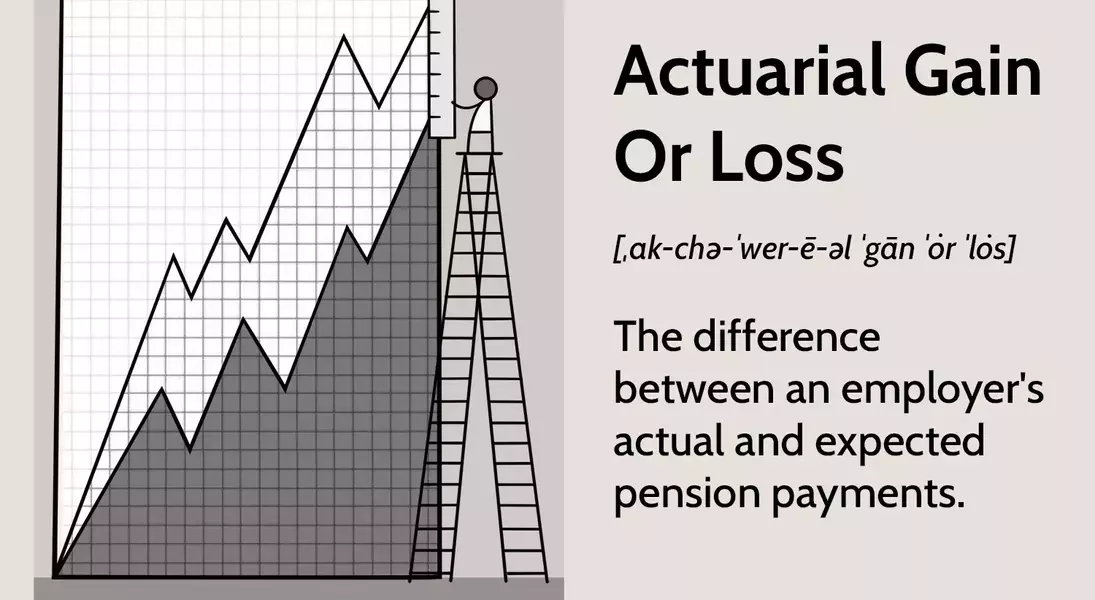
This article delves into the concept of actuarial gains and losses within the realm of pension accounting. It explores how these adjustments arise from changes in key assumptions used to value defined benefit pension plans, such as discount rates and expected returns on assets. The discussion covers the different accounting treatments under U.S. GAAP and International Financial Reporting Standards (IFRS), highlighting their impact on financial reporting and volatility.
Navigating the Nuances of Pension Adjustments
Defining Actuarial Gains and Losses
An actuarial gain or loss signifies an alteration in the financial projections utilized to determine a corporation's commitments for defined benefit pension plans. These fluctuations stem from modifications in the actuarial presumptions, including the anticipated returns on plan assets or the discount rate employed to calculate the current value of future benefit payouts. Accounting regulations mandate that the funding status of pension funds be reported on a company's balance sheet, necessitating regular updates to pension obligations, fund performance, and the plan's overall financial well-being. Consequently, pension plans may experience either an actuarial gain or loss in their projected benefit obligation, contingent on various factors such as participation rates and market performance.
The Mechanics of Actuarial Adjustments
To fully grasp actuarial gains and losses, it's essential to understand the broader context of pension accounting. This explanation primarily focuses on U.S. Generally Accepted Accounting Principles (GAAP). While U.S. GAAP and International Financial Reporting Standards (IFRS) share similar principles for measuring pension benefit obligations, their approaches to reporting pension costs in the income statement, particularly regarding actuarial gains and losses, differ significantly. The funded status of a pension plan, representing the net asset or liability, is the disparity between the value of plan assets and the projected benefit obligation (PBO). While valuing plan assets involves judgment, measuring the PBO necessitates actuarial estimates, which are the source of actuarial gains and losses. These estimates encompass economic assumptions, such as the interest rate for discounting future cash outflows, expected asset returns, and anticipated salary increases, as well as demographic assumptions, like life expectancy and projected service periods.
Impact on Financial Stability
Fluctuations in actuarial assumptions, especially the discount rate, can lead to substantial increases or decreases in the PBO from one period to another. If these adjustments were directly recorded in the income statement, they could distort the comparability of financial results. Therefore, under U.S. GAAP, these adjustments are initially recorded within other comprehensive income in shareholders' equity and are subsequently amortized into the income statement over time. Conversely, IFRS requires these adjustments to be recognized in other comprehensive income but does not permit their subsequent amortization into the income statement.
Transparency Through Footnote Disclosures
Accounting standards require comprehensive disclosures regarding pension assets and liabilities. These include detailed information on period-to-period activity within accounts and the critical assumptions used to determine funded status. Such disclosures enable financial statement users to assess how a company’s pension plans influence its financial position and operating results, both in comparison to previous periods and to other companies.
Concluding Thoughts on Actuarial Accounting
Actuarial gains and losses are reflections of changes in the estimated obligations of defined benefit pension plans. These changes frequently stem from updated assumptions concerning discount rates, investment returns, or demographic factors such as life expectancy. The manner in which these adjustments are reported in financial statements varies between U.S. GAAP and IFRS. Furthermore, footnote disclosures are vital for investors to comprehend the influence of pension obligations and funding status on a company's financial health.
