
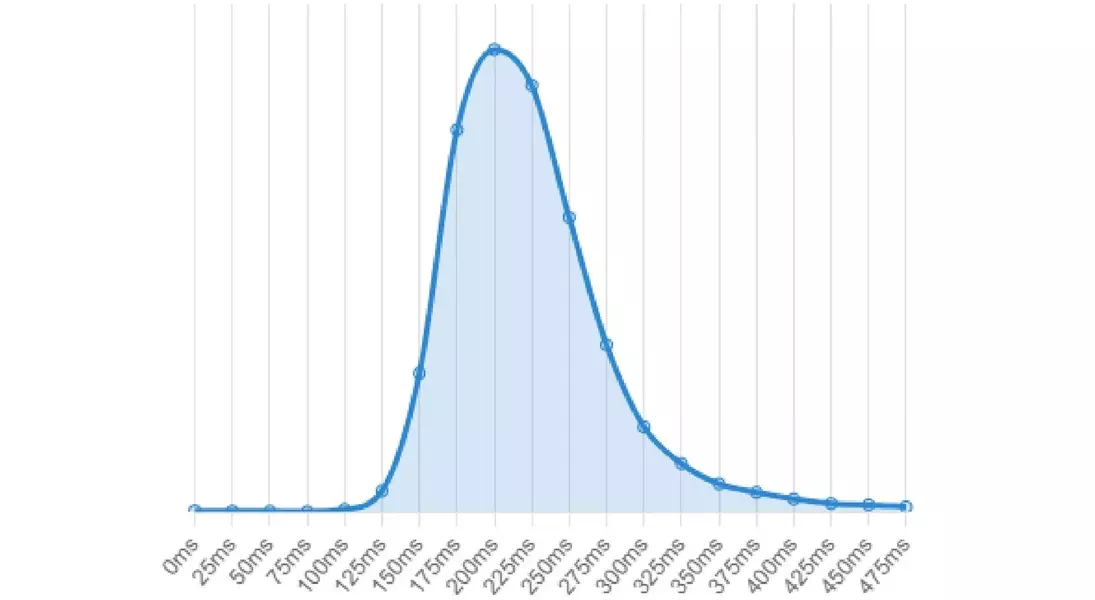
In a surprising turn of events, a writer for PC Gamer has purportedly achieved a reaction time dramatically superior to that of elite professional gamers. While evaluating the new Logitech G Pro X3 Superstrike mouse, which features inductive clicks, the individual recorded an astounding 16 milliseconds on the Human Benchmark's reaction time assessment. This figure stands in stark contrast to the average range of 100-300 ms, and the typical 150-160 ms seen among top-tier esports athletes. The achievement, whether a genuine display of lightning-fast reflexes or a fortunate accident, has sparked humorous speculation about a potential career in competitive gaming.
The Human Benchmark website is a popular platform where users can test various cognitive abilities, including reaction time. Participants are instructed to click their mouse as soon as the screen changes color. Standard scores usually fall within a broad spectrum, with skilled individuals consistently hitting lower milliseconds. Pro gamers, whose livelihoods depend on split-second decisions, often train to maintain reaction times well below the general average, typically aiming for the 150-160 ms mark. Therefore, a reported score of 16 ms is exceptionally low, prompting both amusement and skepticism.
The writer's humorous disclaimer, acknowledging the possibility of an accidental early click, adds to the lighthearted nature of the article. Despite the tongue-in-cheek tone, the anecdote highlights the ongoing quest for competitive advantage in gaming hardware. Manufacturers continuously innovate, developing technologies like inductive clicks, to shave off crucial milliseconds and give players an edge. This personal test, even if a one-off anomaly, playfully demonstrates the aspirations and the sometimes exaggerated claims within the gaming community regarding performance enhancements.
This remarkable, albeit possibly accidental, reaction time score has opened a comical dialogue about the boundaries of human performance in gaming and the impact of advanced peripherals. While professional esports teams are unlikely to recruit based on a single, potentially unreplicable, 16ms result, the incident serves as an entertaining reminder of the blend of skill, luck, and technology that defines competitive gaming. The pursuit of faster reaction times remains a cornerstone of gaming performance, constantly pushing both players and hardware developers to new limits.
