Discovering the perfect oat milk can transform your daily rituals, from morning coffee to culinary creations. This guide explores the quest for a dairy alternative that truly satisfies, offering a deep dive into the characteristics that define an exceptional oat milk.
Unveiling the Best Oat Milk: A Journey to Dairy-Free Perfection
The Quest for the Ideal Dairy Alternative: What Makes a Great Oat Milk?
The search for an outstanding dairy alternative often leads to oat milk, a popular choice for its creamy texture and mild flavor. The best oat milk should possess a rich, coating consistency, a subtle sweetness akin to traditional dairy, and a clean, unobtrusive oat flavor free from artificial notes. It aims to satisfy cravings for traditional milk without compromising on taste or texture, offering a satisfying mouthfeel without being grainy or gummy.
Championing the Best: Oatly Full Fat Oatmilk Takes the Crown
After rigorous evaluation, Oatly Full Fat Oatmilk emerged as the clear victor. Its distinct oat flavor was a hit with tasters, described as warm and cereal-like. The balanced, subtle sweetness received high marks, with one editor noting its neutral yet pleasing profile. While one taster observed a slightly chalky sensation, the overall consensus leaned towards its exceptional "oatiness."
A Texture That Impresses: The Creaminess of Oatly Full Fat
What truly set Oatly Full Fat apart was its remarkable creaminess, closely mirroring that of whole dairy milk. Panelists praised its thick, viscous, and exceptionally smooth consistency, finding it easy to enjoy on its own. The texture was consistently highlighted as a key factor in its appeal, making it a preferred choice for many.
A Strong Contender: 365 by Whole Foods Original Oatmilk Shines
The 365 by Whole Foods Original Oatmilk earned its place as a distinguished runner-up. It impressed with its authentic oat flavor and well-balanced sweetness. Despite one taster identifying a slightly powdery and gritty mouthfeel, this characteristic was surprisingly considered a positive, suggesting minimal processing. Other tasters lauded its creamy texture, noting its substantial body, making it suitable for both drinking and cooking applications.
Ingredient Insights: The Secret to Superior Oat Milk
Most oat milks share a foundational recipe of water, oats, oil, sugar, and salt. Many manufacturers also incorporate additives, emulsifiers, and stabilizers to achieve a rich, creamy texture and enhance foamability, particularly for coffee. Oatly Full Fat Oatmilk, our top pick, starts with an "oat base" created through a patented process involving water, oats, and natural enzymes. This process breaks down starches into sugars, naturally sweetening the beverage before filtering and packaging.
Comparing Formulations: Oatly vs. 365 by Whole Foods
Both the winning Oatly and the runner-up 365 by Whole Foods oat milks feature similar core ingredients: an oat and water base, minimal oil (rapeseed for Oatly, sunflower seed for 365), calcium carbonate, tricalcium phosphate, sea salt, and vitamins. 365 also includes gellan gum and potassium phosphate, which contribute to its unique properties. These additives are crucial in replicating the desirable richness and texture of dairy milk.
The Role of Fats and Additives in Achieving Dairy-Like Qualities
While some brands advocate for minimalist ingredient lists, our tasting revealed that oat milks consisting solely of oats and water often lacked the desired body and creaminess. The incorporation of oils and other thickening agents proved essential in achieving a smooth, rich mouthfeel reminiscent of whole milk. The full-fat variant of Oatly, with its higher rapeseed oil content, exemplifies this, offering a significantly more milk-like texture compared to its original counterpart.
Avoiding Common Pitfalls: Oat Flour and Excessive Gums
Lower-performing oat milks frequently utilized oat flour, which imparted an undesirable grittiness and raw flour taste. Similarly, an over-reliance on gums, such as gellan or locust bean gum, without adequate fat balance, often resulted in a gluey or slimy consistency, detracting from the overall enjoyment.
Rigorous Evaluation: Our Unbiased Testing Methodology
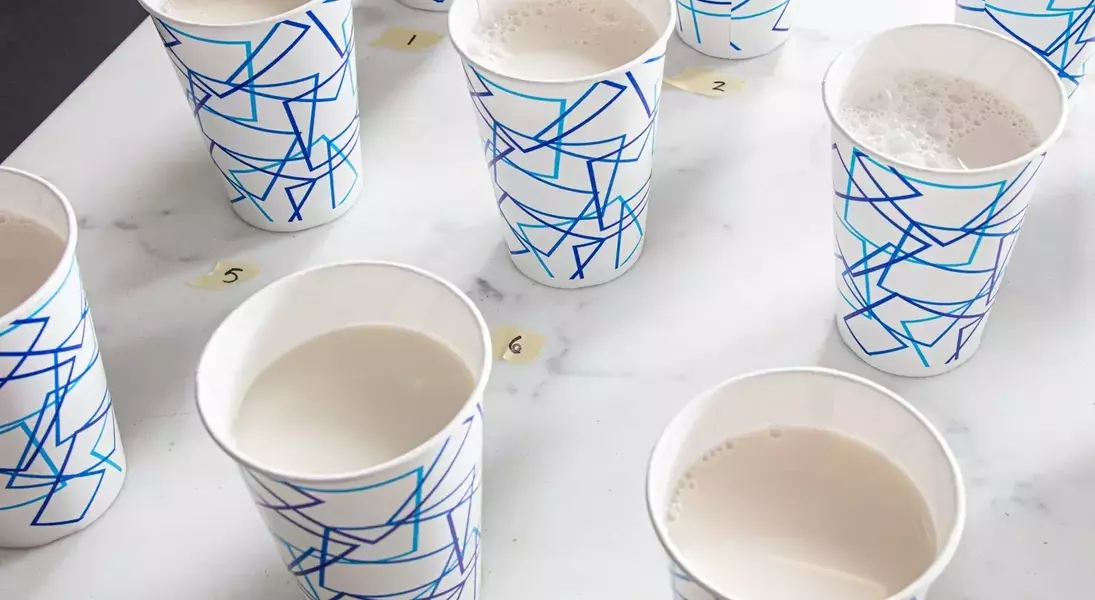
To ensure impartiality, all taste tests were conducted blind, with brands concealed from tasters. Samples were presented in random order to prevent palate fatigue from skewing results. Panelists completed detailed tasting sheets, ranking each sample based on various criteria. The data collected was then meticulously tabulated and analyzed, ensuring that the final results were an objective representation of the products' actual performance.
