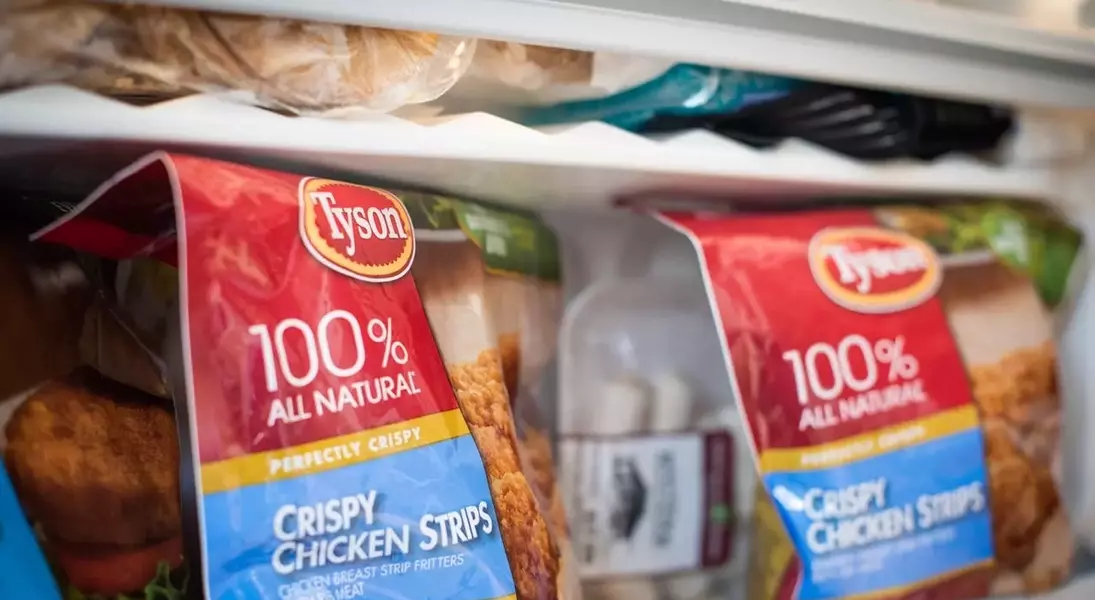
Tyson Foods Inc. has unveiled an enhanced earnings forecast for its 2025 fiscal year, driven predominantly by a surging demand for chicken in the United States and the benefits of reduced feed expenses. This upward revision underscores the company's strategic resilience, particularly as it navigates persistent financial headwinds within its beef division. The escalating prices of slaughter-weight cattle have severely impacted beef processing margins, making it difficult for the company to transfer these increased costs to the end consumer. However, the burgeoning appeal of chicken as a more economical protein choice has provided a crucial counterbalance, allowing Tyson to fortify its overall financial position despite the struggles in its beef segment. This dynamic interplay between consumer preferences and operational efficiencies paints a compelling picture of the company's adaptability in a fluctuating market.
Tyson Foods Navigates Market Dynamics with Elevated Chicken Sales and Strategic Financial Adjustments
In a significant announcement on a recent vibrant Monday morning in New York, Tyson Foods Inc., a prominent global food corporation, elevated its projected earnings for the fiscal year 2025. This optimistic revised outlook, reaching between $2.1 billion and $2.3 billion in operating earnings (excluding certain items), represents a notable $100 million increase at the midpoint from previous estimates. This positive trajectory is predominantly attributed to an increasingly buoyant perspective on the company's chicken business operations.
The strategic shift in consumer purchasing habits, influenced by the escalating costs of beef, has led to a remarkable surge in the demand for more affordable poultry. This change in market dynamics has substantially bolstered Tyson's chicken division, creating a buffer against the considerable financial pressures originating from its beef segment. The beef operations have been contending with an acute shortage of cattle, propelling prices for livestock to unprecedented highs. Consequently, beef processors, including Tyson, have struggled to transfer these increased expenses to consumers, leading to sustained profitability challenges.
Adding to the poultry division's success, an abundance of grain supplies has played a pivotal role by keeping feed costs in check, further enhancing the segment's profitability. This advantageous situation has allowed Tyson's poultry unit to record its highest adjusted operating profit since 2016, a testament to both increased sales volumes and improved pricing strategies. For the three-month period concluding in June, Tyson reported an adjusted earnings per share of 91 cents, marking a 4.6% increase from the prior year and significantly surpassing even the most optimistic analyst projections.
Conversely, the beef division continued to face substantial headwinds, reporting a $151 million loss (excluding certain items) during the same quarter. This marks the seventh consecutive quarter of losses for what is traditionally the company's largest operation. Furthermore, Tyson recorded a goodwill impairment charge of $343 million within this struggling sector, underscoring the severity of the challenges faced by its beef processing operations. Despite these significant setbacks in the beef market, the exceptional performance of the chicken business has enabled Tyson Foods to not only mitigate these losses but also to present an overall positive financial outlook for the coming year, reflecting the strategic importance of its diversified product portfolio.
From a journalist's perspective, Tyson Foods' recent financial update offers a compelling case study in corporate resilience and strategic adaptation within the volatile agricultural sector. The narrative vividly illustrates how shifting consumer preferences, driven by economic factors like inflation in beef prices, can profoundly impact an industry giant's segments. It underscores the critical importance of a diversified portfolio in mitigating risk, as the robust performance of Tyson's chicken division successfully absorbed the significant blows sustained by its beef operations. This situation also highlights the intricate balance between supply chain vulnerabilities (such as cattle shortages) and the ability to leverage market opportunities (like abundant grain supplies for feed). Ultimately, Tyson's ability to pivot and capitalize on the booming chicken market, even amidst a challenging beef landscape, provides a powerful lesson for businesses on the necessity of agility and foresight in navigating dynamic economic environments.
