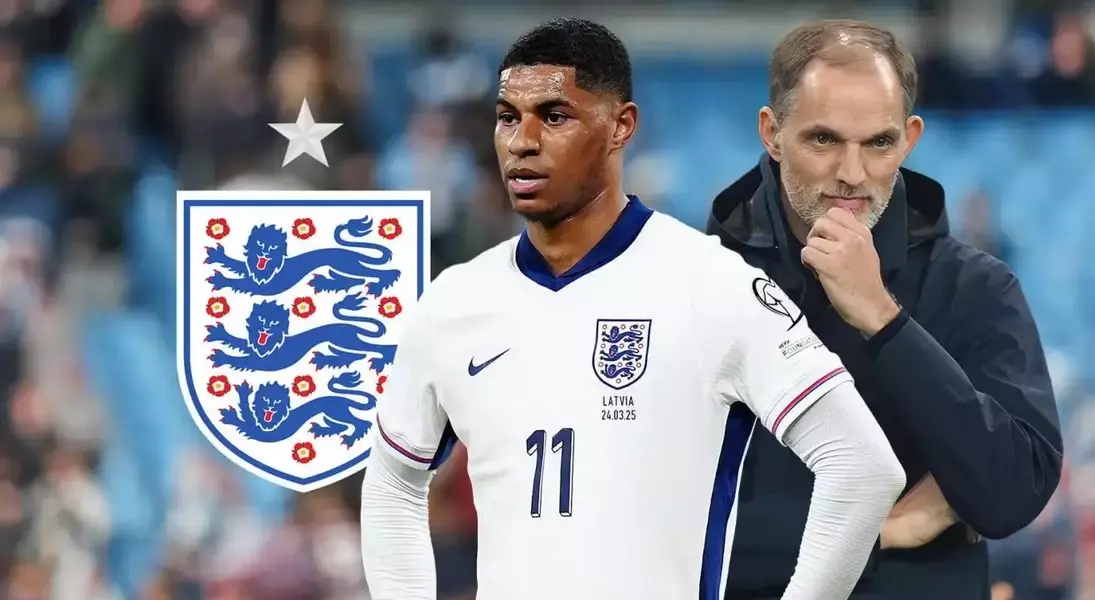
Thomas Tuchel's latest England squad announcement for the upcoming World Cup qualifiers has once again ignited discussions among football enthusiasts. While the omission of certain players, like Ivan Toney and Kyle Walker, might appease some critics, the inclusion of others has raised eyebrows, prompting questions about their current form and long-term relevance to the national team. The spotlight falls on several individuals whose call-ups appear to defy conventional wisdom, leading to speculation about the criteria guiding Tuchel's decisions. The debate centers on whether these choices are based on tactical necessity, historical performance, or an intrinsic belief in their ability to contribute despite recent setbacks.
This contentious selection process highlights the complexities faced by national team managers in balancing experience with emerging talent, and current form with potential. The article scrutinizes the cases of five players in particular, dissecting the arguments for and against their inclusion. It delves into the perceived justifications for their presence in the squad, juxtaposing them against their recent club performances and the availability of other promising contenders. This critical analysis aims to shed light on the intricacies of international football selections, where every decision is subject to intense public and media scrutiny, especially in the lead-up to major tournaments like the World Cup.
Questionable Inclusions in the England Lineup
Thomas Tuchel's latest selection for the England national team has sparked considerable debate, particularly concerning the inclusion of certain players whose recent form or career trajectory seems at odds with a call-up to the national squad. Among the most discussed names are Jordan Henderson, Jarrod Bowen, Ollie Watkins, Marcus Rashford, and Anthony Gordon, each presenting a unique set of circumstances that challenge the perceived merit of their selection. Critics argue that these choices overlook more deserving candidates and reflect a degree of favoritism or a misjudgment of current capabilities, especially when considering England's ambitions on the international stage.
Jordan Henderson's inclusion, despite his age and limited playing time at Brentford, has baffled many, leading to suspicions about non-sporting reasons influencing his selection. Jarrod Bowen, while a commendable player, has not showcased sufficient form to warrant a guaranteed spot, especially given the fierce competition in his position and the unfortunate injury to Bukayo Saka. Similarly, Ollie Watkins's season thus far has not been indicative of a prime candidate to serve as Harry Kane's primary backup, highlighting a perceived shortage of top-tier English strikers. Marcus Rashford's struggles at Barcelona since his move from Manchester United also cast a shadow over his call-up, as his performances have fallen short of expectations. Lastly, Anthony Gordon's disciplinary issues, marked by a second red card in a short period, make his inclusion seem precarious, suggesting a gamble on potential rather than consistent, disciplined performance.
The Rationale Behind Controversial Selections
The decisions behind selecting players like Jordan Henderson, Jarrod Bowen, Ollie Watkins, Marcus Rashford, and Anthony Gordon for the England squad, despite their fluctuating forms or recent controversies, can be interpreted through various lenses. For Henderson, the manager's emphasis on his leadership qualities, experience, and perceived ability to unify the squad might outweigh concerns about his club minutes or recent move to Brentford. Tuchel's past comments suggest a belief in Henderson's intrinsic value beyond mere statistics, seeing him as a crucial element for team cohesion and a winning mentality, regardless of individual output.
In the cases of Bowen, Watkins, Rashford, and Gordon, the rationale might be rooted in a combination of factors including a lack of consistent alternatives in specific positions, a belief in their inherent talent waiting to be unleashed, or a strategic decision to maintain squad depth with players who have previously demonstrated flashes of brilliance. Bowen's inclusion could be a temporary measure given Bukayo Saka's injury, while Watkins's presence underscores the current dearth of reliable English strikers, making him a necessary, if not ideal, option. Rashford's call-up might signify a hope that a change of scenery and international duty could reignite his form, despite a challenging start at Barcelona. For Gordon, despite his disciplinary record, his raw talent and potential for impactful play might be viewed as a worthwhile risk, especially if the team can harness his energy effectively. Ultimately, these selections reflect a manager navigating a complex landscape of player form, fitness, tactical needs, and the broader expectations placed upon the national team.
