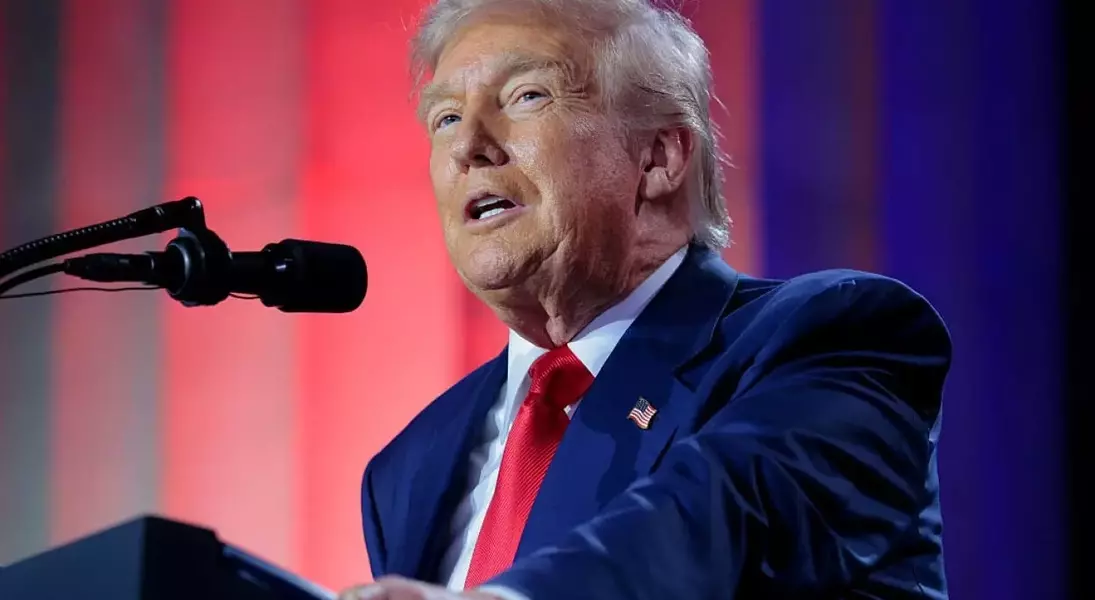
The intersection of artificial intelligence and intellectual property rights has become a battleground, drawing significant attention from policymakers and industry leaders alike. Former President Donald Trump has recently weighed in, aligning himself with prominent tech companies in advocating for a less restrictive approach to copyright enforcement concerning AI training data. This stance, articulated during an AI Summit, highlights a broader philosophical divide between content creators seeking remuneration for their work and AI developers pushing for unfettered access to data to fuel innovation. The debate intensifies as legal battles proliferate, with artists and authors accusing AI firms of unauthorized use of their creative output, while these firms maintain that their use falls under the 'fair use' doctrine and is essential for maintaining global technological leadership.
This complex issue touches upon the very foundation of how knowledge and creativity are valued in the digital age. Trump's assertion that requiring payment for every piece of data consumed by AI models is impractical for a successful AI program reflects a desire to prioritize rapid technological advancement. This perspective often contrasts with the views of copyright holders who argue that their original creations, whether text, music, or art, are being exploited without proper compensation. The outcome of this ongoing dialogue, and the numerous legal challenges currently in motion, will undoubtedly shape the future landscape of AI development, intellectual property law, and the economic models supporting creative industries.
President Trump's Position on AI and Intellectual Property
Former President Trump recently articulated a clear position on the contentious issue of AI and copyright, siding with major technology corporations. Speaking at an AI summit, he emphasized that demanding payment for every single article, book, or other content consumed by AI models for training is an impractical expectation. He suggested that such stringent requirements could impede the development of AI, thereby hindering American competitiveness, especially when compared to countries like China, which he noted are not imposing similar restrictions. This perspective aligns with the arguments put forth by AI industry leaders, including Meta and OpenAI, who have been advocating for a broad interpretation of 'fair use' to allow for more flexible data utilization in AI model training. Their argument centers on the idea that AI models 'learn' from data in a manner akin to human learning, which they believe should not be subjected to the same strict copyright rules as direct replication or derivative works.
Trump's comments suggest a strategic focus on accelerating AI innovation by reducing what he perceives as bureaucratic hurdles. He expressed concern that excessive regulation or mandatory licensing agreements for training data could stifle progress in the AI sector, potentially putting the United States at a disadvantage in the global technological race. This viewpoint is particularly relevant given the numerous ongoing lawsuits where content creators, including authors, musicians, and artists, are suing AI companies for allegedly using their copyrighted works without permission. These lawsuits highlight the tension between fostering innovation and protecting intellectual property rights. The former president's intervention indicates a leaning towards policies that favor the rapid expansion of AI capabilities, even if it means re-evaluating traditional copyright frameworks or providing more leeway for tech firms in their use of publicly available data.
The Broader Implications of AI Copyright Disputes
The debate surrounding AI and copyright is not merely an academic exercise; it has profound implications for both the tech industry and creative sectors. AI companies argue that the current legal frameworks, particularly around copyright, are hindering their ability to innovate and compete globally. They contend that their AI models absorb and process information in a transformative way, making their use of copyrighted material a 'fair use' rather than an infringement. Conversely, creators argue that the unauthorized use of their work to train AI models devalues their intellectual property and could lead to significant financial losses, undermining the very incentive for creative production. The legal system is now grappling with how to balance these competing interests, as evidenced by a multitude of ongoing lawsuits that seek to define the boundaries of fair use in the age of generative AI. The outcomes of these cases could set critical precedents, influencing future AI development, content licensing, and the compensation landscape for artists and authors.
The current legal and political climate surrounding AI copyright is highly dynamic. Despite some recent fair use victories for AI companies like Meta and Anthropic, court rulings have also indicated that the legality of training AI models on copyrighted works without permission is far from settled. The U.S. Copyright Office, for instance, has suggested that fair use might not offer a blanket exemption for AI training, a position that contrasts with the one advocated by former President Trump. Furthermore, legislative efforts are underway to introduce bills that would explicitly prohibit AI companies from training on copyrighted material without consent, and grant individuals the right to sue for misuse of their data. This multifaceted challenge requires careful consideration of how to foster technological progress without eroding the rights and economic viability of creators. The eventual resolution will likely involve a combination of new legal interpretations, industry standards, and potentially, entirely new licensing models that address the unique challenges posed by AI's capacity to generate new content based on vast datasets of existing works.
