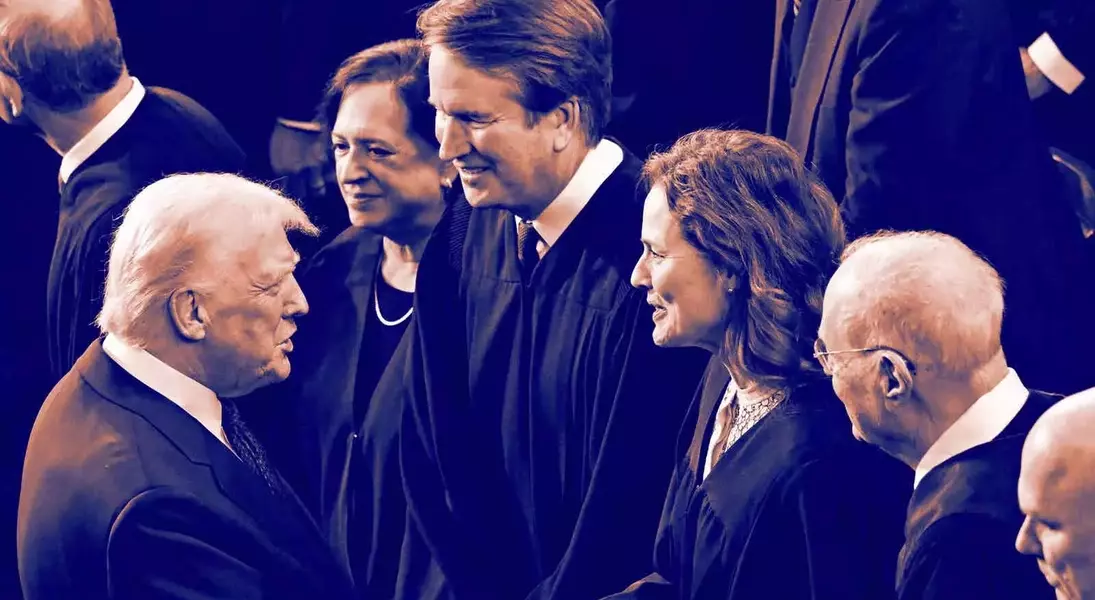
This report analyzes the persistent struggle for power between the executive and judicial branches of the U.S. government, particularly during former President Trump's second term. Despite his attempts to expand presidential authority, including control over federal agencies and foreign policy, the Supreme Court has consistently acted as a significant check, highlighting its critical role in maintaining democratic equilibrium. The discussion centers on whether this judicial assertiveness is a necessary response to an overreaching presidency, especially as legislative checks appear to wane.
The Supreme Court's Unyielding Stance Against Presidential Overreach
Since his re-election, former President Trump has actively sought to redefine the boundaries of presidential power, extending his influence over federal agencies and even initiating undeclared conflicts, such as with Iran. However, a pattern has emerged: many of these aggressive maneuvers have met their end not in the halls of Congress, but within the judicial system, predominantly at the esteemed Supreme Court. This unforeseen resistance from the judiciary suggests that, contrary to some expectations, the Supreme Court has become a central pillar of power in American democracy, effectively reining in executive ambitions. Sarah Isgur, a distinguished conservative legal observer and author of the illuminating book, 'Last Branch Standing,' has meticulously chronicled these developments. Her analysis reveals a compelling narrative of the judicial branch's resilience in the face of executive challenges. The ongoing dialogue, as highlighted in a recent episode of 'Interesting Times' with Ross Douthat, delves into the intricate internal dynamics of the Supreme Court and its profound impact on American political life. The critical question arises: is the emergence of an 'imperial judiciary' a reassuring safeguard against an 'imperial presidency,' or does it signal a troubling shift in the traditional balance of power, with Congress seemingly receding from its oversight responsibilities?
This ongoing dynamic between the executive and judicial branches underscores a fundamental tension within democratic governance. It challenges us to consider the long-term implications of a judiciary that increasingly acts as the primary check on presidential power. While it may offer a temporary bulwark against executive overreach, it also raises questions about the health of the broader system of checks and balances and the role of an engaged, assertive Congress. The current scenario prompts reflection on how a robust, independent judiciary can, and should, function in an era of polarized politics and powerful presidencies.
