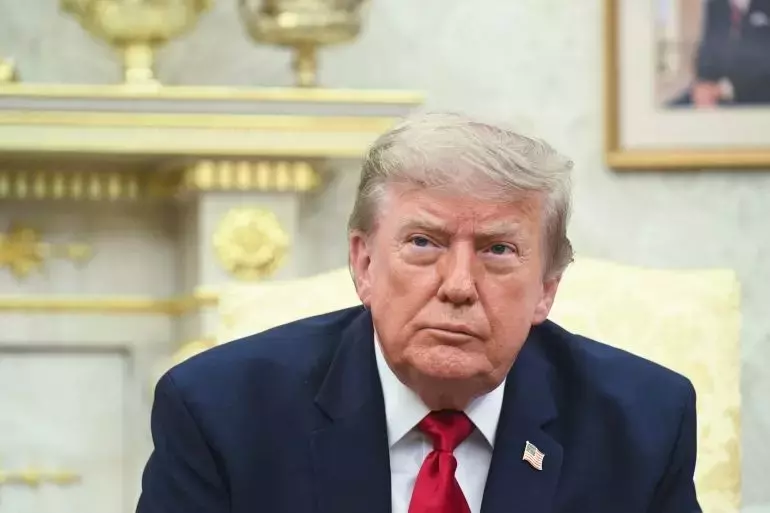
In a notable shift from his prior declarations, former United States President Donald Trump has retracted his plan to introduce a 20 percent transit tariff on maritime traffic through the Strait of Hormuz. This reversal comes shortly after his initial announcement of the fee, which he had characterized as a necessary "reimbursement" for the United States' efforts in maintaining security within the geopolitically sensitive waterway, especially amidst escalating hostilities with Iran. The initial proposal lacked detailed specifics on its implementation, raising questions about how the US, which does not exercise direct control over the international strait, would enforce such a charge.
Subsequently, Trump revealed that the proposed transit fee would be superseded by a framework of "Trade and Investment Deals" forged with various nations in the Gulf region. He credited this strategic pivot to what he described as fruitful dialogues with leaders across the Middle East. This decision signals a departure from his more confrontational stance, aligning with a historical US perspective that generally opposes the imposition of fees in international maritime passages. The revised approach emphasizes economic collaboration and investment as a means to address regional dynamics, marking a significant evolution in the former president's policy towards the critical choke point.
Trump's Policy U-Turn: From Transit Fees to Investment Pledges
Donald Trump's recent decision to withdraw the proposed 20 percent transit fee for ships passing through the Strait of Hormuz represents a significant policy reversal. Initially touted as a way to recoup security costs amidst rising tensions with Iran, this idea was quickly abandoned in favor of economic agreements. The former president stated that instead of a fee, the United States would pursue “Trade and Investment Deals” with Gulf nations, a move he attributed to successful negotiations with regional leaders. This strategic shift underscores a preference for diplomatic and economic engagement over unilateral financial impositions in a critical international waterway. The initial proposal, lacking specific operational details, had sparked concerns about its feasibility and legality, given the international status of the strait. The pivot towards investment deals indicates a recognition of the complex geopolitical landscape and the importance of fostering collaborative economic ties to ensure regional stability.
This shift from a direct transit fee to investment deals highlights a potential reconsideration of the best approach to manage relations and security in the Persian Gulf. Trump's initial proposal had been met with skepticism, not least because previous US administrations, including his own, had vocally opposed any attempts by Iran to levy charges for passage through the strait, citing international law. By pivoting to investment, the Trump administration appears to have moved closer to this established position, prioritizing multilateral economic benefits over a controversial unilateral fee. The promise of “massive” investments from Gulf countries, although short on specifics, suggests an effort to leverage economic partnerships to achieve strategic objectives. This change in policy reflects a dynamic and adaptive approach to foreign relations, where initial, more aggressive proposals can be replaced by more collaborative and economically driven solutions in response to international feedback and evolving circumstances. The impact of these new investment deals on regional stability and international maritime law will be closely watched.
Geopolitical Implications: Strait of Hormuz Security and Regional Stability
The Strait of Hormuz, a narrow waterway connecting the Persian Gulf to the open sea, remains a focal point of global energy security and regional geopolitics. Trump's initial proposal to impose a transit fee stemmed from heightened tensions between the US and Iran, particularly after a series of military actions and mutual accusations. This period saw increased attacks on maritime vessels and concerns over the free flow of oil, raising fears of a broader conflict. The US military's presence in the region, including naval blockades, has been a contentious issue, aiming to deter hostile actions and ensure safe passage for international shipping. The fluctuating policy signals from the US administration have created an atmosphere of uncertainty regarding the future of trade and security in this vital corridor, prompting continuous diplomatic efforts to de-escalate tensions and seek long-term solutions for regional stability.
The current geopolitical landscape in the Strait of Hormuz and the wider Middle East is characterized by a delicate balance of power and a history of conflict. Recent reports of attacks in critical Iranian locations such as Bushehr, Bandar Abbas, Mahshahr, and Abadan, alongside explosions on Qeshm and Kish islands, underscore the ongoing volatility. Furthermore, Kuwait's engagement with aerial targets and Iran's vow to continue attacks on US assets in the region, including alleged actions in Bahrain and Jordan, and against vessels in the Strait of Hormuz, all point to a deeply entrenched regional crisis. The temporary lifting of a US military blockade, followed by its anticipated restart, highlights the fragile nature of any agreements aimed at easing tensions. These events demonstrate the imperative for a coherent and sustainable strategy to manage regional security, emphasizing the need for international cooperation to prevent further escalation and ensure the unimpeded flow of global commerce through one of the world's most critical maritime choke points. The shift towards investment deals, rather than contentious fees, could potentially offer a path for constructive engagement, fostering economic interdependence as a deterrent to conflict and a foundation for enduring peace.
