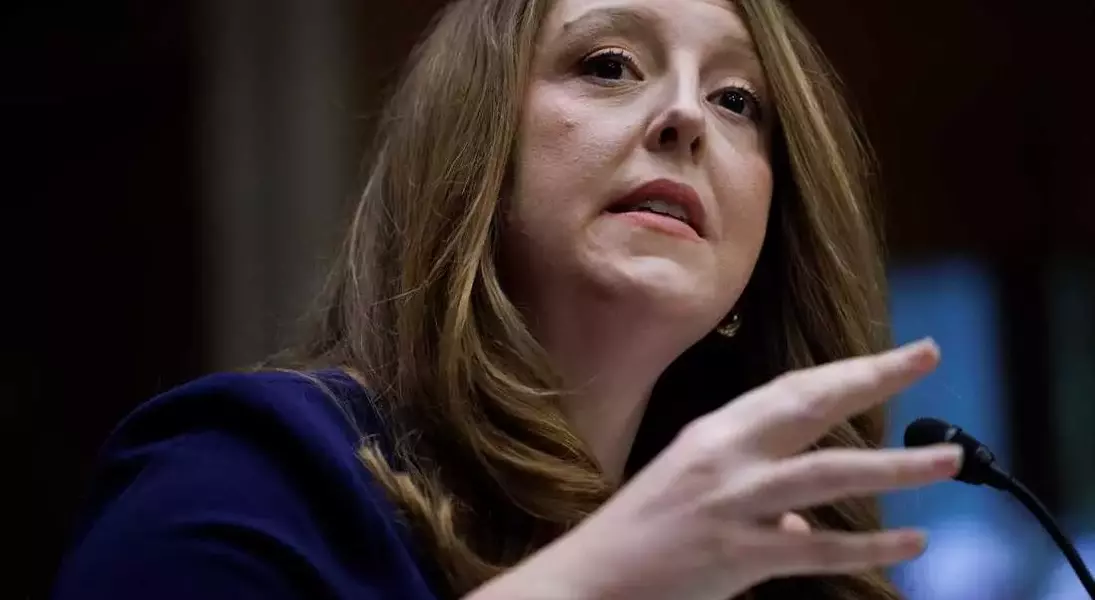
In a significant political maneuver, President Trump has withdrawn his nomination of Dr. Casey Means for Surgeon General and announced his intent to nominate Dr. Nicole Saphier. This decision comes after Dr. Means' nomination encountered substantial hurdles in the Senate, largely attributed to debates surrounding her professional background and her perspectives on vaccine policies. The appointment of Dr. Saphier signals a new direction for the administration's health leadership, placing a well-regarded radiologist and former media contributor at the forefront of national health discussions.
President Trump Shifts Surgeon General Nominee, Introducing Dr. Nicole Saphier
WASHINGTON, D.C. – On a recent Thursday, April 30, 2026, President Trump officially announced his intention to nominate Dr. Nicole Saphier as the nation's next Surgeon General. This pivotal decision follows the withdrawal of Dr. Casey Means' nomination, which had faced considerable resistance within the Senate due to questions regarding her professional experience and her controversial views on vaccinations. Dr. Means' path to confirmation had been effectively blocked since her confirmation hearing in late February, where she was extensively questioned by lawmakers from both political spectrums.
President Trump lauded Dr. Saphier, a distinguished radiologist and former Fox News Channel contributor, as a "STAR physician." He particularly highlighted her dedicated career in guiding women through breast cancer diagnoses and treatment. Health Secretary Robert F. Kennedy Jr. echoed this praise, emphasizing Dr. Saphier's role as a "long-time warrior for the MAHA movement." The "Make America Healthy Again" movement, which Dr. Saphier has championed through her 2020 book critiquing government health care approaches and the Affordable Care Act, seeks to reshape national health policies.
Despite her alignment with the MAHA movement, Dr. Saphier has demonstrated a capacity for independent thought on health policy. Notably, in September of the previous year, she expressed a nuanced stance on Trump's advisories regarding pregnant women's use of Tylenol. While acknowledging the importance of medical supervision, she countered that an oversimplified caution could be "patronizing," underscoring the risks of untreated fever or severe pain to both mothers and infants—a crucial aspect she felt was missing from the President's initial messaging. She further criticized the administration's press conference on the matter as "full of hyperbole" and "painful to watch."
Dr. Saphier brings a robust academic and professional background, serving as the director of breast imaging at Memorial Sloan Kettering Monmouth. Her qualifications include a doctor of medicine degree from Ross University School of Medicine and fellowships at the prestigious Mayo Clinic. Like her predecessor, Dr. Means, Dr. Saphier has voiced skepticism about the universal necessity of the hepatitis B vaccine for newborns, suggesting that a more individualized approach based on parental health and lifestyle factors might be warranted. She also questioned COVID vaccine booster requirements, arguing that their basis in evidence was not always clear.
The withdrawal of Dr. Means' nomination marks the second time during Trump's second term that a Surgeon General pick has been pulled. His first nominee, Fox News medical contributor Janette Nesheiwat, was withdrawn over concerns about her academic credentials. The challenges faced by Dr. Means included her incomplete surgical residency and the absence of an active medical license, coupled with intense scrutiny over potential conflicts of interest and her controversial stance on public health recommendations, particularly concerning vaccine policies.
The MAHA movement had actively campaigned for Dr. Means, organizing phone calls to Republican Senators Lisa Murkowski of Alaska and Susan Collins of Maine, who had expressed reservations. However, the efforts proved insufficient. Calley Means, Dr. Means' brother and a health adviser to the Trump administration, publicly attributed the nomination's failure to the "constant delay tactics" of GOP Senator Bill Cassidy of Louisiana, chair of the Senate health committee, who had aggressively questioned Dr. Means during her hearing. Secretary Kennedy further lambasted Senator Cassidy, accusing him of doing the "dirty work for entrenched interests seeking to stall the MAHA movement."
This episode highlights the complex interplay of political strategy, public health policy, and personal convictions in high-level government appointments, particularly in areas as sensitive as public health leadership.
The recent change in the Surgeon General nomination offers a compelling look into the dynamic and often contentious intersection of politics and public health. It underscores the challenges faced by administrations in balancing political allegiances with scientific consensus and public health imperatives. The debates around vaccine policy and the qualifications of nominees reveal a broader societal tension concerning trust in medical institutions and the role of government in individual health decisions. For public officials, navigating these waters requires not only medical expertise but also a profound understanding of political realities and public sentiment. The outcome serves as a stark reminder that even seemingly straightforward appointments can become battlegrounds for ideological and policy differences, impacting the nation's health strategy at its highest levels.
