In a swift response to the Supreme Court's decision to invalidate a significant portion of his administration's tariffs, former President Donald Trump declared a new tariff strategy. This move highlights his persistent reliance on trade levies as a core element of his economic and foreign policy agenda, even in the face of judicial setbacks. The new tariff regime is set to introduce a global 15% tariff on all imports, a substantial increase from the initial 10% proposal. This action underscores the ongoing uncertainty in trade policy, creating a challenging environment for businesses to navigate.
President Trump Implements Sweeping New Tariffs Following Supreme Court Decision
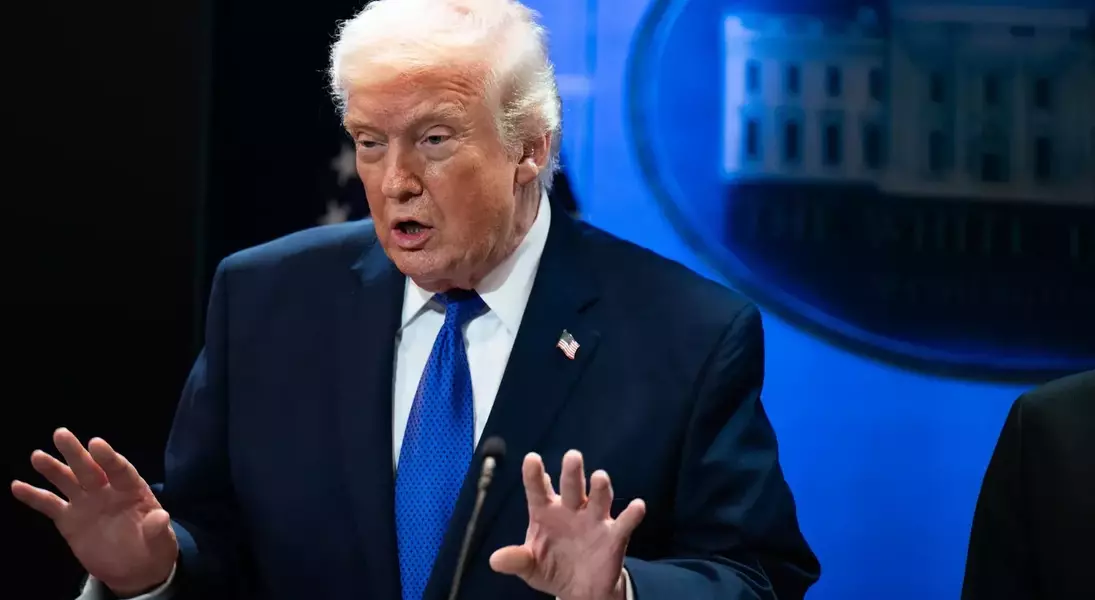
In a decisive move on February 20, 2026, former President Donald Trump unveiled a new tariff structure, just a day after the Supreme Court largely nullified several of his prior trade levies. Speaking from the White House, Trump announced a global 15% tariff on all incoming goods, a significant increase from the 10% rate he had previously proposed on Liberation Day in April. This new policy, however, diverges from past practices by sidestepping the International Emergency Economic Powers Act, which the Supreme Court had deemed an insufficient legal basis for imposing tariffs.
The former President specified that his administration would now invoke Section 122 of the Trade Expansion Act, which grants the executive branch authority to implement tariffs for up to 150 days to correct trade imbalances. Furthermore, Trump initiated Section 301 investigations against various nations, a provision enabling retaliatory tariffs against unfair trade practices, albeit after a thorough investigative period. These investigations, typically spanning several months, contrast sharply with the immediate application of emergency tariff powers previously utilized.
Economists at Wells Fargo Securities highlighted the constraints of Trump's current tariff powers, noting that while the administration can still impose tariffs, the swift, broad authority once afforded by the IEEPA is no longer available. This shift implies a more deliberate and protracted process for implementing new trade barriers. The Supreme Court's ruling initially led to a reduction in the effective tariff rate for American consumers, from 16% to 13%. However, Trump's declared intention to restore, if not exceed, the previous tariff levels suggests continued volatility in trade costs. "We have alternatives. Great alternatives. Could be more money. We'll take in more money, and we'll be a lot stronger for it," Trump asserted during a press conference on Friday, February 20, 2026.
This recent development underscores the dynamic and often unpredictable nature of international trade policy. Businesses and consumers alike are left to contend with an evolving economic landscape where trade regulations can change rapidly. The shift from broad emergency powers to more specific legislative tools for imposing tariffs signals a new era in trade diplomacy, one that demands heightened awareness and adaptability from all stakeholders.
