


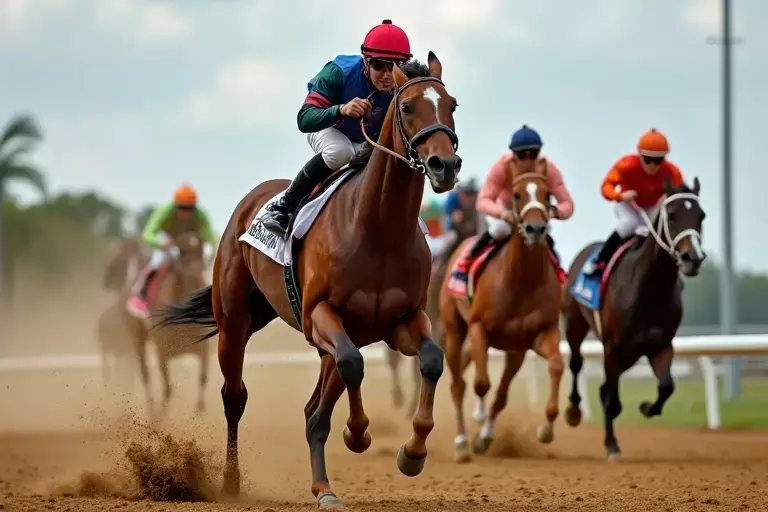
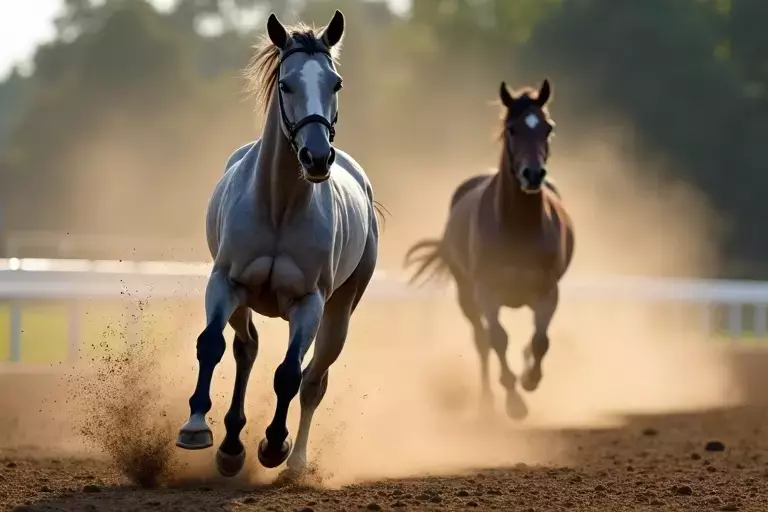
In the lead-up to the prestigious Kentucky Derby 2025, renowned trainer Brad Cox is leaving no stone unturned in ensuring his horses are at their peak performance. Focusing on Tappan Street, a standout colt with a unique name pronunciation, Cox emphasizes meticulous training schedules and strategic race planning. Alongside Tappan Street, Cox also has Final Gambit and Good Cheer in contention for the Derby and Oaks respectively, showcasing the depth of talent within his stable. With futures markets placing Tappan Street as a promising contender, all eyes are on Cox's trio as they gear up for one of horse racing's most iconic events.
Cox's Tactical Approach Unfolds
In the vibrant atmosphere of Churchill Downs during a radiant autumn morning, Brad Cox addressed reporters about his preparations for the Kentucky Derby. One focal point was the naming controversy surrounding Tappan Street, a colt whose moniker rhymes with Japan rather than rappin'. Originating from a street outside Boston, this slight mispronunciation gained attention following Tappan Street’s victory in the Grade 1 Florida Derby last month. Despite some local disagreements, Cox remains steadfast in his chosen pronunciation.
This champion colt, owned by WinStar Farm and Cold Press Racing, forms part of Cox’s formidable lineup alongside Final Gambit and Good Cheer. Tappan Street made an impressive debut on December 28th and followed it with a second-place finish in the Holy Bull Stakes. Under jockey Luis Sáez, he triumphed in the Florida Derby, closing from mid-pack to hold off Sovereignty by 1¼ lengths. Cox attributes much of this success to strategic rest periods between races, allowing Tappan Street ample recovery time after intense competitions.
Meanwhile, Final Gambit, another key player in Cox’s strategy, brings a different set of challenges. Having won races on synthetic surfaces, this gray-roan colt now faces the daunting task of adapting to dirt tracks. His recent workouts at Churchill Downs have been encouraging, with strong gallops and positive feedback from riders indicating potential for success. Lastly, Good Cheer, an undefeated filly poised to compete in the Kentucky Oaks, adds further excitement to Cox’s stable. Known for her commanding victories, she aims to prove herself against top-tier competition in what promises to be a challenging yet rewarding event.
From a journalist's perspective, Cox’s approach offers valuable insights into modern horseracing strategies. By prioritizing rest over frequent racing, he highlights the importance of physical and mental well-being in athletic performance. This philosophy not only preserves the health of these magnificent animals but also maximizes their chances of achieving greatness on the track. As we anticipate the outcomes of these meticulously planned efforts, it becomes clear that preparation and adaptability are crucial components of success in competitive sports like horseracing.
