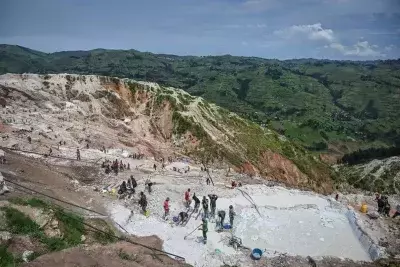
A recent catastrophic mine collapse in the eastern Democratic Republic of Congo has led to a significant loss of life, with rebel authorities confirming over 200 fatalities. The tragic incident, occurring at a prominent coltan mining site, underscores the inherent dangers within the region's resource extraction industry.
The calamity unfolded earlier this week at the Rubaya mines, an area currently under the dominion of M23 rebels. According to a spokesperson for the rebel-appointed governor of North Kivu province, heavy rainfall was the primary catalyst for the landslide. The spokesperson also noted that numerous injured individuals were transported to local medical facilities, with plans for further transfer to Goma, a larger nearby city.
The Congolese government has expressed its condolences to the affected families, simultaneously criticizing the rebels for their alleged unsafe and illicit mining practices. This incident sheds light on the broader challenges of artisanal mining, where tunnels are often dug without proper engineering or safety measures. Former miners attest to the precarious conditions, describing pits densely populated with workers, where a single collapse can trigger a chain reaction across multiple excavation sites. Eastern Congo, a region abundant in minerals like coltan—essential for modern electronics—has been plagued by decades of conflict, exacerbating humanitarian crises and displacing millions.
The tragedy in Rubaya serves as a stark reminder of the urgent need for enhanced safety regulations and ethical governance within the mining sector, particularly in conflict-affected zones. It calls for international attention and collective action to protect vulnerable communities from exploitation and to ensure that resource wealth contributes to sustainable development rather than human suffering. By prioritizing human lives and fostering responsible resource management, it is possible to transform these regions from sites of despair into beacons of hope and progress.
